Little Petra (Siq al-Barid)
Little Petra (Siq al-Barid)
8 km from Petra, Siq al-Barid — Little Petra — reveals the merchant and residential face of the Nabateans, with its tricliniums and the Painted House.
8 km north of Petra, the Siq al-Barid archaeological park — nicknamed Little Petra — brings together a collection of Nabatean ruins carved into red sandstone. More modest than its famous neighbour, the ancient Nabatean capital, it serves as a complementary site for understanding the daily life and commerce of the caravans that passed through here at the turn of our era.
Why visit Little Petra
Little Petra lacks the monumentality of the Treasury or the scale of the Monastery, but it offers complementary insights into Nabatean civilization. Where the main site displays primarily funerary and religious buildings, Siq al-Barid reveals dwellings used for residential or commercial purposes, with no religious or funerary function. It's the urban and mercantile side of Petra.
The site can be explored in 1 to 1.5 hours, making it a compact stop before or after visiting Petra. Crowds here are noticeably smaller, and free access to the park, without a ticket or Jordan Pass, makes it an accessible visit for all budgets.
History and etymology
The site was established in the 1st century BCE, when Petra was already a thriving Nabatean settlement and a crossroads for caravan trade between the Arabian Peninsula, Egypt, and the Mediterranean.
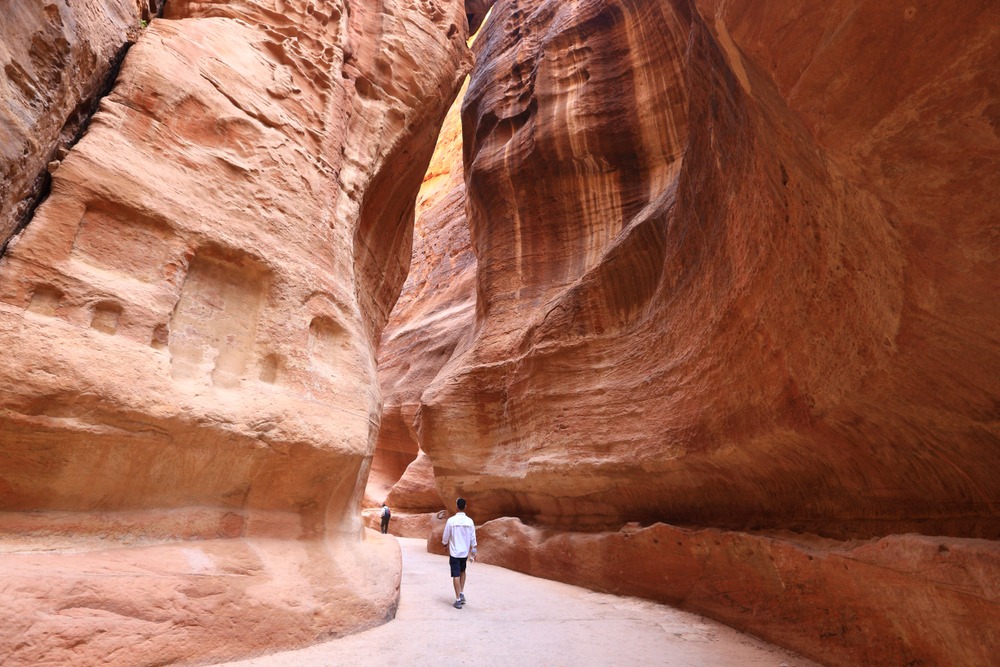
The Arabic name "Siq al-Barid" means "cold canyon", as the narrow gorge leading to the site is never bathed in direct sunlight. This topographical feature likely made it a welcome rest stop for caravans during the scorching summers of the Jordanian desert.
Archaeological excavations and theories describe Little Petra as a commercial and residential annex of Petra rather than an independent city. It served as a way station for traveling merchants, a storage depot for goods, and a venue for banquets related to trade.
What to see on the site
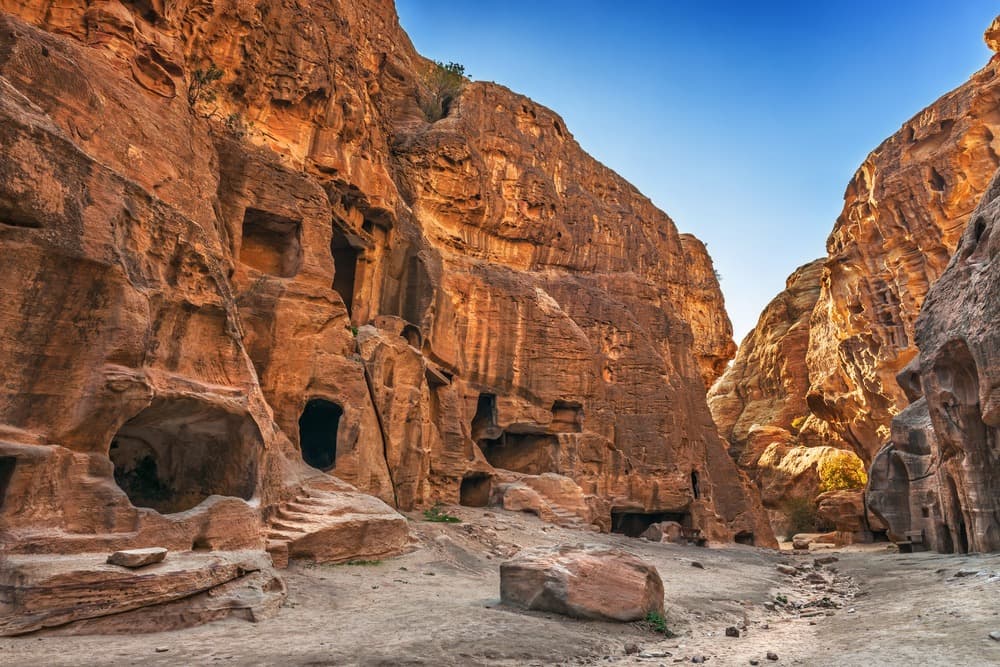
Access is through a narrow 400-meter canyon — the Siq — that opens between red sandstone walls. On either side of the passage stand the main monuments: a temple-tomb and four tricliniums, as well as several rock-cut dwellings.
The tricliniums
These are the site's most characteristic structures. Tricliniums are inn halls with a dining table and three beds arranged in a U-shape where guests reclined. They were frequented by Bedouin merchants traveling in caravans who halted at Petra. These columned halls testify to secular, hospitality-focused use, far removed from the grand royal tombs of the main site.
The Painted House
At 500 meters from the Siq, the Painted House is a biclinium — a variant for two diners — whose ceiling preserves paintings of birds, flowers, and vines still visible today. This decoration makes it one of the rare surviving examples of Petra's pictorial art, as Nabatean painting has almost entirely disappeared elsewhere. Access is via a stone staircase, and viewing requires looking up: the colours are fragile and sometimes faded, but the motifs remain legible.
Rock-cut dwellings and Bedouin presence
Along the canyon, several caves and niches carved into the rock correspond to dwellings or storage spaces. Today, Bedouins still inhabit certain cliff-face caves, continuing a millennia-old residential use of the area.
Practical information
- Access: free, no ticket or Jordan Pass required.
- Opening hours: daily, from early morning.
- Duration of visit: 1 to 1.5 hours for a complete tour of the site.
- Equipment: closed-toe shoes, water, hat, and sunscreen; stone stairs can be slippery.
- Services: at the Siq entrance, a few stands sell drinks and souvenirs.
When to go
The best times to visit Little Petra are spring (April–May) and autumn (October–November), with mild temperatures and favourable light for photography. Summer is manageable thanks to the canyon's shade — hence the "cold canyon" name — but the midday hours can be gruelling in the desert. Winter can surprise with its coolness, especially in the morning.
For light, mid-morning illuminates the facades best, while early morning offers an almost deserted site.
How to get there
Little Petra is reached from Wadi Musa, the base town for Petra. There is no direct public transport: the simplest solution is a taxi or private vehicle. Allow about 15 to 20 minutes drive from central Wadi Musa.
The route passes along Tourism Street, then turns towards the village of Um Sayhoun before reaching the Siq al-Barid car park. The road is asphalt and easily passable.
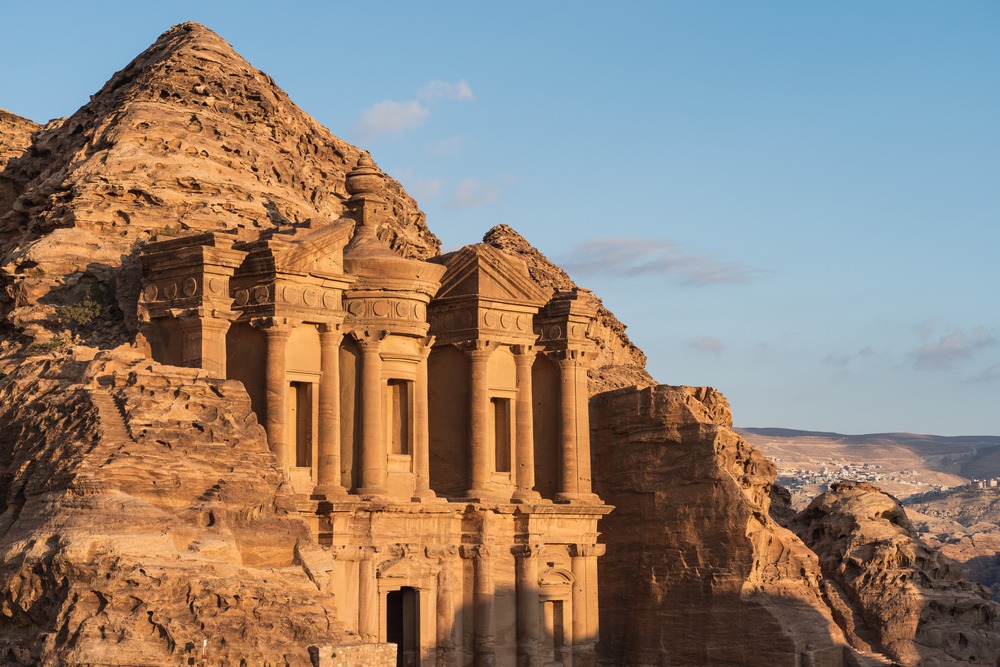
A more adventurous option exists for hikers: a 6-km dirt track connects the Siq of Little Petra to Ad-Deir, the Monastery of Petra. This trail crosses sandstone and djebel landscapes, and allows you to arrive at Petra from above, from behind the Monastery — a far more spectacular approach than the standard entrance. Allow 2 to 3 hours of walking, and bring plenty of water.
What to see nearby
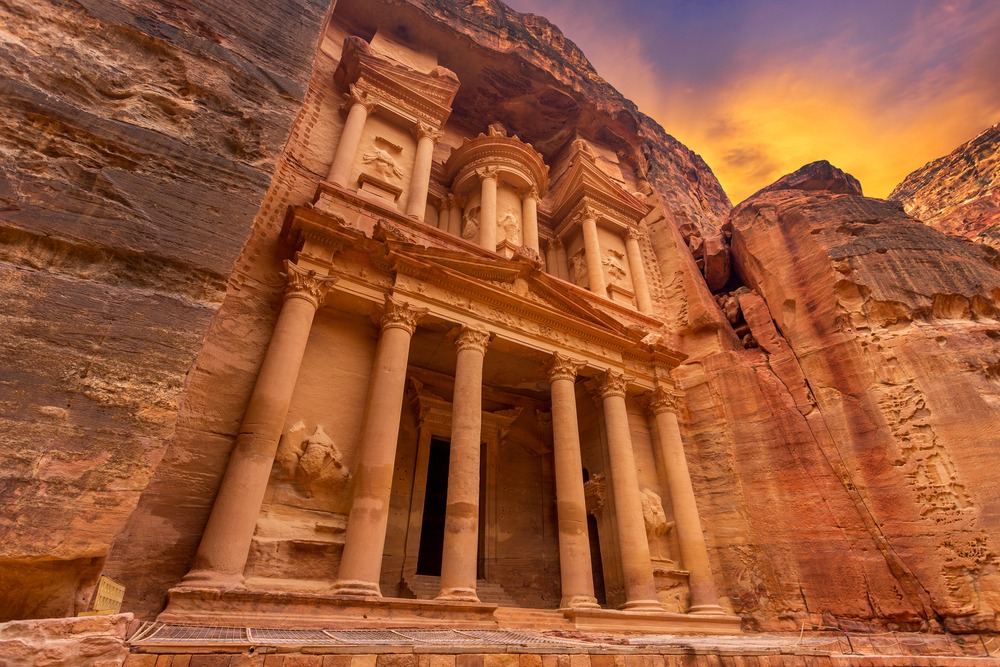
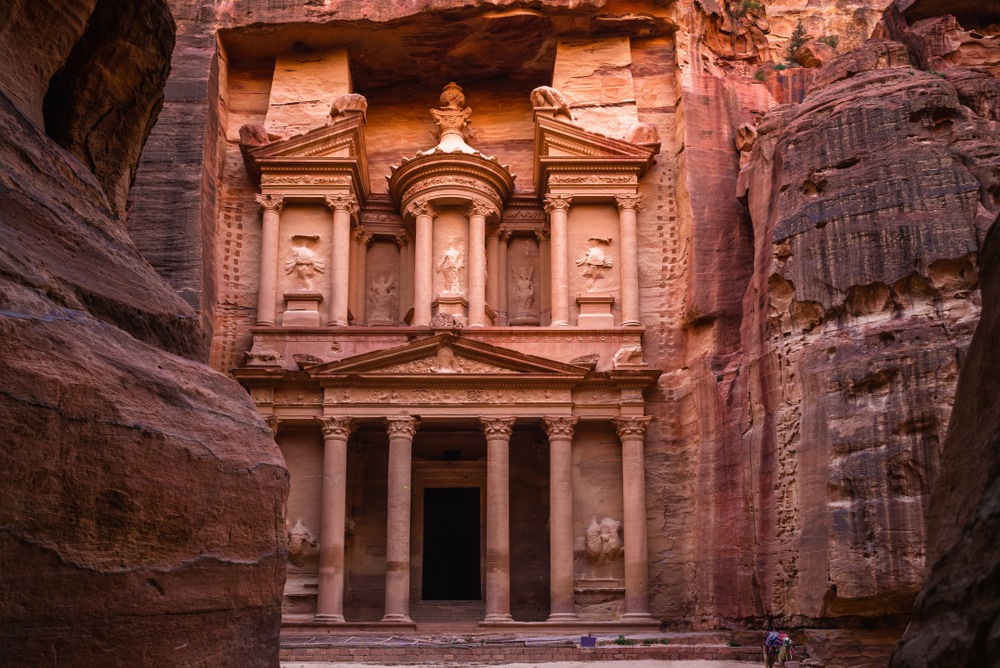
Little Petra fits naturally into a circuit around the Petra region. The Sîq of Petra remains the main entrance to the UNESCO-listed site, with its spectacular canyon and the Treasury as the highlight. Further north, Ajlun Fortress and Al-Karak Castle bear witness to the Ayyubid and Crusader periods. In Amman, the Temple of Hercules and the Church of Saint George in Madaba round out a tour of the country's major historical sites.
Frequently asked questions
Frequently asked questions
No. Access to the Siq al-Barid archaeological park is free, with no entrance fee or Jordan Pass required. This makes it one of the rare major free sites in the region.
Allow 1 to 1.5 hours to walk through the canyon, observe the tricliniums, and climb to the Painted House. If you extend with a hike to Ad-Deir, plan an additional half-day.
Yes, because the two sites are complementary. Petra concentrates monumental funerary and religious buildings, while Siq al-Barid showcases a merchant and residential district, with its tricliniums and Painted House — a different perspective on Nabatean civilization.
Yes. A 6-km dirt trail connects the Siq of Little Petra to the Monastery (Ad-Deir) of Petra. It's a moderate but sun-exposed hike; water and sturdy shoes are essential.
There is no direct bus service. The simplest solution is to take a taxi from Wadi Musa, or arrange a round trip with waiting time. Some accommodations also organize transfers.
Plan your trip
Little Petra fits naturally into an itinerary covering Petra, Wadi Rum, and the Dead Sea. To build a custom stay including this site and other major Nabatean highlights, explore our Jordan travel packages.
Interested in this visit?
We can include it in your personalised itinerary.