The Deir
The Deir
The largest carved monument at Petra: 43 m high, 800 steps to climb, 1st-century Nabataean façade later converted into a Byzantine monastery.
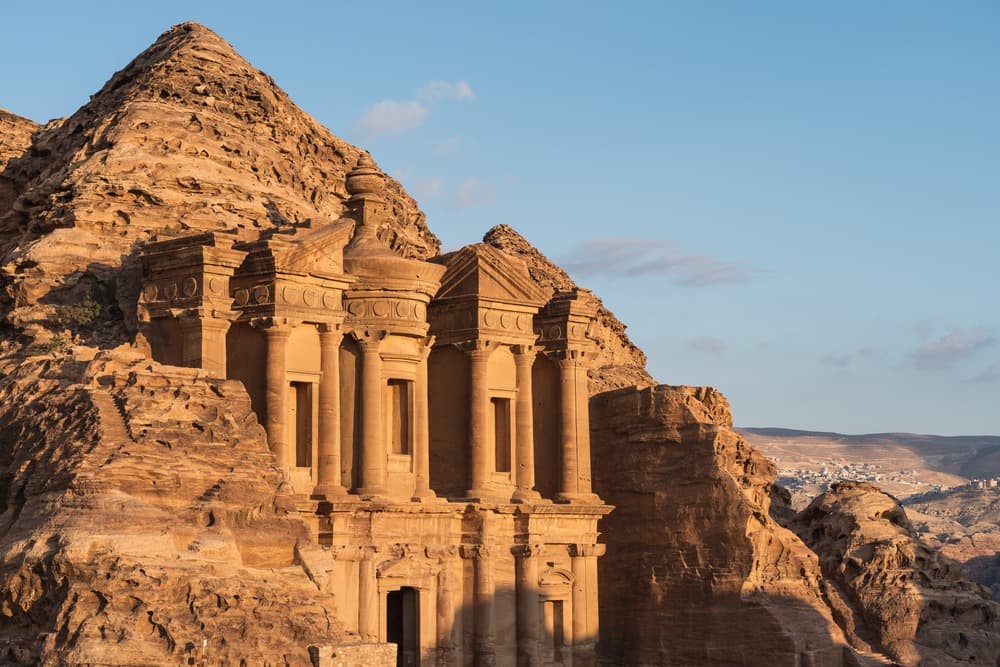
Carved into the red sandstone cliffs at the summit of Djebel Al-Deir, The Deir is, after Al Khazneh, the most monumental structure in Petra. Standing 43 metres high and 44 metres wide, this Nabataean façade hewn from rock demands effort: you must climb approximately 800 steps to reach it.
Why visit The Deir
The Deir holds a dual appeal. First, its architectural significance: it is the largest carved structure at Petra, featuring an entrance portal of 8 metres and a tholos crowned by a funerary urn towering over 9 metres. Second, its enigmatic character: archaeologists still debate three hypotheses to explain its original function — temple, royal sepulcher, or late Byzantine monastery.
The climb itself is part of the experience. The trail crosses sandstone landscapes and offers increasingly expansive views over the Petra basin as you ascend. Once at the summit, the esplanade facing the façade provides space to sit, observe carved details, and enjoy a quietude far more pronounced than at the lower, busier sites.
Monument history
The Deir was constructed in the mid-1st century CE, when Petra flourished as the capital of the Nabataean kingdom. Archaeological research suggests the structure was linked to the cult of Obodas I, the Nabataean king who ruled the city between 96 and 85 BCE. This hypothesis is supported notably by an epitaph discovered on stone benches lining the interior chamber.
In the 5th century, as the Byzantine Empire took control of the region, the building changed purpose and housed a Christian monastic community. Its current name stems from this period: « Al-Deir » (also transcribed « ad-Dayr » or « el-Deir »), from the Arabic meaning « monastery ». Small crosses carved into the interior walls still testify to this religious use.
The entire Petra site, of which The Deir is an integral part, was inscribed as a UNESCO World Heritage site in 1985.
What to see
The façade
The façade adopts the Alexandrian Greek style, with columns, capitals, and decorative friezes, yet remains less ornate than Al Khazneh's. The central tholos — the dome supporting the funerary urn — dominates the upper register and remains visible from several vantage points in the lower city.
The interior
Entry is through a monumental portal 8 metres high. Inside, a large, relatively austere chamber is bordered by stone benches where worshippers gathered during ceremonies. The inscription linked to Obodas I was discovered on one of these benches.
The surroundings
Several viewpoints have been arranged around the monument, notably an overlook slightly higher up that captures the scale of the façade within its rocky setting and, on clear days, allows views of the Wadi Araba in the distance.
Practical information
- Access: included with Petra site entry (Jordan Pass or daily ticket)
- Visit duration: allow 3 to 4 hours round trip from central Petra, including the climb
- Difficulty: 800-step ascent, sustained elevation gain — sturdy hiking shoes essential
- Water: bring at least 1.5 to 2 litres per person, especially during warm seasons
- Shade: very limited on the trail; cap and sunscreen recommended
When to visit
The best times of day are early morning and late afternoon: low-angle light enhances the red sandstone façade, crowds are fewer, and the heat more manageable for climbing. At dusk, the setting sun lights the southwest-facing façade directly.
Seasonally, spring (March–May) and autumn (September–November) are the most comfortable periods for tackling the steps. In summer, midday heat can make the ascent strenuous; winter remains feasible but steps may be slippery after rain.
How to get there
The Deir is accessible only on foot from within the Petra site. The ascent trail begins near the Qasr al-Bint, in the lower city. From there, allow approximately 45 minutes to 1 hour to climb the 800 steps carved and cut into the rock.
To reach the trailhead from the main site entrance, count 1 to 1.5 hours of walking via the Sîq and the ancient city. Donkeys can be hired on site for the climb to The Deir, though this practice remains debated on animal welfare grounds.
Nearby attractions
- Al Khazneh — the « Treasury », Petra's iconic monument at the city entrance
- The Sîq — the natural rock canyon that serves as the site's gateway
- Machaerus Fortress — historic site in northwestern Jordan
- Al-Karak Castle — Crusader stronghold on the King's Highway
Frequently asked questions
Frequently asked questions
Approximately 800 steps carved into the rock from Qasr al-Bint. The ascent typically takes 45 minutes to 1 hour depending on your pace.
Both, successively. Built in the 1st century as a Nabataean structure probably linked to the cult of King Obodas I, it was repurposed as a Christian monastery in the 5th century during the Byzantine period — hence its current name.
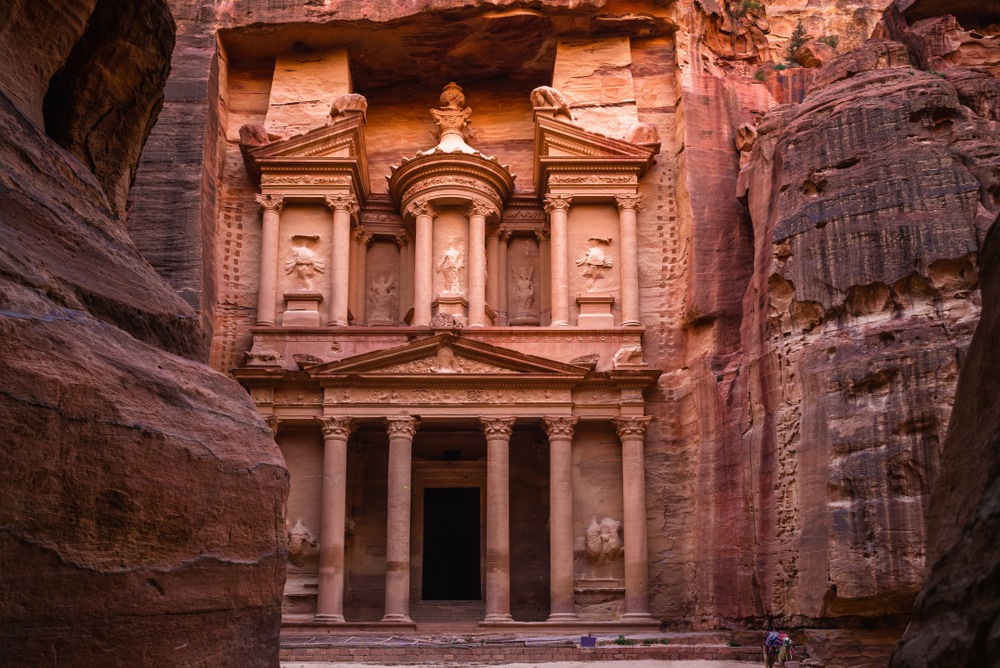
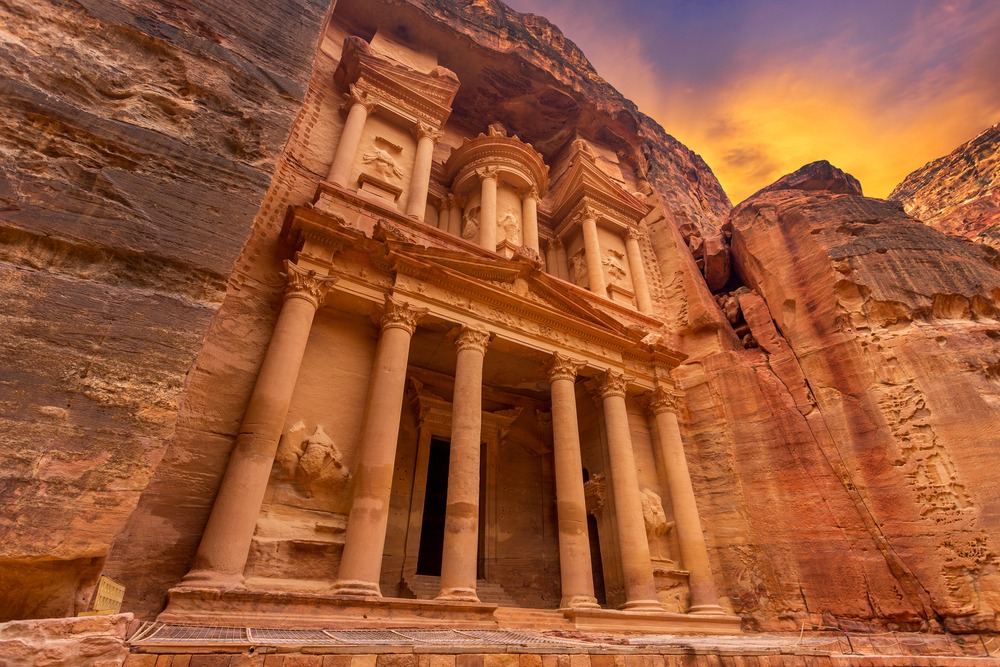
The Deir is taller (43 m high versus 40 m for Al Khazneh) but its façade is less ornate. It sits elevated and set apart, whereas Al Khazneh appears immediately upon exiting the Sîq.
No, the trail is marked and well-trodden. A guide remains valuable for the site's historical and archaeological context, but the ascent itself can be done independently.
Yes, but it requires a full, packed day. It is more comfortable to plan two days on site to combine The Deir, Al Khazneh, the High Place of Sacrifice, and the main royal tombs without rushing.
Petra in your Jordan journey
The Deir fits naturally into an itinerary blending archaeological sites, the Wadi Rum desert, and the Dead Sea. To plan your stay, consult our tailor-made Jordan trips.
Interested in this visit?
We can include it in your personalised itinerary.