Petra
Petra
Khazneh, Siq, Ad-Deir, Nabataean theatre: your complete guide to visiting Petra, the rose-colored city of Jordan and UNESCO World Heritage site.
In the desert valley of Edom, between the Dead Sea and the Gulf of Aqaba, stands Petra, the glorious city of the Nabataeans. The solitude of the place, temples with imposing columns, and necropolises carved into rose-colored sandstone evoke serenity while evoking the opulence and grandeur of a bygone empire.
Petra, an archaeological site inscribed in UNESCO World Heritage
Your journey through Jordan will remain incomplete if you miss Petra, the ancient capital of the Nabataeans. Twelve hundred years before the Christian era, the Edomites established their settlement in the fertile valley of Petra. The city experienced unprecedented urban development during the Nabataean era, when they dominated the caravan routes between Egypt, southern Arabia, and the Mediterranean. This Bedouin tribe distinguished itself through its opulent architecture carved directly from rock. Who would not admire the finely worked ruined tombs? What visitor would not delight in contemplating temples adorned with capitals, friezes, and Corinthian columns? Who could resist the charm of Khazneh, the exquisite royal mausoleum that Swiss geographer Louis Burckhardt regarded as "one of the most elegant relics of antiquity"? Blending Aramaic and Nabataean ruins with influences from Roman, Hellenistic, and Byzantine art, the city of Petra is a world-renowned archaeological site. Be sure to stop here during your next visit to southern Jordan.
Chronicles of the Past
Before becoming the cradle of Nabataean civilization, Petra was the land of Edom, a people of nomads who pitched their tents in the mountainous heights of Umm el-Biyara. This was around the seventh century BCE. Identified in biblical writings as descendants of Esau, the Edomites distinguished themselves through the quality of their textiles and pottery. This expertise was further refined by the Nabataeans, who drove the Edomites from their land a century later to establish a powerful capital.
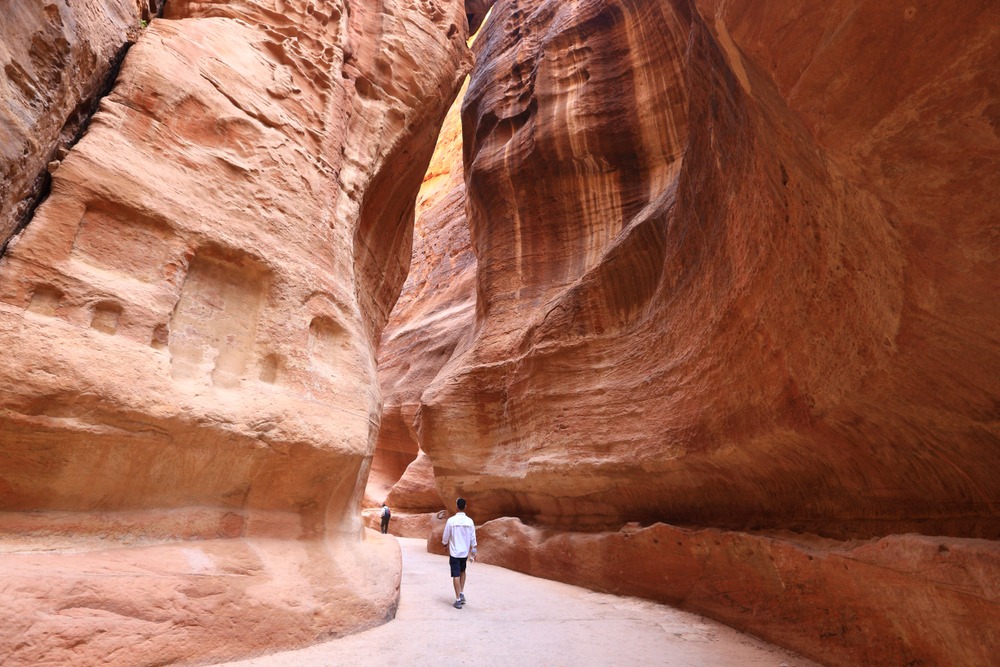
The Nabataeans were a Bedouin tribe originally from the Arabian Peninsula. They transported caravans of incense, myrrh, and other aromatics between Arabia Felix, Egypt, and the Mediterranean. Their merchandise also included pearls, ivory, silk fabrics—the luxury goods of the era. Petra's location at a crossroads was the strategic reason the Nabataeans conquered the city. Beyond commercial ambitions came the choice of security: Petra was perfectly protected behind mountain foothills, lined with gorges and cliffs, and water sources were abundant. Access to the site is possible only through the Siq, a narrow canyon 1,500 meters long and 200 meters deep.
With the arrival of the Nabataeans, Petra's face transformed profoundly. Grandiose temples emerged, carved into rock faces; a row of tombs with richly sculpted facades in the style of Alexandria was constructed; terraced gardens and stelae lined the streets, and stone fortifications protected the borders. Petra became the urban, commercial, and religious center of the kingdom. To ensure continuous access to fresh water and irrigate crops in this desert climate, the Nabataeans engineered canals, cisterns, and rainwater retention dams. The influence of Hellenistic art gave a new impetus to architectural achievements. The repetition of stuccos, architraves, and sculptures of Greek deities was the norm.
Nabataean civilization survived the Roman period; the semi-circular theatre uncovered in 1961 attests to this. Over the centuries, earthquakes and shifts in trade routes undermined Petra's commercial empire. The city lost its importance during the Byzantine period before disappearing entirely in the early Middle Ages.
Today
Petra's reputation is well established. Its inscription as a UNESCO World Heritage site is entirely justified. While tourists are eager to visit, the site's visitation has experienced fluctuations due to political unrest in neighboring countries. Yet within Petra itself, insecurity is not a concern. The people show great respect for visitors.
What to See and Visit
Welcome to the Rose-colored Sandstone City, as Jordanians affectionately call Petra! This name refers to the color of the stones in which the buildings were carved. As you wander from ruin to ruin, you will gain a measure of Nabataean wealth and the grandiose ambitions of powerful families. No fewer than 3,000 rock-cut ruins are recorded on the site, including 600 tombs.
Khazneh, the Pharaoh's Treasury
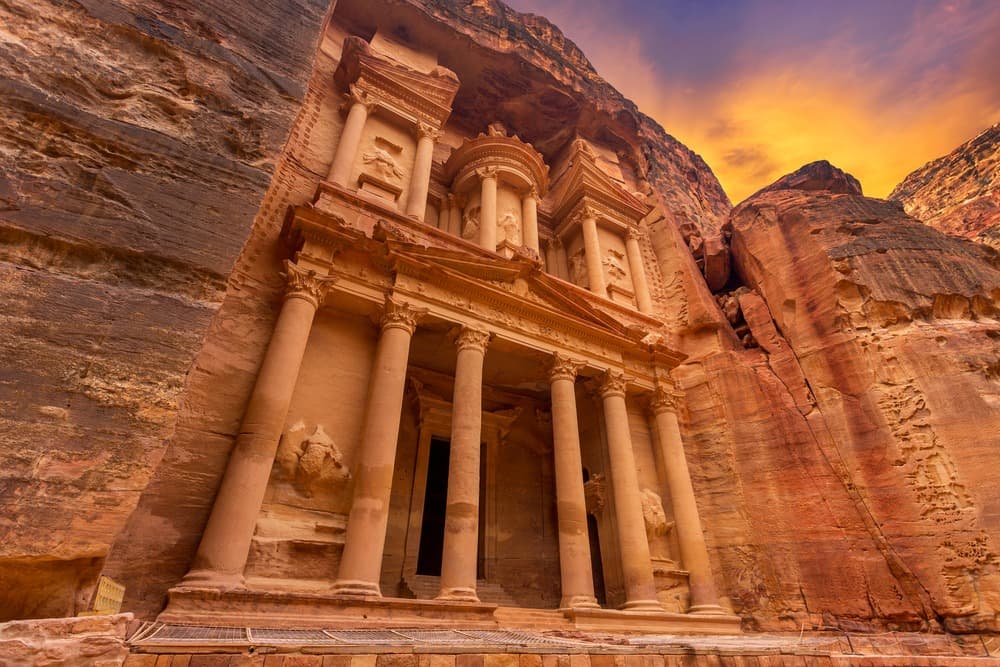
Facing the Siq stands Khazneh, Petra's most famous and evocative monument. This imposing structure was originally a temple before being repurposed as a sepulcher. It may contain the remains of a king or queen. The façade, sculpted from red and rose-colored sandstone cliffs, delights with its porticoes and columns adorned with mythological figures: Castor and Pollux riding a horse, the Winged Victory, warrior Amazons, the goddess Isis holding a cornucopia as a symbol of fertility… The architectural genius of Alexandria and the classicism of ancient Greece merge in this first-century BCE mausoleum, also known as the "Treasury."
The Theatre
Descending to the valley floor, you will reach a magnificent theatre composed of three tiers of seats. Many mistakenly consider it a Roman construction, though it is the work of the Nabataeans. More than 3,000 spectators gathered here during major ceremonies.
Ad-Deir, the Monastery
It is difficult to imagine that two thousand years ago, the faithful shared a sacrificial meal in this monumental 48-meter-high edifice. The sovereign to whose glory this sanctuary was erected was called Obodias II (30 to 9 BCE), whom people revered as a god on earth. Later, the Byzantines used the site as a monastery, as evidenced by crosses carved into the walls of the chamber.
Accessing the monastery requires athletic legs to climb 800 steps. It is somewhat strenuous, admittedly, but you will discover a true marvel.
The Qasr al-Bint Temple, the Palace of the Pharaoh's Daughter
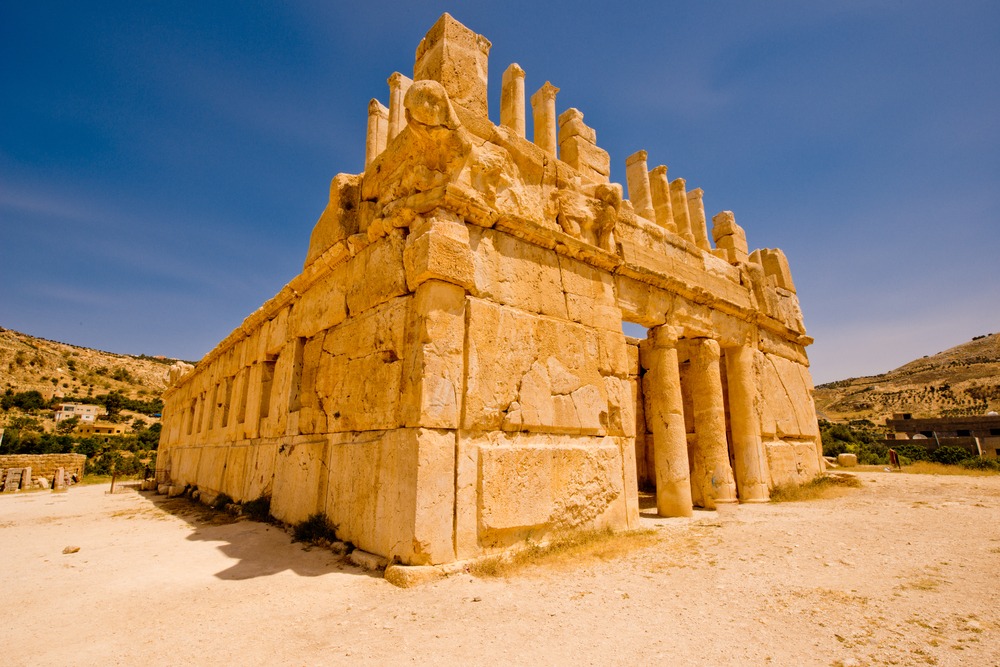
The temple of Dushares or Qasr al-Bint is Petra's most monumental structure. Its façade is four times larger than that of the Treasury and the Grand Temple. Its construction dates to around 30 CE under the reign of Aretas IV Philopatris. Next to the temple, do not miss the Columbarium.
The Winged Lions Temple
On the left side of the street, not far from the Treasury, the Winged Lions Temple is also an emblematic site of Petra. During excavations, Greek and Byzantine manuscript scrolls were unearthed on the site.
The Byzantine Church
Just steps from the previous temple, you will discover a Byzantine chapel—or what remains of it. The church was severely damaged by earthquakes, but the mosaic paving is still visible.
These are only some of Petra's notable ruins. As you explore, you will traverse fountains, pigeon houses, massive stone pillars, and an endless succession of necropolises: the Renaissance Tomb, the Soldier's Tomb, the Broken Pediment Tomb, the Lion Triclinium, and more. You will be thrilled if you are passionate about ancient civilizations. While most travelers spend only a day here, two or three days are not excessive to explore all of Petra's riches, the lost city of Jordan that Swiss explorer Burckhardt made known to the entire world.
Practical Information
Opening Hours
The Petra archaeological site is open daily from 6 a.m. to 6 p.m. in summer and closes two hours earlier in winter.
Entry Fees
To encourage longer stays, entrance fees are reduced for travelers who have made a hotel or guesthouse reservation. They receive a 40 JOD discount after presenting an accommodation certificate, while day-trippers must pay the full fee of 90 JOD. If they stay for two or three days on-site, they will pay only 55 JOD and 60 JOD respectively.
When to Visit?
Petra is primarily visited from April to November. If you fear intense heat, choose your dates in spring or autumn.
The simplest approach is to find a hotel near Petra and arrange for a shuttle service. Most star-rated hotels offer this. Otherwise, you can flag down a taxi in Wadi Musa, which will take you to Petra's entrance for 4 or 5 JOD. The price is relatively high, as drivers capitalize on the site's reputation. Do not hesitate to negotiate before getting in.
Nearby Attractions
Archaeological treasures are not limited to Petra's grounds. In the surrounding area, other sites worth visiting include the Sanctuary of the Prophet Aaron, Mount Nebo, and the Mosque of Moses, the place where Moses struck the rock, at the Lord's command, to bring forth water.
Attractions in Petra
Le Sîq
Long de 1 200 mètres et bordé de falaises de grès rose hautes de 80 mètres, le Sîq constitue l'accès principal à la cité nabatéenne de Pétra.
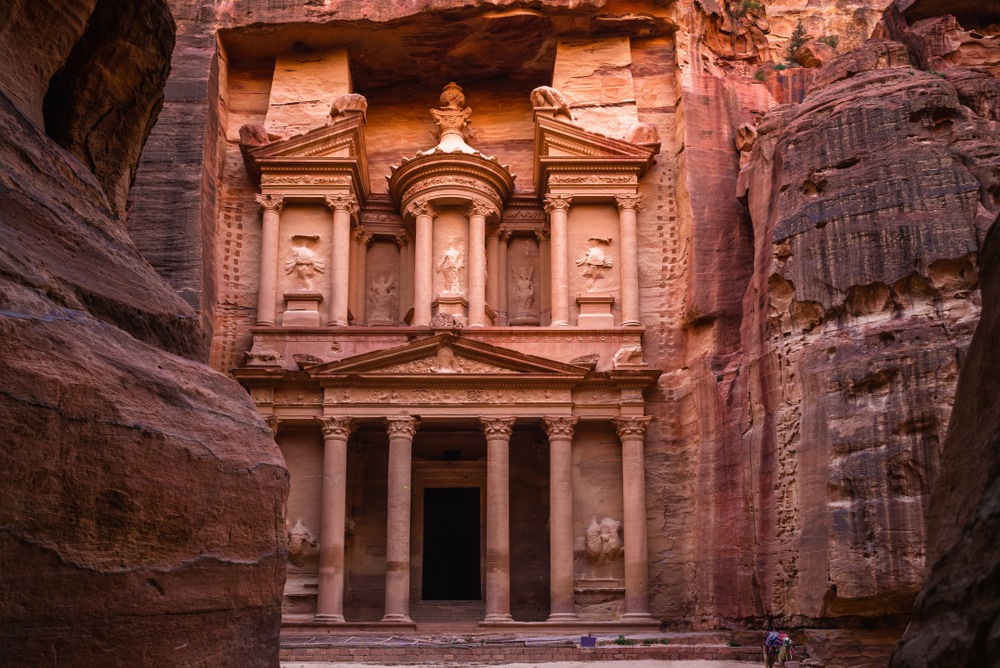
Al Khazneh
Façade nabatéenne taillée dans le grès rose à la sortie du Siq, Al Khazneh est le monument emblématique de Petra. Guide d'histoire, d'observation et de visite.
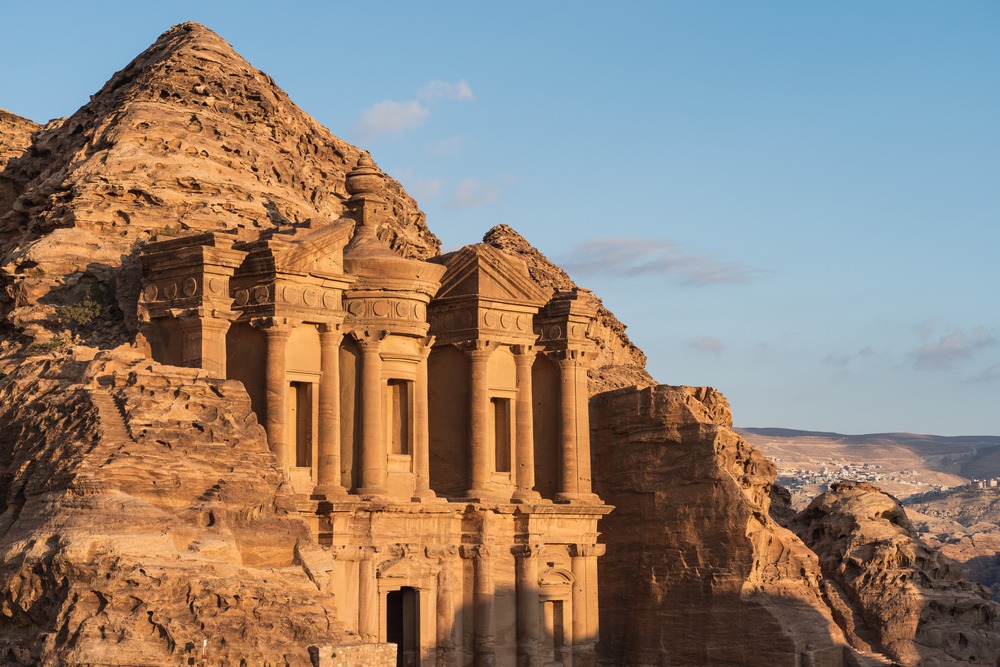
Le Deir
Le plus grand monument taillé de Pétra : 43 m de haut, 800 marches d'ascension, façade nabatéenne du Ier siècle reconvertie en monastère byzantin.
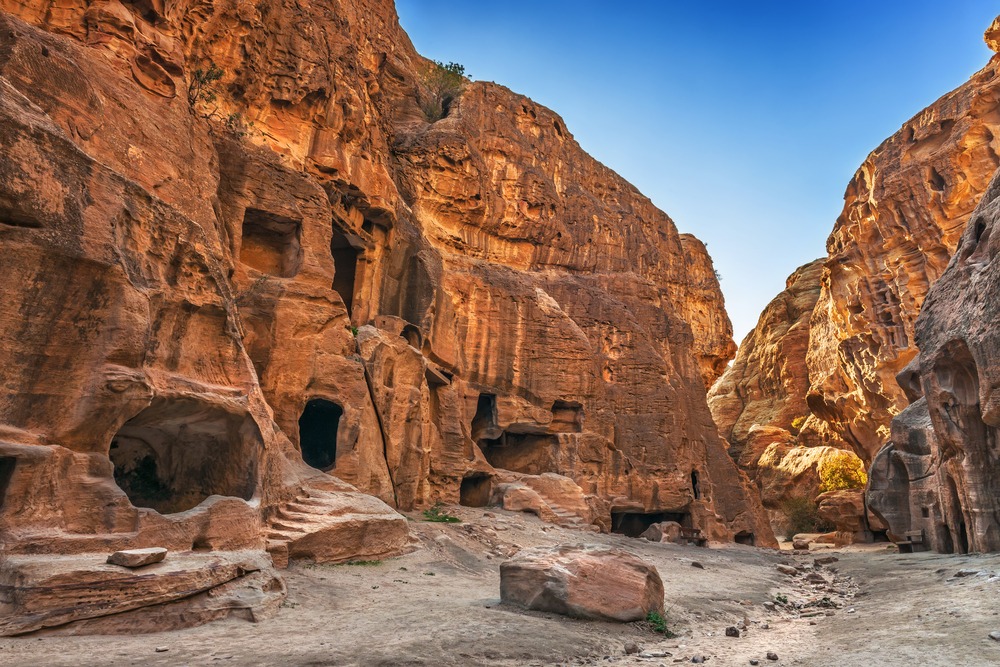
Petite Petra (Siq al
À 8 km de Petra, Siq al-Barid — la Petite Petra — révèle le visage marchand et résidentiel des Nabatéens, avec ses tricliniums et la Painted House.
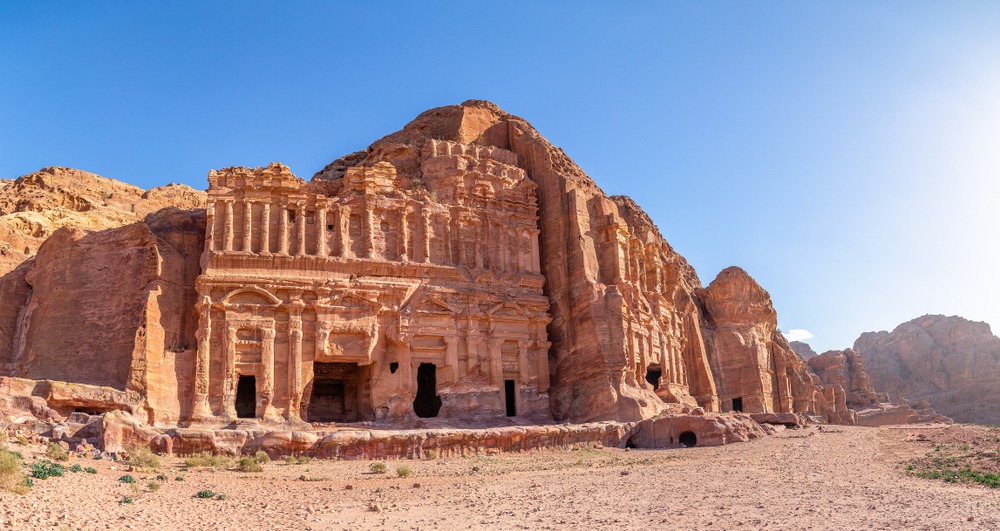
Tombes royales
Au pied du mont al-Khabta à Petra, quatre tombeaux nabatéens sculptés dans la falaise témoignent de la fin du royaume et de son dialogue avec Rome.
Want to discover this destination?
Our local advisors design your tailor-made trip.