The Sîq
The Sîq
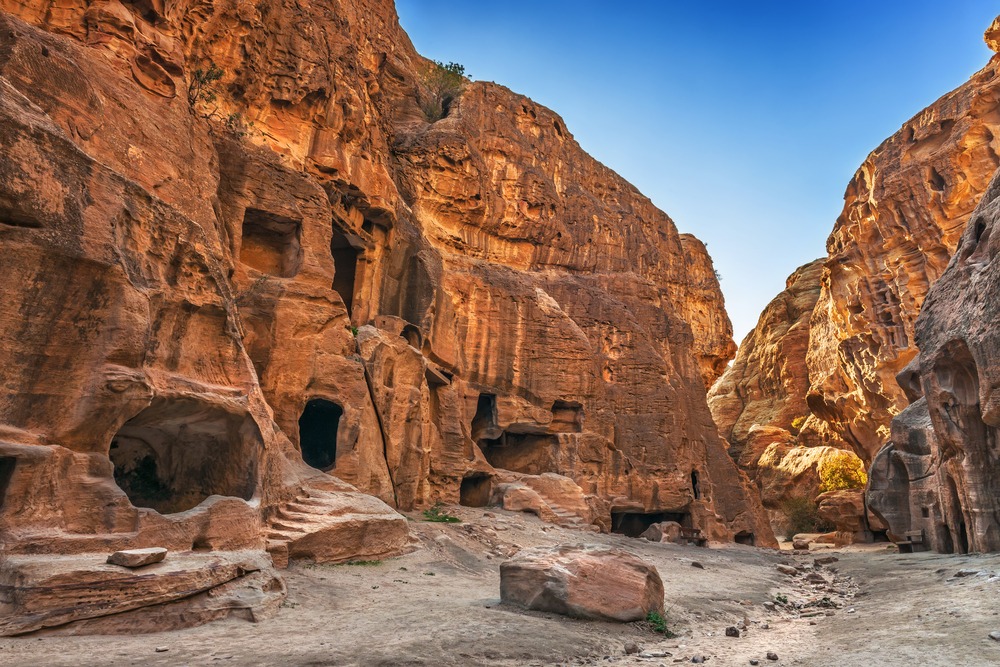
Stretching 1,200 meters and bordered by rose-red sandstone cliffs towering up to 80 meters, the Sîq serves as the principal gateway to the Nabatean city of Petra.
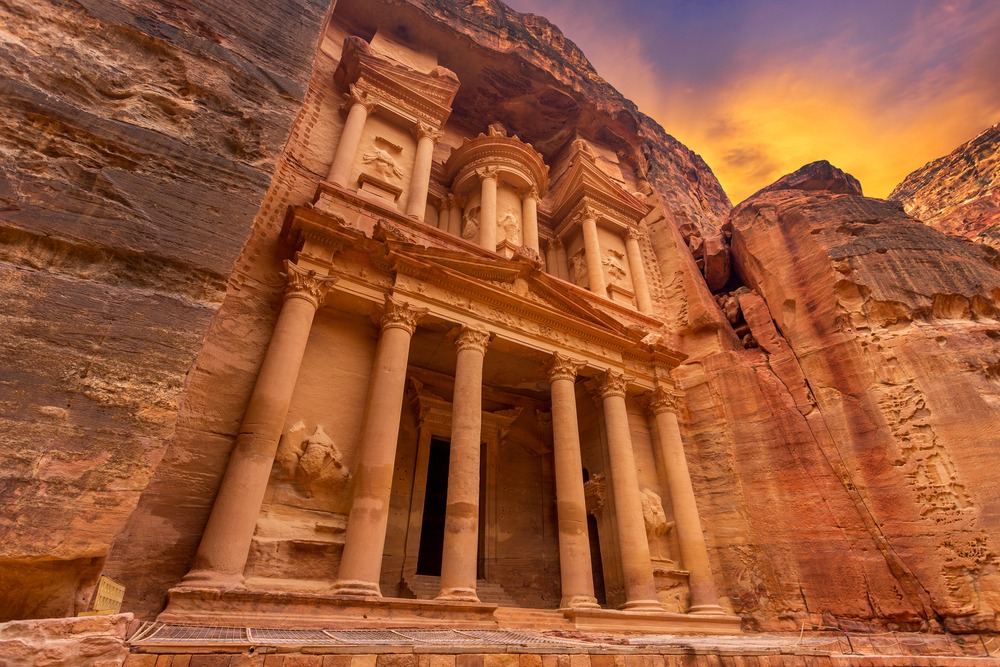
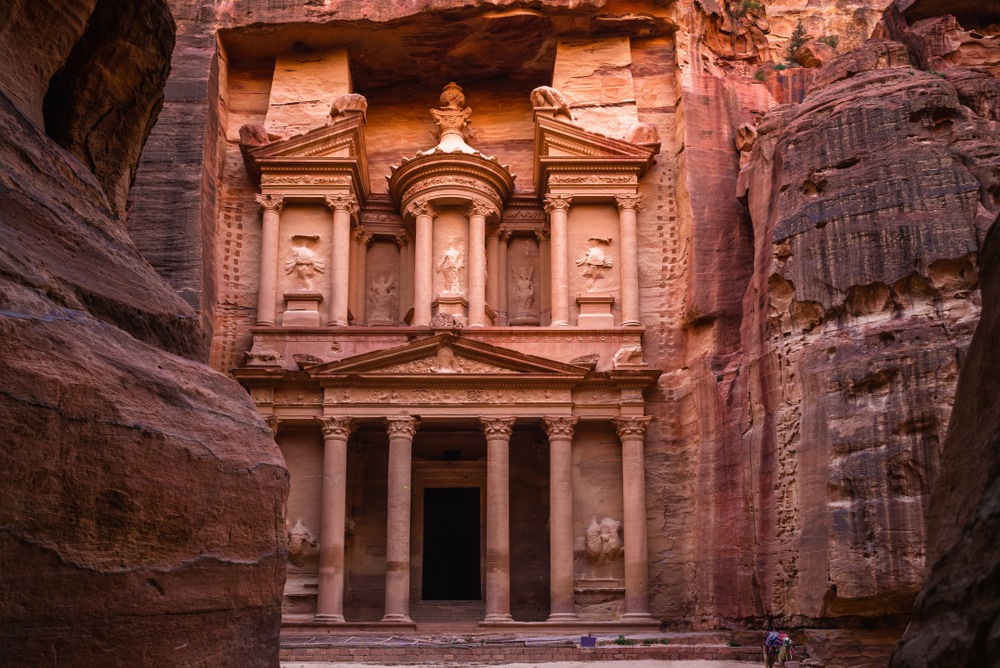
The Sîq, a name meaning "gorge" in Arabic, is the main entrance to Petra. Approximately 1,200 meters long and 3 to 12 meters wide, this natural corridor winds between rose and reddish sandstone cliffs that in places reach heights of 80 meters. It opens onto Al Khazneh, the famous Treasury carved from the rock face.
Why visit the Sîq
The Sîq is far more than a simple access route: it forms an integral part of the grand design the Nabateans created for their capital. The gorge, partly natural and partly engineered, bears witness to the hydraulic mastery of a civilization that conquered water management in desert terrain. The walk through takes approximately 30 to 45 minutes, marked by carved channels, votive niches, and sculpted figures that herald the splendor of the city, designated a UNESCO World Heritage Site.
History and Nabatean origins
Petra was founded by the Nabateans, an Arab trading people, around the 4th–3rd century BCE. The city rapidly established itself as a vital hub on the caravan trade routes, positioned at the crossroads connecting Egypt, Syria, and the Mediterranean. Arabian incense, spices, and silks passed through here before reaching Mediterranean ports.
The Sîq itself resulted from a tectonic fracture widened by erosion. The Nabateans engineered it to manage water flow and accommodate their water supply network. The nearest water source, the Wadi Musa valley, lies several kilometers away: conveying water to the city represented a major technical challenge, accomplished through a sophisticated system of channels, cisterns, and dams.
What to observe along the route
Walking through the Sîq reveals several noteworthy features:
- The entrance dam: positioned upstream in the Sîq, it was designed to divert violent wadi floods and prevent inundation of the gorge. Traces of ancient dams remain visible in the first hundred meters.
- The water channels: carved into the walls at shoulder height, they transported fresh water from Wadi Musa valley to the heart of Petra.
- Niches and sculpted figures: on the left side of the gorge, above the channels, mythological figures and betyles (sacred stones) connected to Nabatean worship can be discerned. Water, perceived as a divine gift, was the subject of rituals honoring local deities.
- The carved caravan: a partially eroded relief depicts a figure leading camels, a reminder of Petra's commercial significance.
- The opening to Al Khazneh: as the Sîq exits, the rock face opens onto the façade of the Treasury, a monumental tomb carved from sandstone, the crescendo of the traverse.
Practical information
Access to the Sîq begins at Petra's visitor center in Wadi Musa. The site entrance ticket covers the entire archaeological zone, including the Sîq. Various options are available: self-guided exploration or with an official guide. Plan for a full day exploring all of Petra, with 30 to 45 minutes needed to traverse the Sîq one direction.
The route is relatively flat, with sandy and rocky underfoot. Horse-drawn carriages circulate through the gorge; these are not recommended for animal welfare and comfort reasons. Bring sturdy hiking shoes, plenty of water, a hat, and sun protection.
When to visit the Sîq
The finest periods are spring (March to May) and autumn (September to November), with mild temperatures and soft light that enhances the rose tones of the sandstone. July and August are challenging due to intense heat, particularly midday. Winter (December–February) remains feasible but can bring rainy spells: during storms, the Sîq is closed due to real risk of flash flooding.
For favorable lighting and fewer visitors, aim for early morning opening or late afternoon hours.
How to get there
The Sîq is located in Wadi Musa, approximately 240 kilometers south of Amman via the Desert Highway, a 3–4 hour drive. From Aqaba, allow roughly 2 hours. Daily buses connect major cities to Wadi Musa. The visitor center, the mandatory starting point, lies approximately 800 meters from the Sîq entrance, a distance easily covered on foot.
Nearby attractions
The Sîq is merely the gateway to an extensive archaeological site:
- Al Khazneh (the Treasury), immediately upon exiting the Sîq.
- The royal tombs and Nabatean theater, further along the main path.
- The Deir (the Monastery), accessible after climbing approximately 800 steps.
In Jordan, several other sites complement a Petra visit: the Ajlun fortress to the north, the Temple of Hercules in Amman, or the Church of Saint George in Madaba.
Planning your journey
To incorporate the Sîq and Petra into a complete itinerary, explore our Jordan journeys crafted on your behalf by our local specialists.
Interested in this visit?
We can include it in your personalised itinerary.