Karak Castle
Karak Castle
12th-century Crusader fortress overlooking Al-Karak on the King's Highway. Military architecture blending Latin, Arab and Byzantine influences.
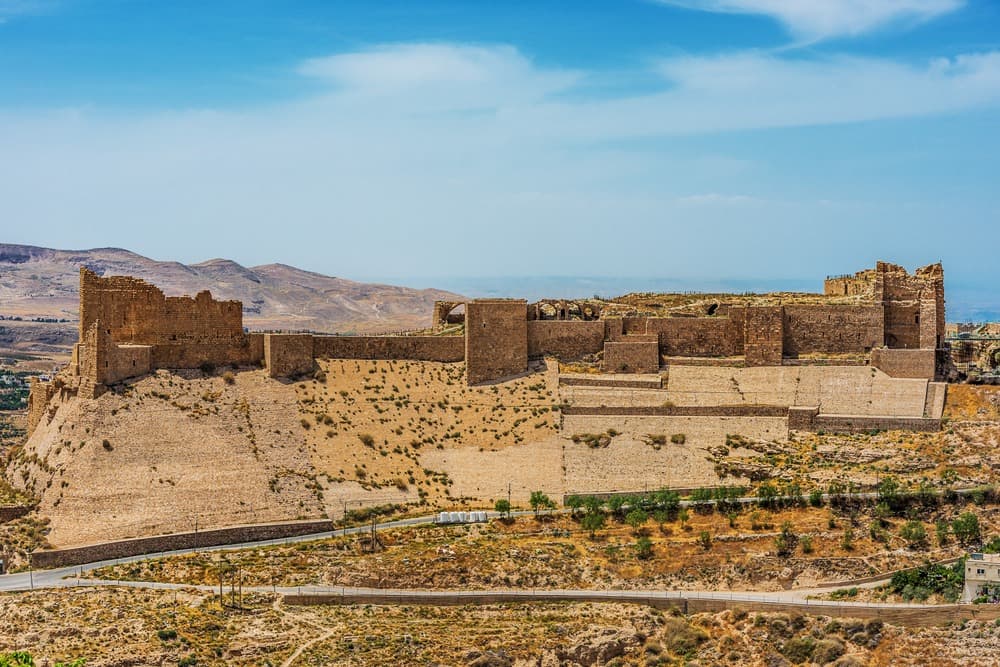
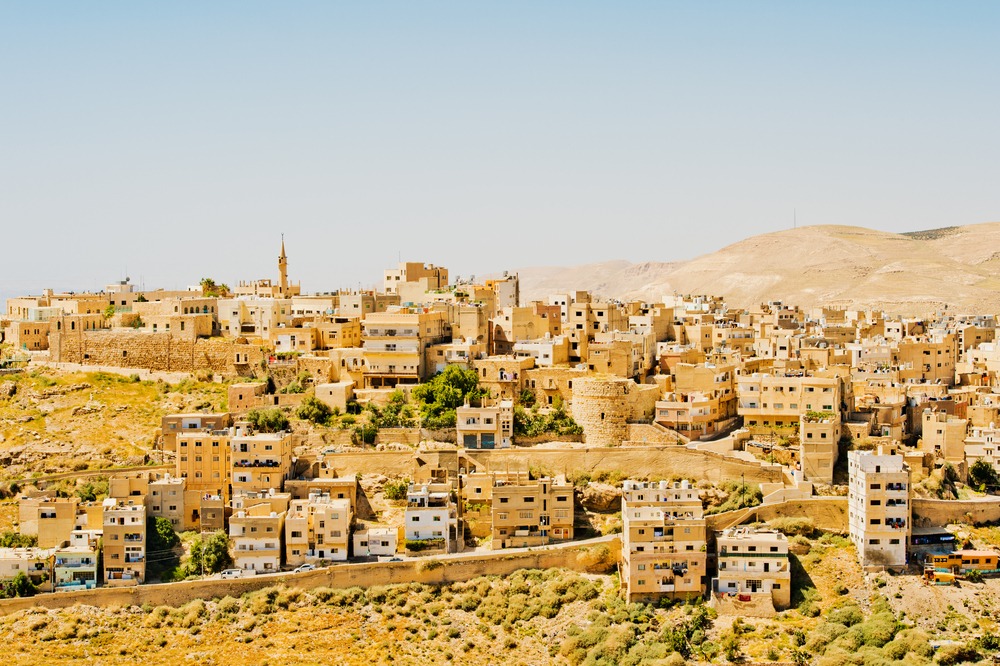
Karak Castle dominates the town of Al-Karak, perched on a rocky outcrop along the King's Highway, approximately 120 km south of Amman. This 12th-century Crusader fortress ranks among the best-preserved strongholds of the Near East and tells more than eight centuries of struggle between Latins, Ayyubids and Mamluks.
Why visit Karak Castle
Karak is not merely a stone backdrop: it was one of the strategic locks of the Lordship of Outre-Jourdain, theater of confrontations between Reynald of Châtillon and Saladin. Visitors will find military architecture combining Western, Arab and Byzantine influences, well-preserved underground galleries and sweeping views across the highlands descending to the Dead Sea. The site remains off the most crowded circuits, making it a more contemplative stop than Petra or Jerash.
Note: UNESCO has declined to inscribe the castle on the World Heritage list due to its state of preservation and the density of historic castles in Jordan. This detracts nothing from its historical significance, but explains why certain areas are poorly marked.
History of Karak Castle
The site was inhabited well before the arrival of the Crusaders. Biblical literature evokes an Israelite attack against the kingdom of Kir Moab (or Kir Heres), repelled after King Mesha, according to the account, sacrificed his eldest son. Under Byzantine rule, Karak was the seat of a bishopric.
The current fortress was built in the 1140s under the patronage of Pagan the Butler, administrator of the Lordship of Outre-Jourdain. It then passed to Reynald of Châtillon, Prince of Antioch, who distinguished himself through raids against Arab caravans and pilgrims en route to Mecca. These attacks provoked Saladin's retaliation, who besieged Karak in 1183. The prince then lit a distress fire atop the keep, visible from great distance; alerted, the sovereign of Jerusalem sent troops and forced the besiegers to lift the siege.
The fortress eventually fell to Saladin in 1187, after several assaults. Under the Mamluks, between 1263 and 1517, Dhaher Baibars equipped the castle with a keep to the north and reinforced the defensive works. Local inhabitants still refer to the site today as "Crac of the Desert" or "Crac of the Moabites."
What to see on site
The entrance and upper courtyard
Access to the complex is through an Ottoman-era gate, at the end of a wooden bridge. The upper courtyard groups together the key elements of garrison life: aristocratic residence, refectory, barracks, Christian church and Mamluk mosque. This superposition of religious and military functions illustrates the successive changes of hands the castle experienced.
The underground galleries
Designed to store weapons, arrows and provisions, the underground galleries are among the best-preserved sections. They also house a small archaeological museum presenting objects discovered on the site and in the region. Bring a torch or use your phone's light: lighting remains basic.
The ramparts and views
From the summit, views extend across the valley to the highlands descending toward the Dead Sea. This was an obvious military advantage: watchers could see enemy columns approaching from great distance. Information panels mark the route, and local guides offer their services at the entrance to deepen your knowledge of the castle's military and architectural history.
Practical information
- Duration: allow 1.5 to 2 hours for a complete tour, longer if you explore the galleries in detail.
- Admission: modest entry fee for foreign visitors; the site is included in the Jordan Pass, worthwhile if you're also visiting Petra and Jerash.
- Hours: open daily during daytime, with shorter hours in winter and during Ramadan. Check locally before visiting.
- Equipment: closed-toe shoes (uneven ground), water, hat in summer, torch for underground sections.
- Parking: free parking is available near the entrance.
When to visit
Karak sits on an exposed plateau: in summer, temperatures rise sharply and shade is scarce on the ramparts. The most comfortable seasons are spring (March-May) and autumn (September-November), with temperate days and soft light, ideal for photography. Winter can be cool and windy, sometimes rainy, but offers fewer crowds. For summer visits, favor the morning.
How to get there
The castle overlooks the town of Karak, on the King's Highway, approximately 120 km south of Amman. Several options:
- By car: the most scenic route from Amman or the Dead Sea, allow 2 to 3 hours depending on your itinerary. The Desert Highway is faster but less interesting.
- By bus: regular connections link Karak to Amman and Aqaba. Depart early: departures become rare after 10am.
- Organized tour: Karak often features in itineraries between Amman, the Dead Sea and Petra.
Nearby attractions
Jordan has several other historic sites accessible from Karak or en route:
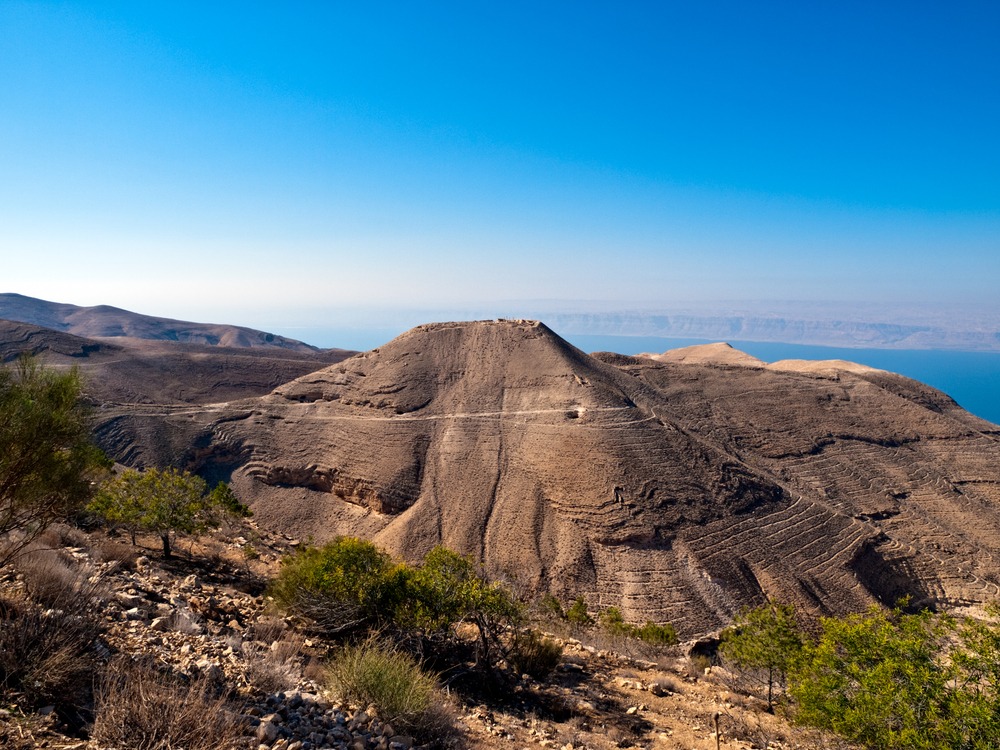
- Machaerus fortress, another historic stronghold north of Karak, linked to the death of John the Baptist.
- Ajlun castle, an Ayyubid citadel built facing the Crusaders.
- The Siq and Al Khazneh at Petra, natural stops on any extended itinerary along the King's Highway.
Frequently asked questions
Frequently asked questions
Allow approximately 1.5 to 2 hours for the complete visit, including the upper courtyard, ramparts and underground galleries with the archaeological museum.
Yes. If you're visiting multiple major sites such as Petra or Jerash, the Jordan Pass is generally more economical than purchasing individual tickets.
Both are contemporary Crusader fortresses, but Krac des Chevaliers, better preserved, is a UNESCO World Heritage site. Karak, more modest, nonetheless retains a complete military plan and remarkable underground galleries.
Accessibility remains limited: stairs, uneven ground, narrow passages in the galleries. However, part of the upper courtyard can be traversed.
Yes, it's one of the classic stops on the King's Highway. Plan a full day for the journey and visit, with an early departure from Amman.
Plan your trip
To incorporate Karak into a broader itinerary combining Crusader castles, biblical sites and deserts, consult our suggestions for customized travel in Jordan.
Interested in this visit?
We can include it in your personalised itinerary.