Diving in the Red Sea in Jordan: our complete guide
Though Jordan's coastline is modest in length, it offers magnificent diving conditions.
Though Jordan's coastline is modest in length, it offers magnificent diving conditions. Between the coral reefs, impressive wrecks, and the remarkable world of underwater life, the waters of Jordan hold countless surprises for all divers, whether beginners or experienced.
Where to dive? When? What will you see? Under what conditions? Discover our complete guide to diving in the Red Sea in Jordan.
Aqaba Marine Park, a diving destination to discover in Jordan

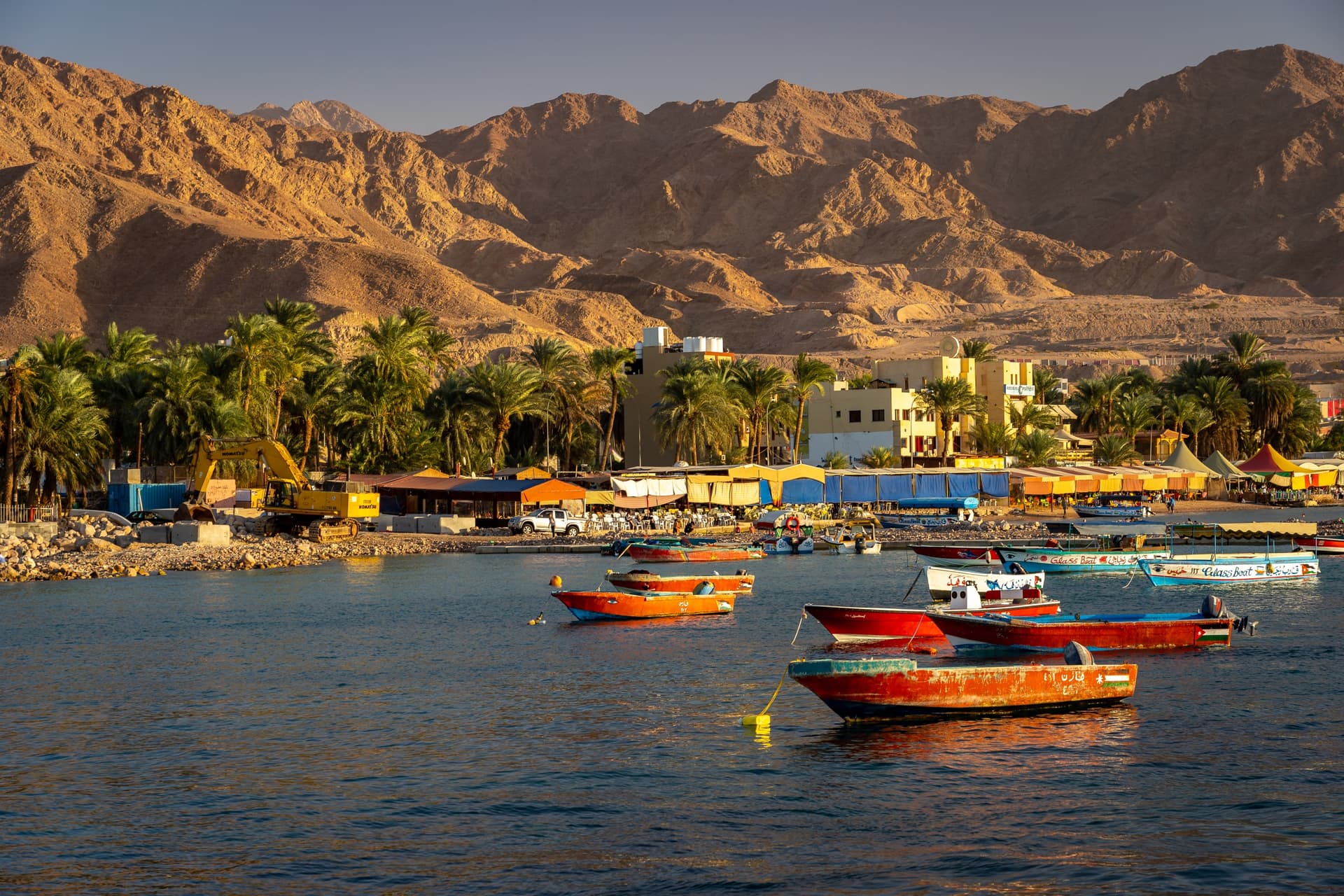
In Jordan, diving sites are located in the south of the country, near the city of Aqaba. It is Jordan's southernmost point, where the tropical waters of the Red Sea shelter coral reefs among the most spectacular in the world.
The total coastline is just 27 km long but is bordered by a marine park hosting pristine corals and abundant marine life. In total, there are around twenty diving sites to explore around Aqaba.
Though the diving sites are less dramatic than those of its neighboring country, Egypt, they remain nonetheless impressive and, above all, have the advantage of being far less crowded.
What to see while diving in Aqaba Marine Park?

Flora and Fauna
The waters of the Gulf of Aqaba are home to magnificent hard and soft corals. You can notably see rainbow-colored coral bommies, black corals, elephant ears, seagrass beds, anemones... The presence of wrecks, converted into artificial reefs, particularly allows corals to thrive. Despite climate change, the corals here are well-preserved and in good health.
As for fauna, Aqaba Marine Park is home to numerous colorful fish. You can see, among others:
many groupers,
lionfish,
Napoleon wrasse,
parrotfish,
toadfish,
anthias,
fusiliers,
jacks,
barracudas,
sergeant majors
shrimp,
sea turtles,
moray eels,
garden eels,
eagle rays and many more...
Aqaba's diving sites are also a paradise for nudibranchs. Though there are fewer 'big' fish than in Egypt, it is not uncommon to encounter sharks as well as manta rays at certain sites.
Wrecks
Beyond the flora and fauna, Aqaba Marine Park is home to several wrecks, most of which are situated at shallow depths. Being easily accessible from shore, they do not require advanced diving skills to explore.
Among the most beautiful wrecks to discover while diving in Aqaba, you can mention:
The Cedar Price wreck: This is a Spanish vessel considered one of the finest wrecks in the Red Sea and one of the most renowned in the world.
The Taiyong wreck: a ship that served as a platform for unloading cargo.
The Tank M42 Duster wreck: this former armored vehicle from the Jordanian military is easily accessible and can even be seen while snorkeling since it sits at only 6 m depth and 20 m from shore.
The Hercules C-130 aircraft wreck: this is the most recent wreck. It is an enormous fuselage with impressive dimensions: 30 meters long, 40 meters wingspan, and 12 meters tall!
The Al Shourouk wreck: this ship wreck is the deepest (between 38 and 60 m depth). It is therefore reserved for technical divers.
What diving conditions should you expect in Aqaba?
 Water Temperature
The average water temperature in Jordan hovers around 26°C in summer and 18°C in winter. For those who feel the cold, it is therefore better to go in summer, though it is always possible to dive in cool water with appropriate wetsuits.
Visibility
Visibility is good year-round, between 15 and 50 meters with an average visibility of 30 m.
Currents
The waters of Jordan are very calm. Marine currents are virtually non-existent. That said, at depth, it is not impossible to encounter stronger currents.
Depth
Most of Aqaba's diving sites are situated between 0 to 40 meters for recreational divers. For technical divers, it is possible to descend to 150 m depth! The current depth record in technical diving is 167 m.
Difficulty Level
Jordan's diving sites have the advantage of being accessible to all diving levels: whether you are an experienced diver, a technical diver, or a beginner.
Note that for beginner divers and discovery dives, many sites are accessible directly from shore and do not require heading out into open water by boat.
What is the best time to dive in Aqaba?

It is possible to dive in Jordan year-round. That said, the best time to dive in Aqaba stretches from April to November with a preference for the months of September and October and the months of April and May. Indeed, during these times of year, marine diversity is more abundant, water temperature remains pleasant (around 24°C), and visibility is at its best.
Frequently asked questions
Not necessarily. The diving sites in Aqaba are accessible to all levels. Beginners and those wishing to do an introductory dive can dive directly from shore without a boat trip. For recreational divers, an Open Water level (PADI) or equivalent is sufficient for most sites. Deep wrecks such as the Al Shourouk (38-60 m) are reserved for technical divers.
Diving is possible year-round in Aqaba. The best period runs from April to November, with a preference for the months of April, May, September, and October. During these months, marine diversity is at its maximum, water temperature is around 24°C, and visibility is excellent, reaching up to 50 meters.
Aqaba Marine Park is home to several remarkable wrecks. The most famous is the Cedar Price, considered one of the finest Red Sea wrecks. The Hercules C-130 aircraft wreck impresses with its dimensions (30 m long, 40 m wingspan). The M42 Duster Tank, accessible while snorkeling at just 6 m depth, is ideal for beginners. The Al Shourouk (38-60 m) is reserved for technical divers.
Yes, diving in Aqaba is considered very safe. Marine currents are virtually non-existent at the surface and very weak at most sites. Stronger currents may exceptionally be encountered at depth. Excellent visibility (15 to 50 m on average) also facilitates underwater navigation.
Yes, though 'big' fish are less frequent than in Egypt, it is possible to encounter sharks and manta rays at certain sites in Aqaba Marine Park. Sea turtles are also regularly observable. Biodiversity also includes groupers, barracudas, moray eels, eagle rays, and a wide variety of nudibranchs.