Our Top 5 Jordanian Wadis
Almost entirely covered by desert, Jordan is home to numerous wadis. Translated from Arabic as 'valleys', wadis can be arid or contain watercourses offering extraordinary ecosystems.
Almost entirely covered by desert, Jordan is home to numerous wadis. Translated from Arabic as 'valleys', wadis can be arid or contain watercourses offering extraordinary ecosystems. To get an idea of the fascinating landscapes that compose them, we take you on a discovery of the 5 most beautiful wadis in Jordan.
1. Wadi Rum, the country's most beautiful desert
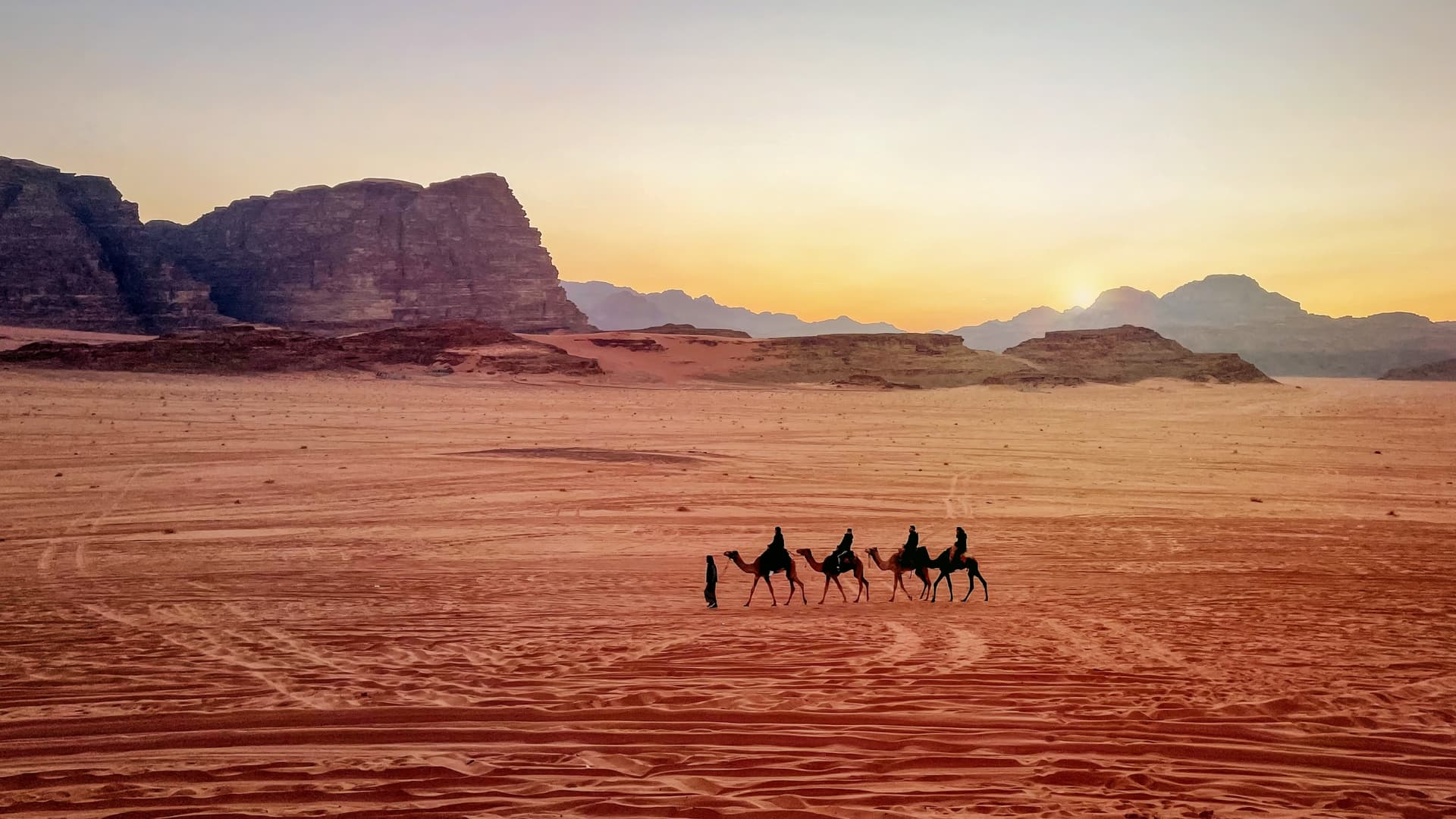
Located at the southern tip of the country, 2 hours from Petra, Wadi Rum is considered by many to be Jordan's most beautiful desert.
Inscribed on the World Heritage List since 2011, it offers a striking natural landscape: sand dunes, caves, and sandstone and granite rock formations with colors ranging from yellow to ochre and red!
Wadi Rum is also known for being home to Jordan's highest peak: Djebel Umm ad Dami, at an altitude of 1,854 meters.
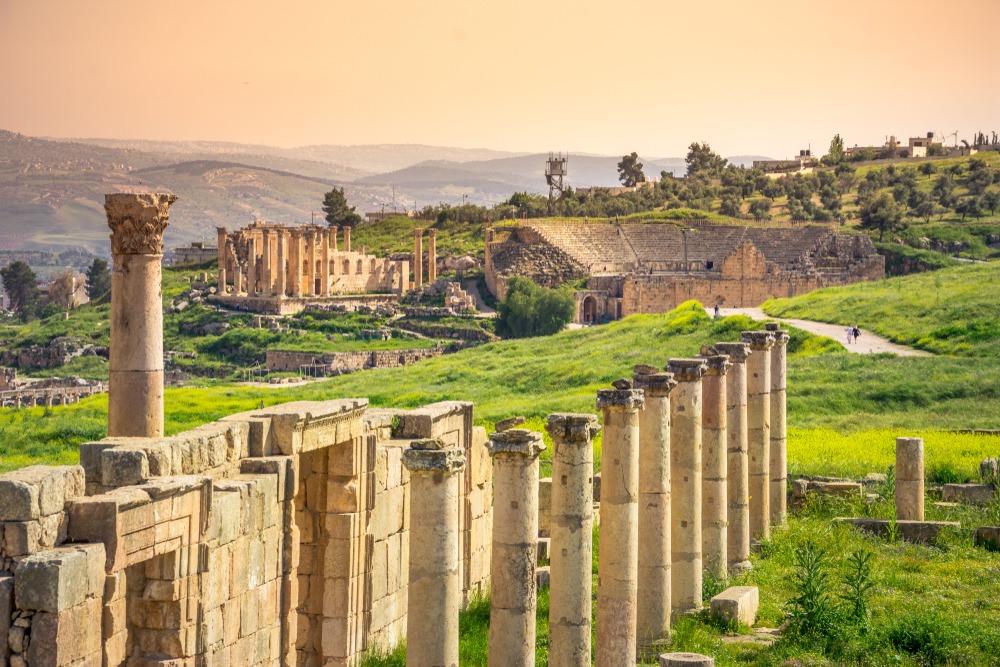
For history enthusiasts, Wadi Rum also contains numerous petroglyphs that allow you to trace the history of the site, whose human presence dates back over a thousand years. The rock engravings depict scenes of life from the era, including agriculture, village life, and hunting expeditions.
2. Wadi al-Mujib, a gem of biodiversity

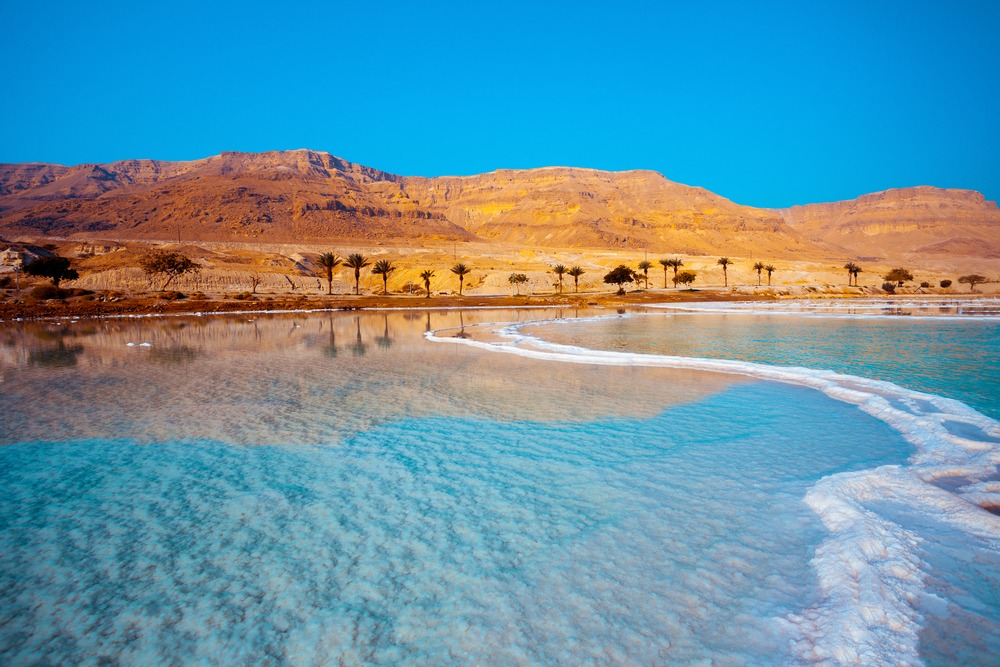
Once covered by the sea, Wadi al-Mujib today consists of steep canyons and gorges that plunge into the Dead Sea, located nearby, at 410 meters below sea level. This geological peculiarity makes the site the world's lowest nature reserve.
Due to the presence of numerous watercourses, the Mujib valley possesses extraordinary biodiversity, recognized as a "biosphere reserve" by UNESCO in 2011.
More than 400 plant species, 100 resident and migratory bird species, and numerous mammals (jackal, wild cat, red fox, ibex, Syrian wolves...) are recorded there.
To discover this treasure of biodiversity, there's nothing better than going hiking or canyoning!
3. Wadi Araba, the least visited by tourists
Wadi Araba is the arid valley that stretches between the Red Sea and the Dead Sea. Belonging to the Rift Valley, it separates Jordan from Israel. With contrasting reliefs, Wadi Araba is an open desert, without gorges or streams.
What makes it unique? Its towering sand dunes, which are rather rare in Jordan's Wadis and offer magnificent views of desert massifs.
Very little visited by tourists, it's the ideal place for desert trekking feeling almost alone in the world. You'll only encounter a few Bedouins with their herds.
To discover the desert landscapes of Wadi Araba, you can set out by 4x4 and explore nearly unexplored passages on foot. And why not plan a night under the stars in the heart of the desert?
4. Wadi Hasa, a paradise for water hiking

Wadi Al-Hasa is a canyon that descends from east to west to meet the Dead Sea near Al-Safi. Very easily accessible and only 5 to 6 km long, Wadi Al-Hasa can be explored in one or two days.
It's a paradise for water hiking. Visitors discover the beauty of the place with their feet in the water, enjoy a few swimming breaks in magnificent waterfalls, and take in the sublime colored landscapes composed of small tunnels and rocky outcroppings.
As a little note: Wadi Al-Hasa is said to be mentioned in the Old Testament under its ancient name: the Zered. It is believed to have been one of the stages of the Children of Israel.
5. Wadi Jadid, discovering archaeological treasures
History lovers, Wadi Jadid is for you! And indeed, archaeological treasures are found there, including the largest dolmens in Jordan, which despite the region's earthquakes, are still, in some cases, very well preserved.
Located about 10 km south of Madaba, near the village of Al Fiha, the site is characterized by a rocky valley where about forty dolmens dating from 5,000 to 3,000 BC can be found. These thus testify to human presence between the Neolithic period and the Bronze Age.
Beyond the dolmens, there are also alignments of monoliths, menhirs, and cavities carved into rock slabs discovered in the desert.
For the locals and Bedouins, the dolmens are believed to be the homes of ghosts and other Djinns, hence the name given to the place by the inhabitants: "Beit Al Ghula,