Dana and the Eastern Desert
From juniper forest at 1,500 metres to Umayyad frescoes in the eastern desert, two Jordans of the margins that our team combines into one coherent crossing.
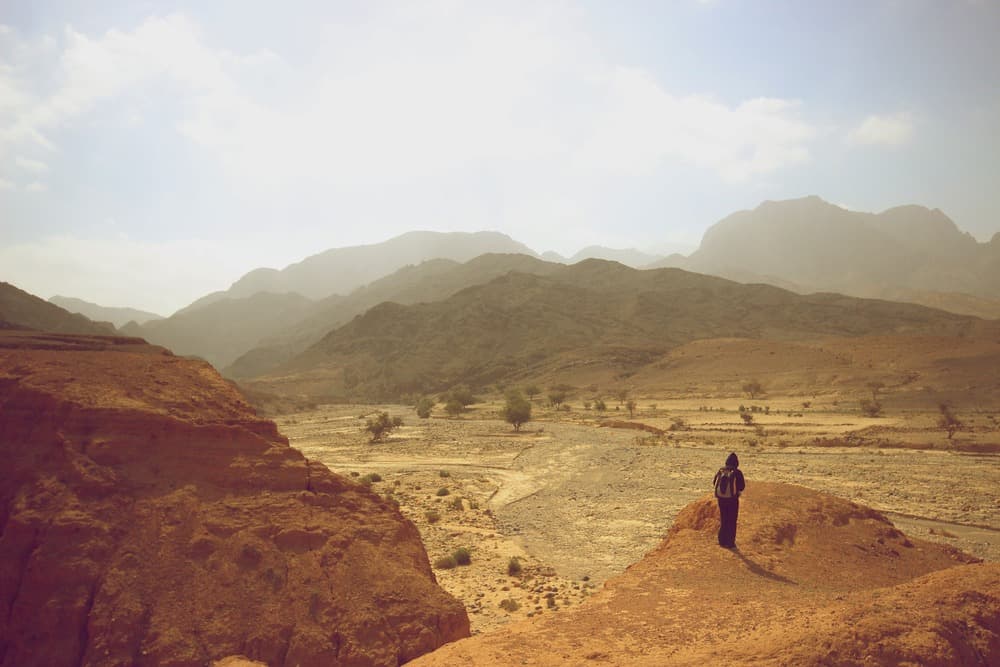
Dana and the eastern desert form two worlds that seem utterly separate, yet we regularly weave them together in our itineraries because they tell the story of Jordan's margins: the world of Bedouin herders, Umayyad caravan traders, and a biodiversity that the steppe protects far better than one might imagine. The Dana Biosphere Reserve, established in 1989 and managed by the RSCN, cascades from 1,500 metres on the Edom plateau down to 50 metres below sea level in the Wadi Araba. Within just 14 kilometres as the crow flies, four bioclimatic zones unfold in succession: Mediterranean forest of oaks and junipers at the top, Irano-Turanian steppe, Saharo-Arabian desert, then Sudanian enclaves at the wadi floor. This vertical compression explains the simultaneous presence of Nubian ibex on the cornices, caracals in the lower acacias, and the Egyptian vulture nesting on the sandstone cliffs.
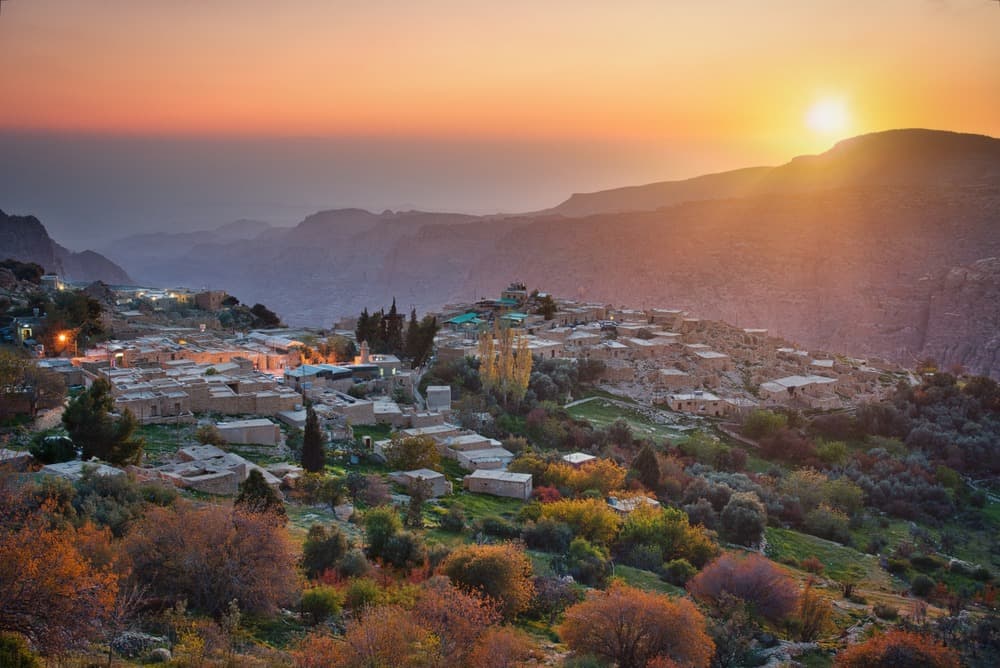
The village of Dana itself is a 15th-century Ottoman hamlet, abandoned in the 1960s when its inhabitants descended to Qadisiyah to work in the cement factory. The RSCN has restored part of the dry-stone houses, operating the Dana Guesthouse there and funding anti-poaching patrols through guest nights. Lower in the wadi, Feynan Ecolodge, lit only by candle, is run by men of the Ammarin clan and powered entirely by solar energy. Women from the village sell cardamom coffee and silver jewellery on the terrace. It is one of the rare places in the country where tourism money truly remains within the community that welcomes you.
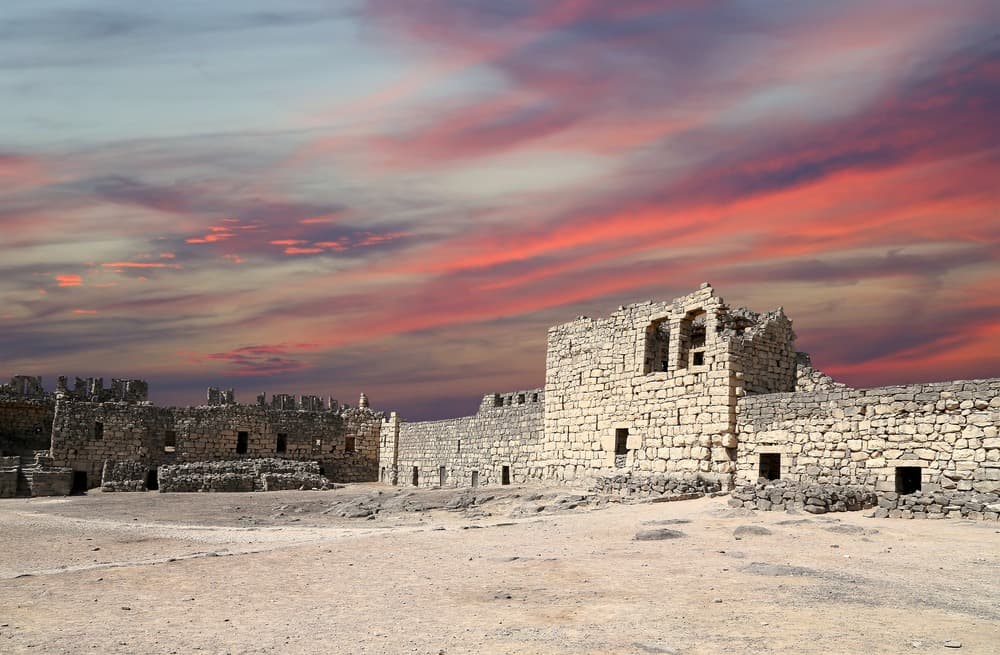
Some 200 kilometres to the north-east, the eastern desert operates by different logic. You enter via Route 40 from Amman, heading towards Azraq and the Iraqi border. The landscape becomes a hammada of black basaltic stones, Harrat al-Shaam, dotted with 8th-century Umayyad caravanserais, loosely called desert castles. Qasr Amra, UNESCO-listed in 1985, preserves secular frescoes depicting hunting scenes, bathing women and a zodiac painted beneath a dome—a rare testimony to the figurative art of the early Islamic period. Qasr Kharana, more austere, was probably not a military fort despite its appearance, but a caravanserais or tribal gathering place. At Azraq, the oasis that once sustained the region has largely dried up since the 1990s due to pumping to supply Amman; a 12 km² wetland managed by the RSCN remains, a migratory stopover for white stilts and purple herons in spring.
It was here, in the Roman fort of Qasr Azraq built of black basalt, that T. E. Lawrence spent the winter of 1917 with the troops of Emir Faisal before the taking of Damascus. The room he occupied above the south gate can be visited. Further east still, towards the Saudi border, the Bani Sakhr Bedouins graze their camels on the rare winter pastures. Our team works with two families who offer camps in black goat-hair tents, mansaf served with rice and fermented sheep's milk in the evening, and detailed knowledge of tracks towards Wadi Dahek and Burqu.
The region attracts two very different profiles: the hiker, who comes for Dana's marked trails (from 3 km around the village to 14 km for the full descent to Feynan), and the history-curious traveller, who loops the desert castles in a day from Amman. We rarely suggest one without the other, because trekking through the reserve followed by a night in a Bedouin tent near Azraq gives a coherent reading of what it means to inhabit the arid margins of the Fertile Crescent.
To discover
Descent of Wadi Dana to Feynan. A 14 km trail that takes six hours to pass from juniper forest at 1,200 metres to Saharo-Arabian desert acacias, with a night at the candlelit ecolodge run by the Ammarin clan.
Umayyad frescoes of Qasr Amra. A small bathhouse pavilion of Caliph Walid I decorated around 730 with hunting scenes, musicians and a zodiac beneath a dome, UNESCO-listed and accessible in a loop from Amman.
Black basalt fort of Azraq. Qasr Azraq, built by the Romans then reworked by the Ayyubids, where Lawrence of Arabia established his winter headquarters in 1917. The room he occupied above the south gate is open to visitors.
Nubian ibex on the Rummana cliffs. Rummana camp, open March to October at 1,300 metres altitude, allows you to observe herds of ibex at dawn on the sandstone cornices overlooking the wadi.
Azraq wetland reserve during migration. March–April and September–October, around 280 species pass through the remaining 12 km² of wetlands: white stilts, purple herons, occasionally pink flamingos on the central basins.
When to go
Dana is a highland region that should not be treated like the rest of Jordan. The best window for hiking runs from mid-March to end of May, then from mid-September to early November. At 1,500 metres on the plateau, daytime temperatures are then 18–24°C, cool mornings of 8–10°C, ideal for long walks. Summer (June–August) remains feasible at the top, but the descent to Feynan, where temperatures reach 38–42°C during the day, becomes uncomfortable before 7am or after 4pm. Winter (December–February) brings snow to the plateau a few days a year and nights around 0°C; some lodges close, but Feynan Ecolodge stays open and makes a pleasant refuge at 20°C.
The eastern desert around Azraq follows a more contrasting pattern. From October to April, daytime temperatures swing between 15–22°C, ideal for the desert castles. From June to August, dry heat regularly exceeds 40°C and the harsh midday light flattens the frescoes of Qasr Amra. We also avoid spring Fridays, when sites closest to Amman fill with Jordanian families on picnics.
Practical advice
We recommend a minimum of two nights at Dana to justify the detour: one in the village or at Rummana, one at Feynan after the crossing. Three nights are preferable if you wish to combine two hikes and savour the silence of the wadi. The desert castles can be completed in a full day from Amman (220 km total, paved road), or combined with a night in a Bedouin camp near Azraq for those who prefer to break the journey. The logistical entry point is Amman, 2.5 hours' drive north of Dana via the King's Highway, or 3 hours via the faster but scenically unrewarding desert highway.
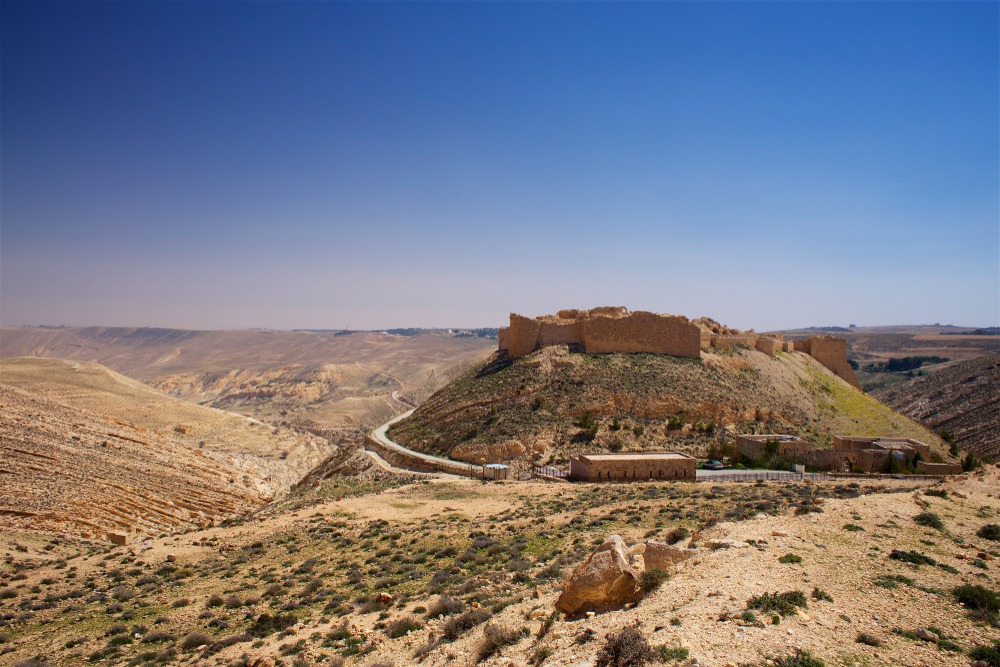
Dana fits naturally between Amman and Petra, descending the King's Road, which avoids the highway and adds Karak and Shobak en route. The desert castles are tackled in a loop from Amman before or after the North. Comfort at Dana remains rustic: ecolodges are clean but without air-conditioning at Feynan, unreliable wifi, and simple local food. This region suits fit hikers, travellers conscious of ecotourism and conservation, and those curious about Islamic history for the eastern section. It is less suited to families with very young children for the hiking portion, but entirely manageable with them for the castles and Azraq oasis.