Shobak
Shobak
Along the King's Highway, 35 km from Petra, Shobak is home to one of Jordan's finest Crusader fortresses. History, visiting information and practical tips.
Shobak, or Shoubak, is a city located 190 km south of Amman. It is home to the Crusader castle bearing the same name.
Shobak, An Agricultural and Tourist Town
Shobak is a city steeped in history. It was a highly strategic location during the Crusades era. Its position allowed protection of the Damascus route against Egypt. Spanning 189 km² and blessed with cultivable land, its economy relies primarily on agriculture. Tourism comes second, centered largely on visiting the Krak of Montreal, a fortress built in 1115 by Baldwin I, King of Jerusalem.
History
Shobak was an Edomite settlement in the second millennium BCE, then Nabatean during the following millennium. The city gained significant importance under the reign of Baldwin I, when he erected the fortress of Montreal in 1115 atop a hilltop. It was annexed by Saladin's Ayyubid dynasty 72 years later.
In 1849, under the Ottoman Empire, Shobak became a nahié (an administrative division encompassing several villages) and was attached to the Kerak district. In the early twentieth century, its inhabitants rebelled against the Ottomans. It became a Caza (a third-level administrative division) in 1973, then a full governorate in 1995.
What to See in Shobak?
The Shobak region is one of Jordan's most pristine areas. Olive groves, apple orchards, vegetable fields, and fruit plantations stretch across the landscape, alongside hundreds of beekeeping operations. Moreover, the city serves as a starting point for treks to Petra. However, this is not why tourists visit, but rather to explore the Krak of Montreal, one of the most significant Crusader castles in Jordan and the first to be built in this territory.
Spotlight on the Krak of Montreal
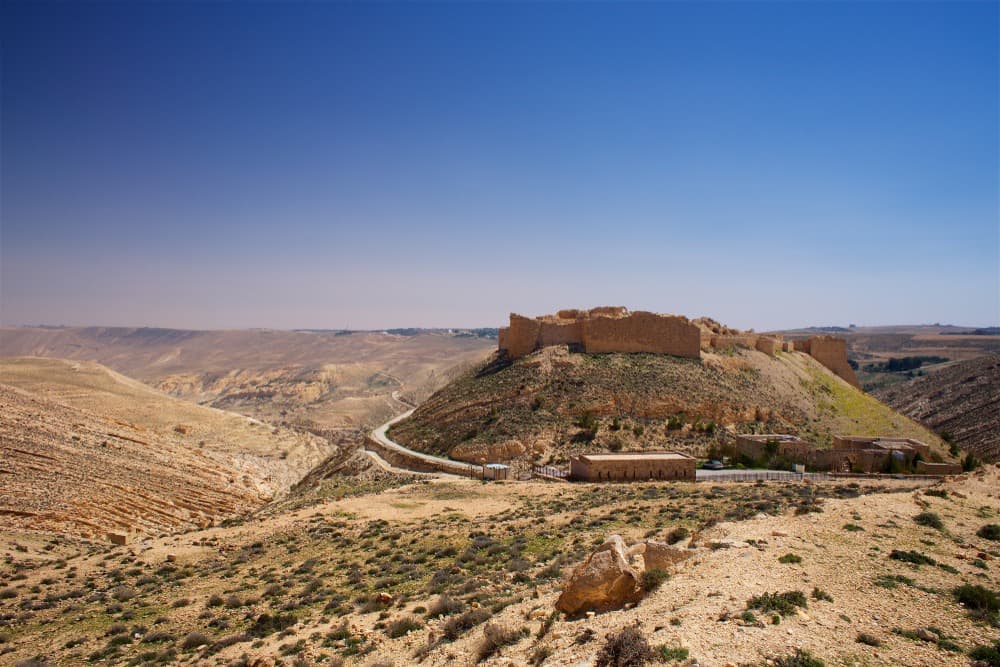
The Krak of Montreal, commonly known as Shobak Castle, is perched on a hilltop less than 2 km from the city of Shobak. Its construction was ordered by Baldwin I during his expedition through the region and after his conquest of Aqaba and the Red Sea.
Erected in a strategic position, this fortress allowed control of the routes between Egypt and Syria, and defended the southern zone of the kingdom. It therefore held major importance at the time. It houses a well, accessible by descending 375 steps. Troops no longer had to leave the citadel to fetch water—a considerable advantage during sieges. The fortress thus resisted multiple attacks before being taken by Saladin in 1189. The Ayyubids subsequently fortified and embellished it by adding palatial quarters and gardens, and carving inscriptions throughout. The fortress fell into the hands of the Mamluks of Egypt in the thirteenth century, who restored it in the fourteenth century. At its height, it accommodated 6,000 people.
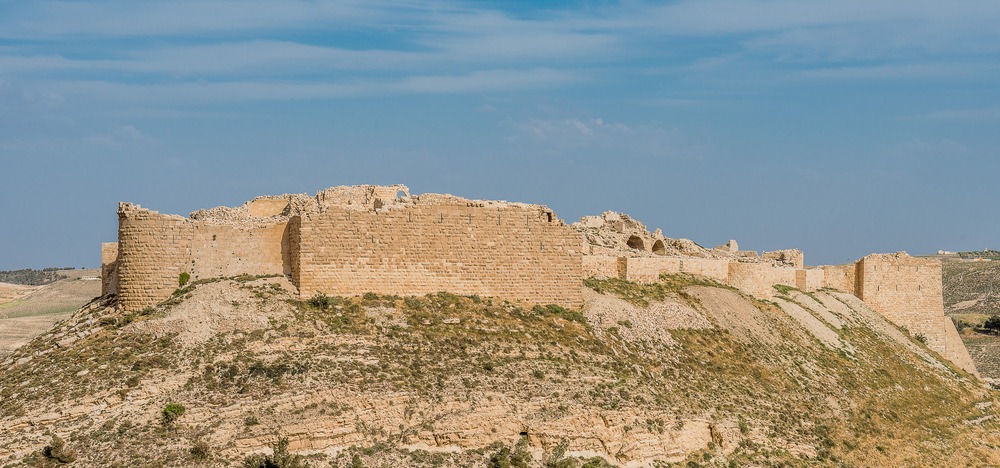
Today, visitors can only admire the castle's ruins, but they remain fascinating to explore. Men dressed in traditional Mamluk costumes will greet you upon arrival. You will discover the royal court and Saladin's throne, watchtowers, the water source, the school built by the Mamluks, and two churches. One church features a small baptistry, while the other contains Christian sculptures, Islamic tablets, and catacombs.
Practical Information
When to Visit?
Situated at the borders of the Arabian Desert, Shobak enjoys a hot Mediterranean climate with warm summers. It is pleasant to visit year-round, except during the winter season (December to March). The city experiences cold, icy winters due to its high altitude. The risk of precipitation also peaks during this period.
Shobak is accessible by bus or car from Amman via the famous King's Highway, Jordan's most magnificent route and one that passes the country's finest tourist sites.
Want to discover this destination?
Our local advisors design your tailor-made trip.