Madaba
Madaba
Just 30 km from Amman, Madaba is home to the oldest known map of the Holy Land and unique Byzantine mosaics found nowhere else in Jordan.
Heir to a thousand years of history, Madaba, the city of mosaics, is a biblical pilgrimage destination not to be missed. Here's an overview of the destination's highlights.
A Getaway to Madaba: Biblical Pilgrimage and Byzantine Art Discovery
Jordan is home to several biblical sites documented on the geographical map of the Holy Land. Among them stands the ancient city of Madaba, identified in the Exodus as a dependency of the kingdom of Moab, conquered by the tribes of Israel and rebuilt in 1880 by Arabs from Kerak.
A visit is a must; your private vehicle can take you there directly from Queen Alia Airport. The city of mosaics boasts no shortage of historical and cultural attractions. Who wouldn't want to discover the celebrated Byzantine map that adorns the Saint George Orthodox Church? Representing the urban layout of Jerusalem, it is regarded as the most beautiful archaeological and biblical treasure in the country. Who wouldn't want to visit the Church of the Apostles, the Church of the Virgin, or the Hippolytus Hall and admire their delicate mosaics? The Byzantine masterpieces of Madaba are unparalleled throughout Jordan. In the environs of downtown, temples from the 1st and 2nd centuries are also well worth a visit.
Annals of the Past
In the ancient world, Madaba was a territory of plains that the Israelites forcibly seized from the Moabites. "We have launched our arrows against them: from Heshbon to Dibon, all is destroyed. We have extended our devastations to Nophach, to Medeba," reads Numbers 21:30. Remains of a sepulcher in the eastern part of the city prove that men lived there at that time.
Scholars date the birth of the city to 1200 years before our era. Madaba returned to the kingdom of Moab in the 9th century BCE, but seven hundred years later, conflicts between the Seleucids and Judean rebels tore the city apart. John Hyrcanus, leader of the Hasmonean dynasty, went to war against Aristobulus, his own brother. He asked Aretas III, the king of Petra, for assistance; the latter agreed to provide men but demanded in return that Madaba be returned to Petra. Thus Madaba became a Nabataean possession until 106 CE, when Roman rule began. By undertaking major real estate projects, the Romans contributed to Madaba's urban renewal. The fortifications lining the archaeological park road date from this era.
In the 6th century, the Byzantines brought this architectural development to its height. They introduced the art of mosaic into churches and monasteries. The map of Jerusalem, commonly called the Mosaic of Madaba, is arguably one of their greatest achievements. The mosaic served both an informative and decorative function, as most of the biblical cities of the Near East are depicted on it. World-renowned, the map attracts the curiosity of tourists and archaeology students.
The Modern City
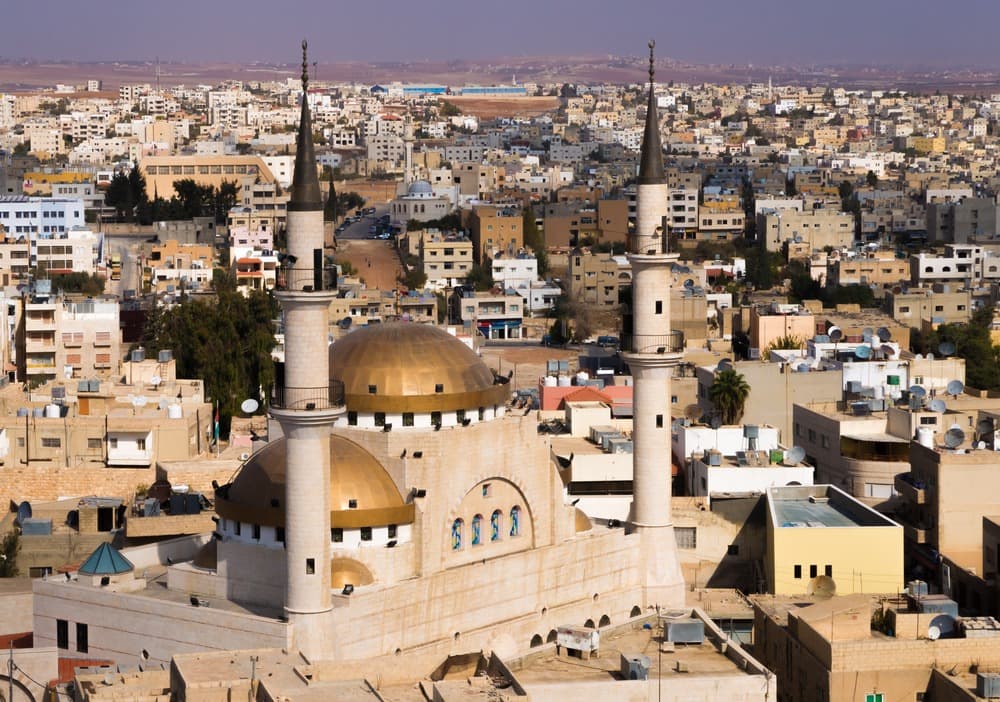
Madaba is a small town of 80,000 inhabitants located about thirty kilometers from Amman. Its neighboring cities are Kerak and Petra. Madaba's tourist appeal bears no relation to its size. Visitors will be delighted to discover treasures of Byzantine art from the 5th to 7th centuries. Jordanian authorities have taken care to restore old churches within an archaeological park, ensuring that the authenticity of the architecture is respected. Being very small, the city can be explored on foot in just a few hours.
Must-See Attractions
Madaba is home to exceptional historical and religious heritage. To appreciate it in all its facets, a stroll through downtown is essential. That said, the surroundings also hold pleasant surprises.
Religious Heritage
The Basilica of Saint George
Completed in 1986, this Orthodox church houses an invaluable historical treasure: the Madaba Map, a monumental Byzantine mosaic on which one can read a wealth of geographical information about Jerusalem and its suburbs. Jacob's Well, the Castle of Kerak, the battlefield between Reynaud de Châtillon and Saladin, the Tower of David… It's all clearly depicted! The map dates from the 6th century, making it the oldest known map of the Holy Land to date. Judge for yourself whether the attraction lives up to its reputation!
The Church of the Virgin
Part of the archaeological park, the Church of the Virgin Mary captivates with its central mosaic, which is an example of harmony and geometric proportion. For the record, the church was unearthed in 1887 beneath a private property.
The Church of the Apostles
At the crossroads of the King's Highway, the Church of the Apostles stands before you. A series of mosaics adorns this building, the most beautiful being the allegorical figure of the Sea. It represents the goddess Thalatta emerging from the waves, complete with her court of fish and sea creatures. The church is not within the archaeological park, but a little further on.
The Sanctuary of the Beheading of John the Baptist
Continue your pilgrimage at the Catholic Church of Saint John the Baptist, otherwise known as the Sanctuary of the Beheading of John the Baptist. It is dedicated to the greatest prophet of all time, according to Jesus's own words — "of all those born of women, none greater than John has arisen" (Luke 7:28) — the same prophet who had to pay for his obedience with his head. Byzantine ruins can be discovered in the underground galleries.
The Madaba Archaeological Museum
This establishment demonstrates the creativity of the Byzantines. The collection includes sacred iconography, jewelry, and ceramic artifacts.
The Madaba Archaeological Park
Excavations at Madaba have uncovered several Byzantine sculptures with both secular and religious motifs. A worthy venue was needed where these treasures could be preserved and displayed. Hence the creation of the Madaba Archaeological Park. The main attractions of the complex are the Machaerus Mosaic, believed to be the oldest in the region; the mosaics of the Prophet Elias Sanctuary, very elegant even if some lines are faded; the mosaics of the Hippolytus Hall, which are also artistic masterpieces. The mosaics are arranged in three panels. The first illustrates the Four Seasons; the image of Phaedra and Hippolytus occupies the central place; the third panel depicts Adonis seated beside Aphrodite, with the Three Graces — Joy, Beauty, and Creativity — following in his wake.
Around the City
Outside the city, several sites recall episodes famous from the Old and New Testament:
Mount Nebo
Nine kilometers north of Madaba rises Mount Nebo, frequented by thousands of pilgrims. Hebrew scripture designates it as the place where Moses, the man of God, died after gazing upon the Promised Land without being granted entry. The mountain offers a spectacular view of the Jordan River as well as Jerusalem and Jericho, situated on the far side of the river. Don't miss the Franciscan convent and church perched joyfully on the summit.
Machaerus Palace
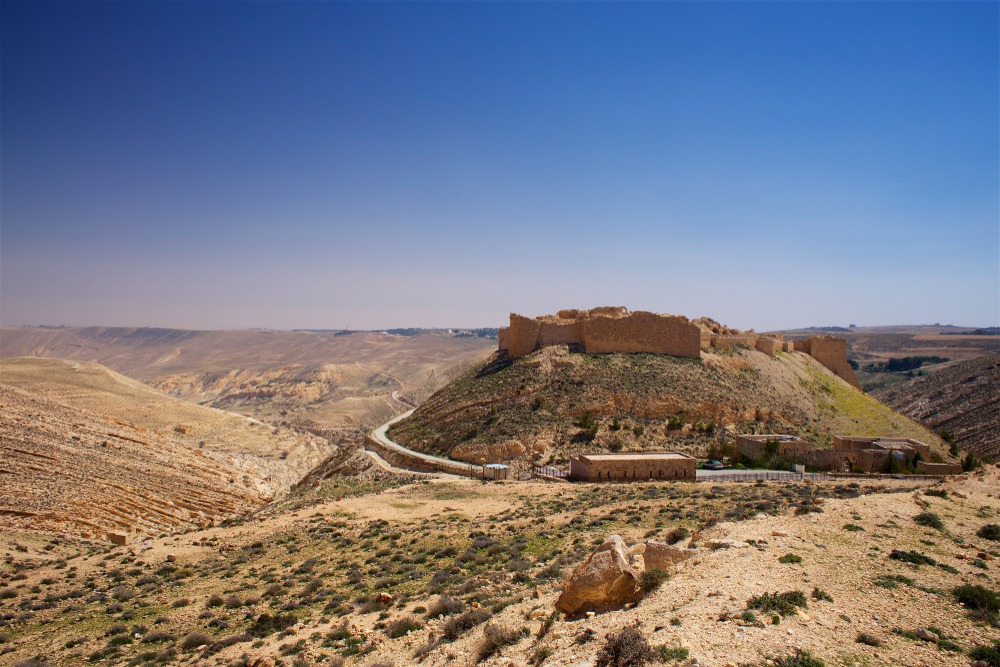
The view of the Dead Sea from the palace is breathtaking—worth the trip to Machaerus Castle on its own. However, its true interest lies elsewhere. Machaerus Castle invites you to travel back 2,000 years to relive the execution of John the Baptist. It was here that Herod the Great beheaded the prophet at a royal reception, having been captivated by the dance of Salome, his stepdaughter. The story of John the Baptist is made famous by the dance of the seven veils, performed in several operatic airs.
Umm ar-Rasas
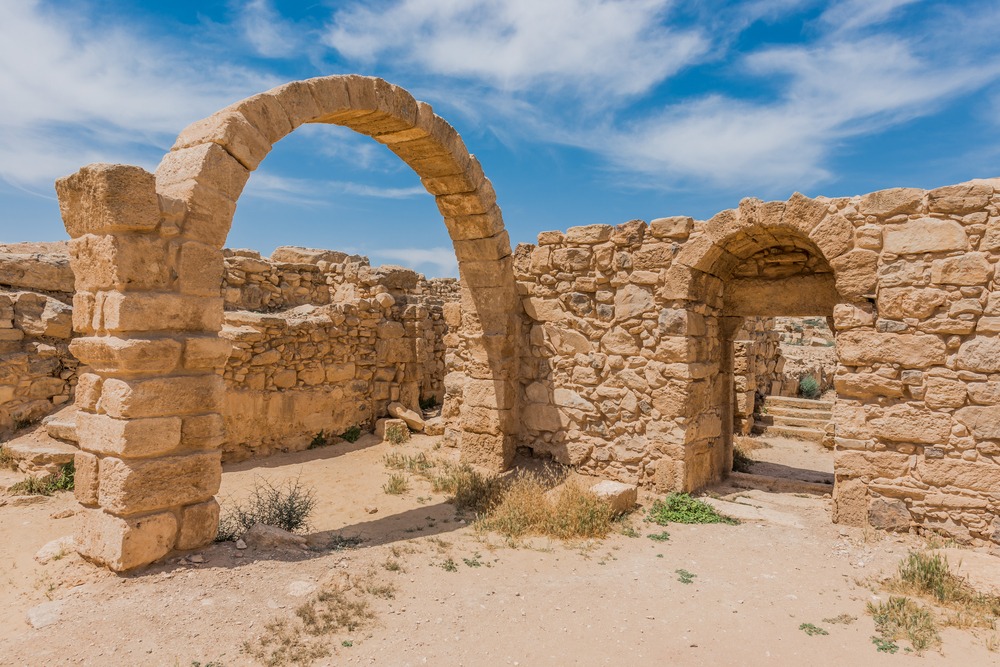
Fabulous Roman, Byzantine, and Umayyad ruins earn the village of Umm Ar-Rasas a place on the UNESCO World Heritage list. Located about thirty kilometers outside Madaba.
Practical Information
When to Go?
To visit Madaba with favorable weather, plan your departure for spring (March to May) or autumn (October and November). The dry season and mild temperatures allow for outdoor activities.
It's only 30 km to reach Madaba from Amman, traveling along the Ancient King's Highway. The city is about ten kilometers from Hesban. If you want to avoid the discomfort of public buses, there are only two transportation options: a car or a taxi. The Amman-Madaba journey is best made in a private vehicle with your driver.
Attractions in Madaba
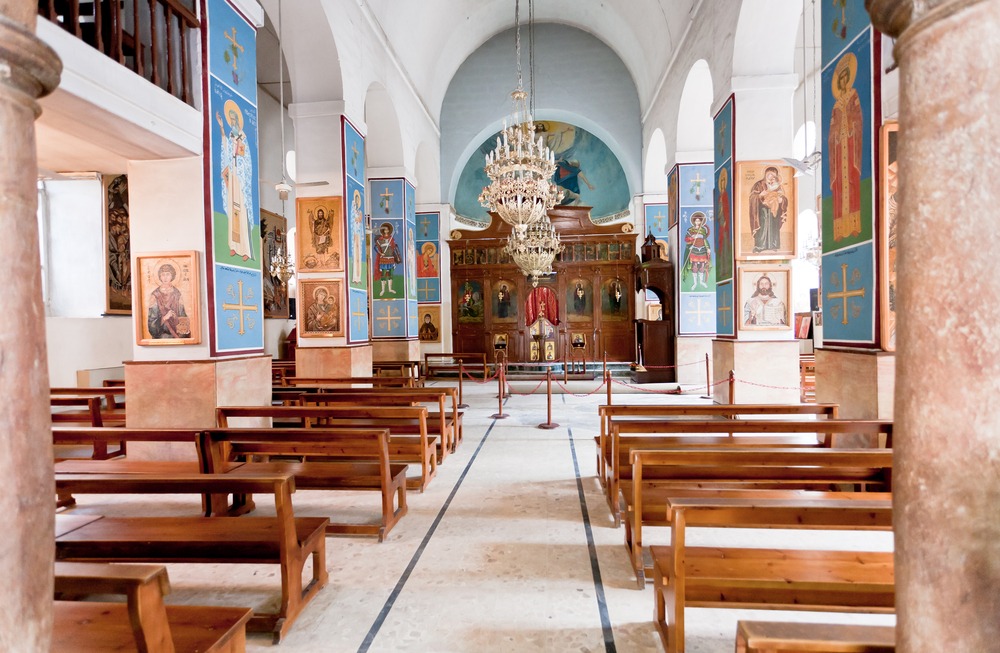
Église de Saint
L'église Saint-Georges de Madaba abrite la plus ancienne carte connue de la Terre Sainte : une mosaïque byzantine du VIe siècle de 16 mètres de long.
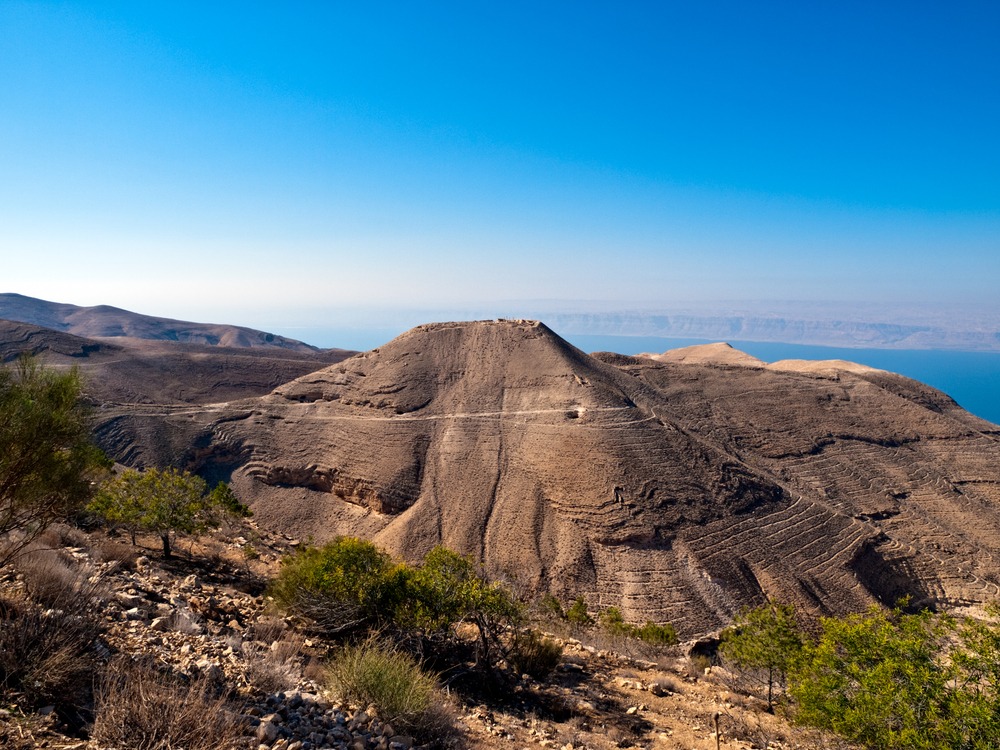
Forteresse de Macheronte
Perchée à 1 100 m face à la mer Morte, la forteresse de Machéronte conserve les vestiges du palais hérodien associé à l'exécution de Jean-Baptiste.
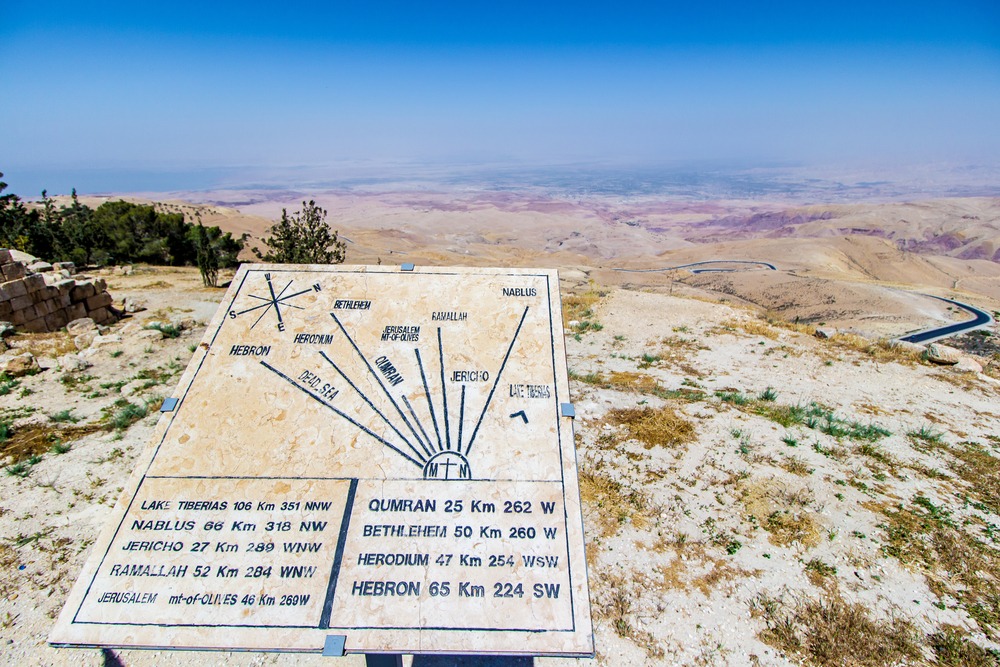
Mont Nebo
À 8 km de Madaba, le mont Nébo conserve la basilique mémoriale de Moïse, ses mosaïques byzantines et un panorama sur la vallée du Jourdain et la mer Morte.
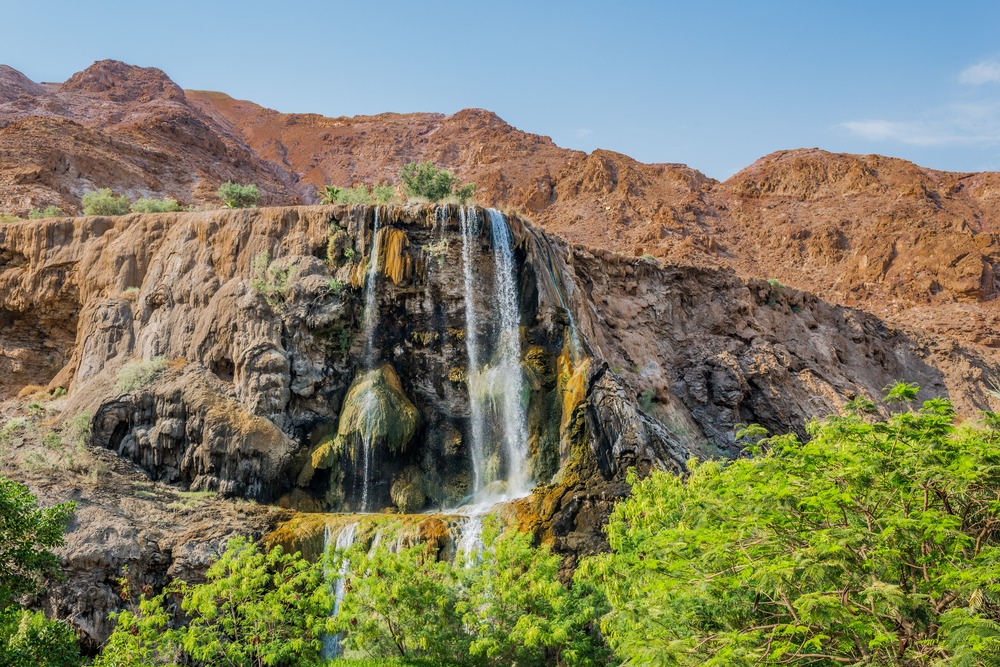
Sources chaudes de Ma'in
Cascades chaudes au fond du wadi Zarqa Ma'in, eaux thérapeutiques et héritage biblique : un site thermal unique entre Madaba et la mer Morte.
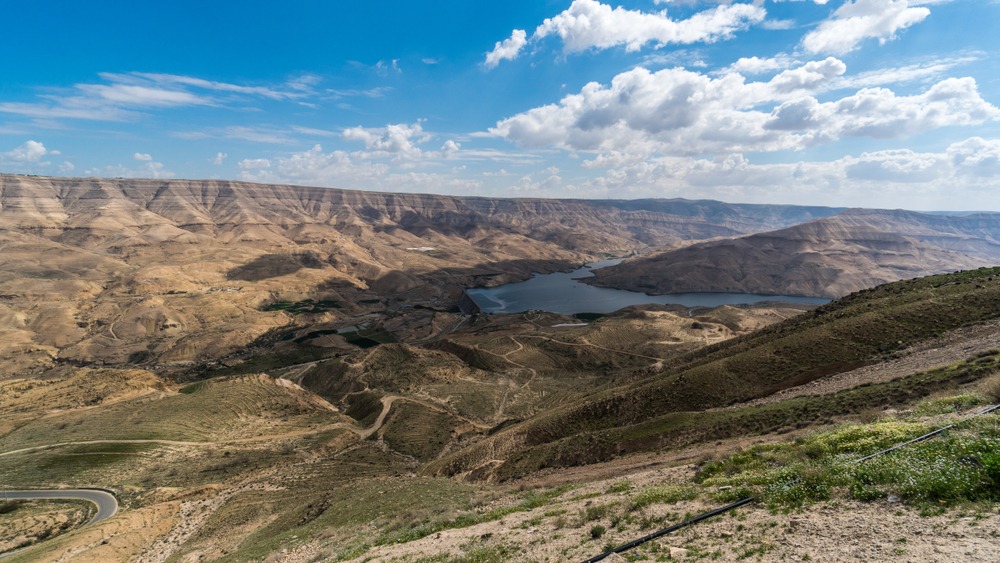
Vallée de la Mujib
Gorge la plus profonde de Jordanie, classée réserve de biosphère, la vallée du Mujib se parcourt en canyoning entre cascades, parois de grès et faune protégée.
Umm ar-Rasas
Site archéologique UNESCO du gouvernorat de Madaba, Umm ar-Rasas abrite des mosaïques byzantines exceptionnelles, dont une carte géographique monumentale du VIIIe siècle, et une tour stylite isolée dans la plaine.
Want to discover this destination?
Our local advisors design your tailor-made trip.