Dana Nature Reserve
Dana Nature Reserve
UNESCO Biosphere Reserve designated in 1993, Dana combines canyons, mountains and desert across four bioclimatic zones, between Petra and Kerak.
Sprawling across the slopes of the Rift Valley down to the desert plains of Wadi Araba, the Dana Nature Reserve is Jordan's largest nature reserve and one of the Middle East's major biodiversity hotspots. Canyons, wadis, limestone cliffs and sandstone mountains compose a territory managed by the Royal Society for the Conservation of Nature (RSCN) since 1989, and designated a UNESCO Biosphere Reserve in 1993.
Why visit Dana Reserve
Dana brings together four bioclimatic zones within a single perimeter, making it rare terrain in Jordan for hiking and wildlife observation. The reserve is home to 215 bird species, 38 mammal species and three endemic plants. It's also a successful ecotourism project: reserve revenues fund conservation and support the local economy, particularly that of Bedouin families settled in the village of Dana and its surroundings.
For travellers, the appeal is twofold: hiking through landscapes that change radically between the highlands (1,500 m, cool and forested) and the desert depths of Feynan, and encountering wildlife rarely seen elsewhere in the country.
History and settlement
Archaeological excavations attest to continuous human occupation for 4,000 years before the Common Era. The region was successively controlled by the Edomites, Egyptians, Persians, Seleucids and Byzantines, who exploited its copper deposits — abandoned mines can still be found within the reserve.
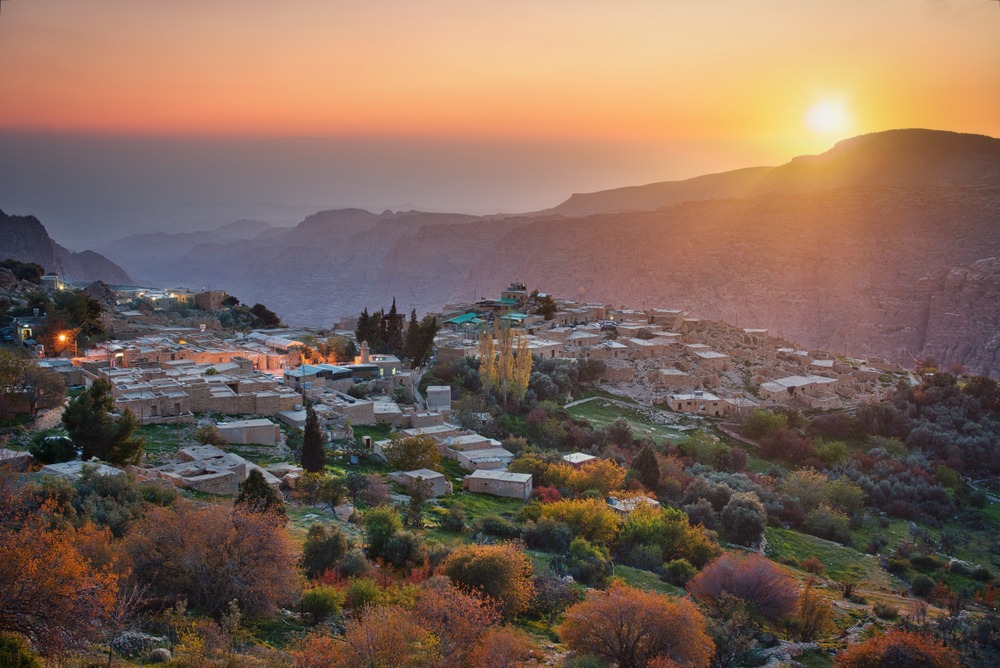
The modern village of Dana was founded in the 17th century. The dominant ethnic group is the Al Atata (sometimes transcribed Ata'ta). In the 19th century, soil erosion and increasing aridity led to gradual depopulation. The village regained vitality with the reserve's creation in 1989: nearly 70 stone houses were renovated and the area gained UNESCO Biosphere Reserve status four years later, in 1993. The RSCN has managed the entire site since, combining conservation with local development for inhabitants of the zone.
What to see and do
Hiking trails
Walking is the main activity. Several marked routes cross the reserve, some independent, others requiring a mandatory guide (particularly those descending toward Feynan).
- Cave Trail: a route leading to limestone caves where monks once retreated.
- Campsite Trail: path departing from Rummana camp, renowned for its views over the Dana mountains and birdwatching opportunities.
- Wadi Dana: the major descent from Dana village to Feynan ecolodge, spanning about 14 km, crossing all four bioclimatic zones.
Fauna and flora
Among mammals, you'll find the striped hyena, sand cat, desert lynx (caracal) and mountain gazelle. The Nubian ibex and Syrian serin, two endangered species, are among the reserve's emblems. Vegetation combines Mediterranean cypress, oak and red juniper at higher elevations, with desert plants and acacias lower down.
Encounters with local communities
A stay at Dana also offers the chance to exchange with Bedouin families in the reserve: farm visits, shared meals, insights into herding and foraging. These activities are organized by the RSCN or local accommodations.
Practical information
Access and entry: the reserve requires an entrance fee, with moderate rates (differentiated for residents and non-residents). Tickets are purchased at Dana's visitor center or directly at trail entrances.
Guided trails: most longer itineraries require a guide, to be reserved in advance via the RSCN or your accommodation. Plan a half-day to a full day for main routes.
Accommodations: three main options managed by the RSCN or local communities.
- Feynan Ecolodge, in the lower reserve, accessible by 4x4 shuttle — candlelit, solar-powered.
- Rummana Camp, at altitude, open seasonally.
- Bedouin guesthouses in Dana village, simpler and more economical.
When to visit
Spring (March-May) is the best season: mild temperatures, hillside blooms, migratory birds. Autumn (September-November) also offers fine conditions, with favorable light for observation. Summer is very hot in the lower parts of the reserve. In winter, several trails close due to cold and flooding risks in the wadis.
How to get there
The reserve lies on the Kings Highway, in south-central Jordan:
- From Amman: approximately 2 hours' drive south.
- From Petra: 54 km south, roughly less than an hour.
- From Kerak: 88 km north.
The simplest option remains a rental car or private transfer. Public buses serve Qadisiyah, a few kilometres from Dana village.
Nearby
Several major sites naturally connect with a Dana visit:
- Krak de Montréal at Shobak, a Crusader fortress perched midway between Dana and Petra.
- Al Khazneh, Petra's iconic façade, an hour's drive away.
- The Sîq, Petra's entrance gorge.
- Ajlun Fortress, further north, to extend a historic loop.
Frequently asked questions
Frequently asked questions
One day allows for a short hike from the village. To fully enjoy the reserve and descend to Feynan, allow two nights on site.
Short trails around the village can be done independently. Longer routes, particularly Wadi Dana and certain descents toward Feynan, require an RSCN-approved guide.
Yes, but trail offerings are very limited and Rummana camp is closed. Favour Feynan Ecolodge, situated at lower altitude and thus milder.
Raptors and songbirds are frequent year-round. Nubian ibex are sometimes visible early morning. Hyenas, caracals and sand cats exist in the reserve but remain very elusive.
Yes, provided you choose a short trail suited to children and comfortable accommodation. Encounters with Bedouin families and local farms are particularly enjoyed.
To integrate Dana Reserve into a complete Jordan itinerary, consult our Jordan journeys.
Interested in this visit?
We can include it in your personalised itinerary.