Mount Nebo
Mount Nebo
Located 8 km from Madaba, Mount Nebo preserves the Moses Memorial Basilica, its Byzantine mosaics, and sweeping views over the Jordan Valley and the Dead Sea.
Approximately 8 km west of Madaba, Mount Nebo rises to nearly 800 metres and offers one of Jordan's most evocative panoramas. According to the Book of Deuteronomy, it was from this vantage point that Moses gazed upon the Promised Land before his death. The site today preserves a memorial basilica, Byzantine mosaics, and several commemorative monuments.
Why visit Mount Nebo
Mount Nebo combines three rarely reunited interests on a single Jordanian site: profound spiritual significance for Jewish, Christian, and Muslim traditions; remarkably well-documented Byzantine archaeological remains; and a belvedere overlooking the Jordan Valley, the Dead Sea, Jericho, and, on clear days, Bethlehem.
The visit remains accessible: the path leading to the basilica is short and manageable. Allow 1 to 1.5 hours on site to tour the mosaics, esplanade, and viewpoints.
History of the site
The Deuteronomy biblical narrative does not pinpoint Mount Nebo's exact location. Moses, forbidden by God from entering Canaan, is ordered to climb a mountain to observe the land promised to the Hebrews. He dies there after passing his authority to Joshua. Christian tradition identifies this summit with present-day Mount Nebo in Jordan; Islamic tradition places the biblical mountain near Jericho instead.
Excavations, initially led by Sylvester Saller and later by the Franciscan academic society of Jerusalem, uncovered evidence of continuous monastic and pilgrimage activity since Byzantine times. The first church, built in basilica plan, dates between 350 and 400 AD. It was enlarged at the end of the fifth century, then restored in 597. The most celebrated mosaics were uncovered in 1980.
What to see on site
The Moses Memorial Basilica
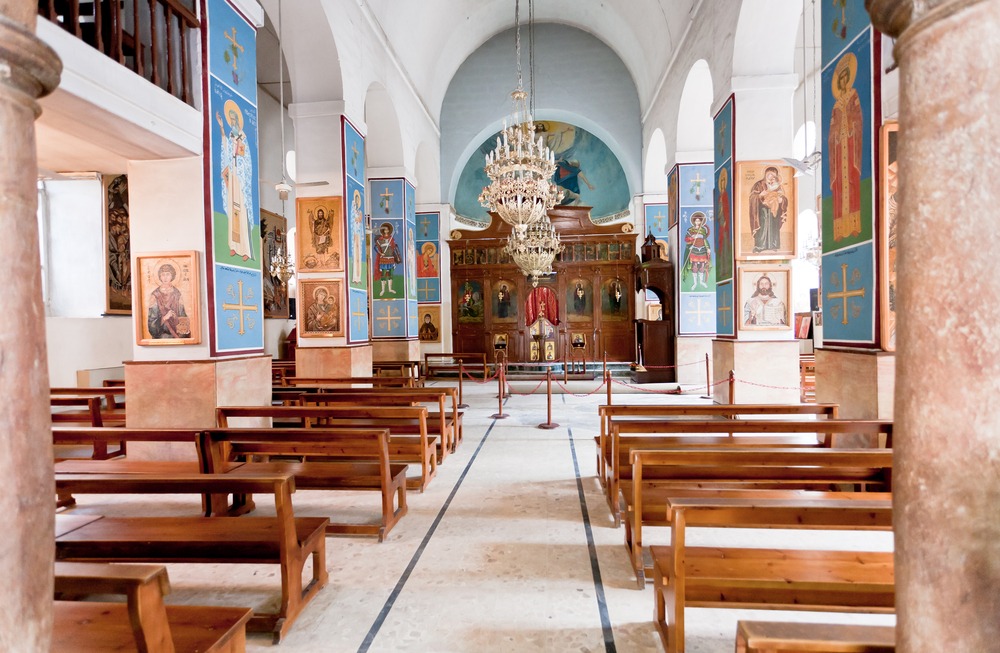
The current structure, sheltered beneath modern protective covering, preserves the colonnades and especially the Byzantine floor mosaics. The best-preserved panels depict ostriches, peacocks, zebus, as well as rural scenes featuring hunters and shepherds. These compositions document daily life in the Jordan region during the early Christian centuries.
The Brazen Serpent
Before the basilica stands a monumental sculpture by Italian sculptor Giovanni Fantoni. It evokes both the bronze serpent raised by Moses to protect the Hebrews from venomous bites, and the cross of Christ, whose silhouette it echoes.
The Jubilee Monument
Crafted in white stone, this monument commemorates Pope John Paul II's visit to Mount Nebo on Epiphany in the year 2000, a major milestone of his pilgrimage to the Holy Land.
The panorama
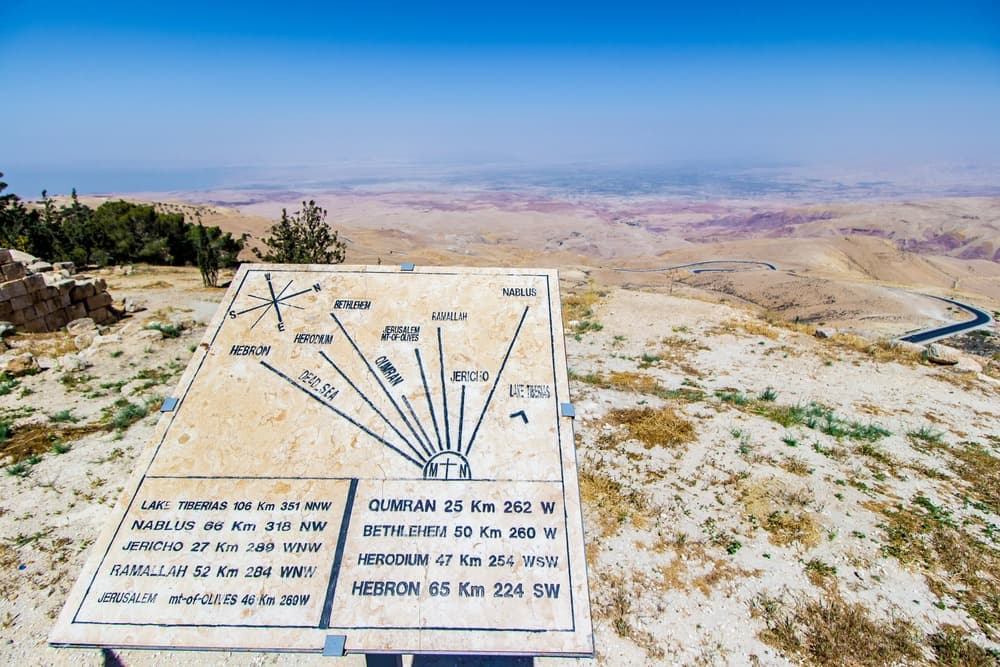
From the esplanade, the view encompasses the Jordan Valley, the Dead Sea, Jericho, and, when the air is clear, as far as Bethlehem. An orientation plaque helps identify the principal landmarks.
Practical information
Site entry is paid but remains moderate in cost. Mount Nebo is not included in the Jordan Pass, so a separate ticket must be purchased.
As the site is an active place of worship, modest dress is expected (shoulders and legs covered). Mobile phones and tablets should be switched off or silenced inside the basilica. The atmosphere calls for discretion: laughter and loud conversation are discouraged.
When to visit
Spring (March to May) remains the most pleasant period: temperatures still mild, clear light, and better visibility over the valley. Autumn (September-October) offers comparable conditions with fewer visitors. Summer is dry but hot, and heat haze often limits the panorama's range. Winter can be cold and windy at altitude, but the air is sometimes exceptionally transparent.
How to get there
From Madaba
No regular public transport serves the site. From Madaba's centre, the simplest option is a taxi or private vehicle: take Palestine Street then Al-Quds Street, allowing approximately 15 minutes of travel time.
From Amman or the Dead Sea
From Amman, follow the Kings Highway towards Madaba then turn towards Mount Nebo. From the Dead Sea, access is via the scenic road climbing towards Madaba. English-language signage marks the main junctions.
Nearby attractions
Mount Nebo fits naturally into a circuit through western Jordan:
- The Byzantine mosaic map of Madaba, preserved in the pavement of the Church of Saint George, just 8 km away;
- Al-Maghtas (Bethany Beyond the Jordan), the traditional site of Christ's baptism, approximately 45 minutes' drive away;
- The Dead Sea and its developed beaches, accessible by the descending road from Mount Nebo;
- Further south, the Montreal fortress (Shobak) to extend the itinerary towards Petra.
Frequently asked questions
Frequently asked questions
No. Entry to Mount Nebo is not covered by the Jordan Pass and must be paid separately at the site entrance.
Allow 1 to 1.5 hours to tour the basilica, view the mosaics, walk around the esplanade, and enjoy the panorama.
As the site is an active place of worship, wear clothing that covers shoulders and knees, for both men and women. A headscarf is not required.
Not essential. English-language explanatory signage accompanies the visit. A local guide, however, provides useful insights into the mosaics and biblical context.
Yes, this is the most common arrangement. The two sites are 8 km apart and complement each other: spend the morning in Madaba viewing the Byzantine mosaic map, the afternoon at Mount Nebo for the panorama and basilica.
Planning the rest of your journey
Mount Nebo fits logically along the route between Amman, the Dead Sea, and Petra. To build a complete itinerary that includes biblical sites, Crusader castles, and the Wadi Rum desert, consult our Jordan journeys.
Interested in this visit?
We can include it in your personalised itinerary.