Krak of Montreal
Krak of Montreal
A 12th-century Crusader fortress perched on a rocky pinnacle, Krak of Montreal marks the Kings Highway between Amman and Petra.
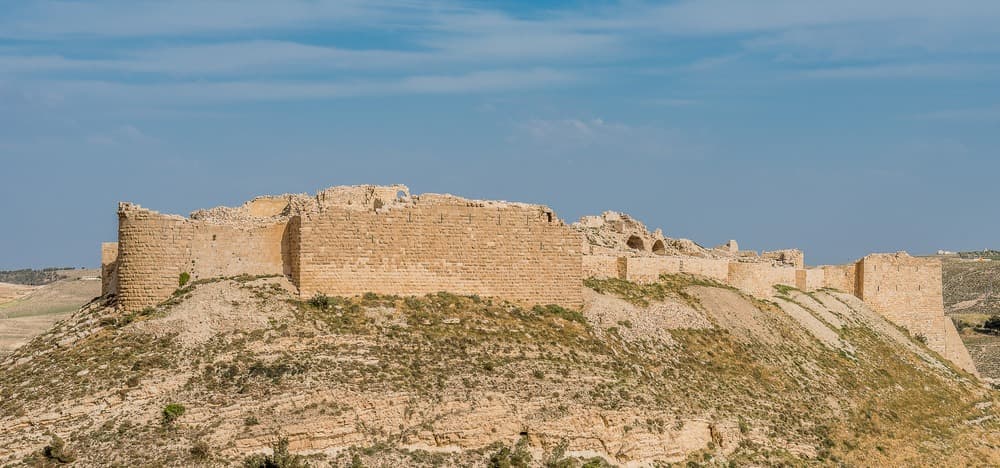
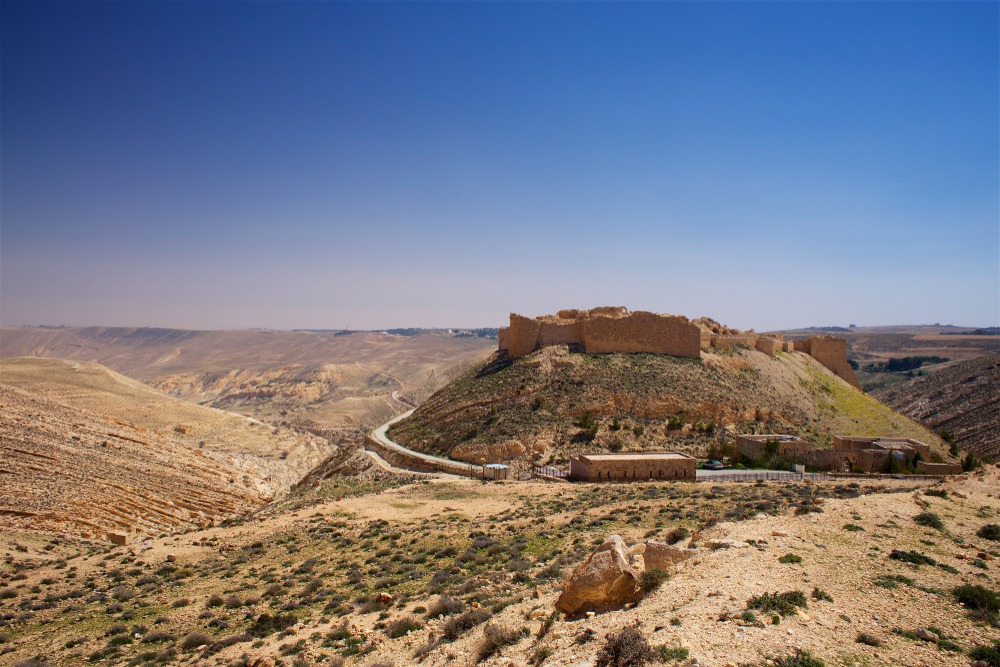
The Krak of Montreal, also known as al-Shawbak Castle or Schaubak, stands in ruins atop a rocky pinnacle overlooking the Arabah valley, south of the Dead Sea. This 12th-century Crusader fortress ranks among Jordan's least-visited historical sites, off the beaten tourist path, yet rich with dense military heritage.
Why visit Krak of Montreal
The site holds dual appeal. First, historically: founded in 1115 on the orders of Baldwin I of Jerusalem, it was one of the strategic strongholds of the Latin Kingdom against Muslim territories. Second, architecturally: despite erosion, loopholes towers, limestone walls, two churches and several cisterns remain recognizable. The site is also remarkable for its location, perched on the Kings Highway, one of the ancient Near East's most important trade routes.
Visitor numbers remain moderate, allowing for a peaceful exploration. Plan 1 to 1.5 hours for your visit, longer if you explore the underground cistern.
Castle history
The fortress was built in 1115 to serve a dual purpose: to tax Arab ships and pilgrims heading toward Medina and Mecca, and to protect Jerusalem's kingdom borders against Saracen raids. The site appears in Crusader archives under several names: Mons Regalis, Mont Real, Mont Shawback, the latter borrowed from the nearby settlement of Shoubak.
During the successive reigns of Baldwin I, Philip of Nablus and Philip of Milly, relations with Muslim neighbors remained generally cordial. The break came in 1170, when Reynald of Châtillon, lord of Outre-Jourdain, took control of the castle. He violated truces by attacking pilgrims and caravans that had previously traveled freely in exchange for a toll.
Retaliation came from Saladin, the Ayyubid sultan. After years of tension, he besieged the fortress, whose elevated position complicated the use of siege engines. The starving defenders eventually capitulated in 1189. Later, the castle passed to Baybars, the fourth Mamluk sultan, who added new structures, including a school.
What to see on site
The two churches
The enclosure contains two religious buildings. The first church stands near the main gate. The second, located beyond a watchtower, is more interesting: local tradition holds that it once housed Saladin's royal throne, an attribution to take with caution given the absence of formal archaeological evidence.
The underground cistern
The Crusaders carved a stone cistern designed to channel water from a spring to the fortress without exposing carriers to attackers during a siege. An underground staircase of 375 steps descends to the bottom of the structure. The descent is narrow and damp; bring a flashlight and sturdy footwear.
The Mamluk school
A few meters from the cistern stands a two-story building. One of its wings was converted into a school during the Mamluk period, after Baybars took the castle. Several inscriptions and decorative elements from this era remain visible.
Ramparts and towers
A walk along the fortifications offers extensive views over the surrounding valley. The loopholes towers and sections of limestone walls testify to the care taken in the site's passive defense.
Practical information
- Admission: the site is included in the Jordan Pass. Without the Jordan Pass, a modest entrance fee is charged on-site (verify current rates with the Jordanian tourism office).
- Hours: open year-round, with extended hours during the warm season (April–October) compared to the cool season (November–March). Check current hours before departing.
- Duration: 1 to 2 hours depending on your interest in architectural details.
- Equipment: closed-toe shoes, water, hat and flashlight for the cistern.
- Guides: at the entrance, local villagers offer informal guiding services. Negotiate the fee beforehand.
When to visit
Since the site is entirely open-air and exposed, shoulder seasons (March–May and September–November) offer the most comfortable conditions. In summer, midday heat can be intense: favor early morning or late afternoon. In winter, the Shoubak plateau can be windy and cool; bring an extra layer.
How to get there
Krak of Montreal lies approximately 210 km south of Amman, roughly 2.5 hours by road via the Kings Highway or the Desert Highway. No regular public transport serves the site directly: a private vehicle, taxi or organized transfer is necessary.
The castle sits about 30 to 40 km north of Petra, making it an easy stop between Amman/Madaba and the Nabatean city, or as an excursion from Petra.
Nearby attractions
- Al-Karak Castle: another major Crusader fortress, further north on the Kings Highway.
- Al Khazneh: the famous Treasury of Petra, about an hour's drive south.
- The Siq: the gorge leading into Petra, to combine with a visit to the Nabatean city.
- Ajlun Fortress: an Ayyubid citadel built against the Crusaders, in the north of the country.
Frequently asked questions
Frequently asked questions
Yes. The site is among the attractions covered by the Jordan Pass; simply present your ticket at the entrance.
Plan 1 to 2 hours to tour the ramparts, see the two churches, the Mamluk school and descend into the underground cistern.
Yes, the two sites are only about 30 to 40 km apart. Many visitors coming from Amman stop at Krak of Montreal before continuing to Petra.
It's not mandatory, but signage is limited. A local guide, often available at the entrance, helps you better understand the site's history and layout.
Yes, the castle is open throughout the year. Shoulder seasons offer the most pleasant conditions; summer can be extremely hot and winter windy.
Planning your trip
Krak of Montreal fits naturally into an itinerary along the Kings Highway, between Madaba, Karak, Shoubak and Petra. To build a complete circuit including these stops, consult our Jordan journeys.
Interested in this visit?
We can include it in your personalised itinerary.