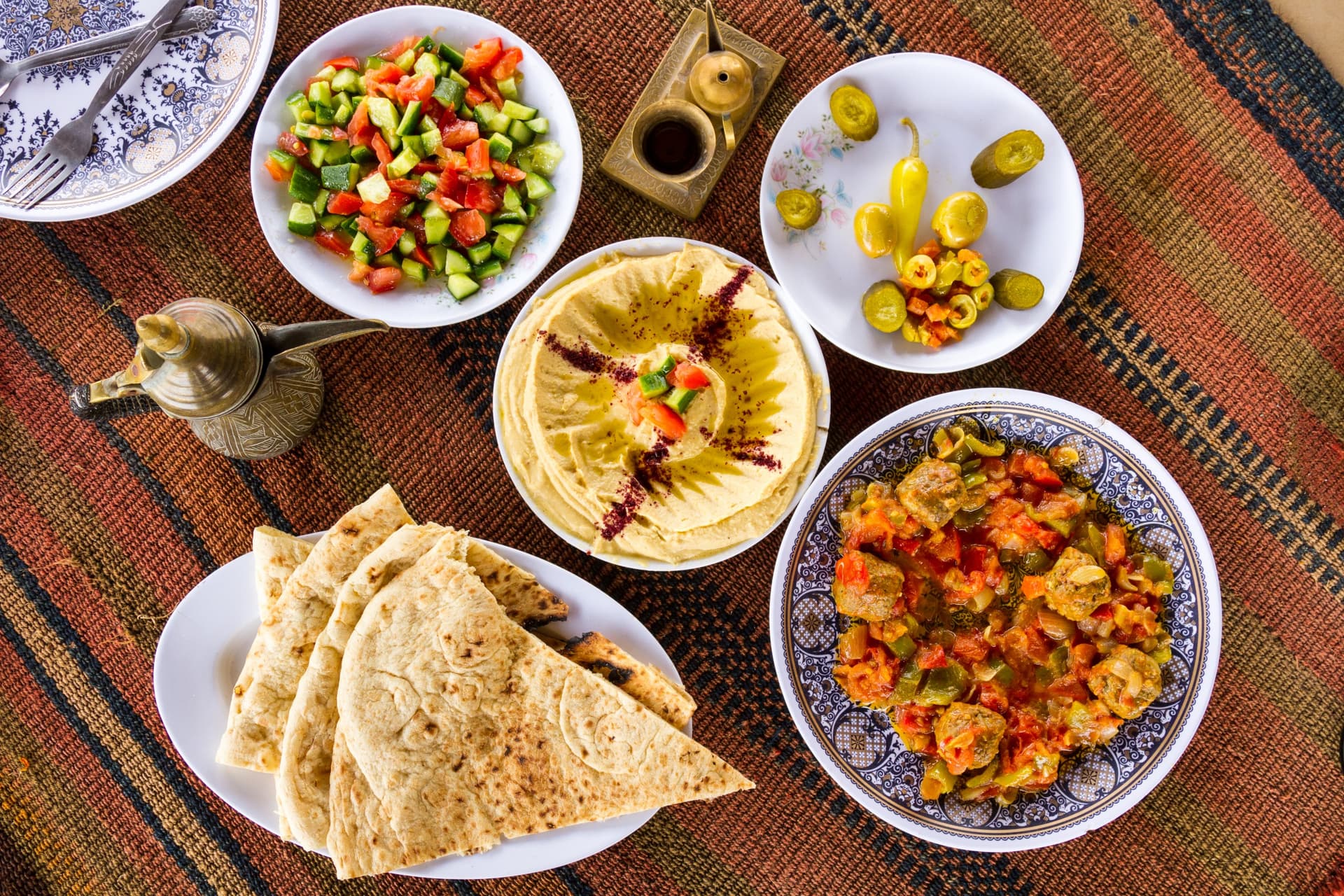
Jordanian Cuisine, What Are the Local Specialties?
Influenced by Egyptian, Lebanese, Palestinian, Syrian, and Turkish cuisines, Jordanian gastronomy is a vibrant melting pot of flavors.
Influenced by Egyptian, Lebanese, Palestinian, Syrian, and Turkish cuisines, Jordanian gastronomy is a vibrant melting pot of flavors. Here are all the Jordanian culinary specialties you absolutely must try during a trip to Jordan !
Typical Jordanian Dishes
Mansaf
Mansaf is the national dish of Jordan. Locals enjoy it especially on festive occasions (weddings, births, Eid…). Of Bedouin origin, it is a dish made with lamb cooked in jameed, a dried and hardened yogurt prepared from sheep's or goat's milk that has been dried and fermented. Mansaf is served on a large platter with a layer of flatbread (marqouq or shrak) with rice infused with turmeric and garnished with almonds and pine nuts.
Traditionally, mansaf is presented in the center of the table. Jordanians serve themselves directly from the platter with their right hand.
Maqluba
Also called maglouba or maklouba, maqluba is another Levantine specialty you can enjoy in Jordan. Cooked with lamb (or sometimes chicken), this dish is a meat stew with rice accompanied by vegetables (eggplant, cauliflower, tomato…) and spices. It is served on a bed of musakhhan, bread filled with meat previously seasoned with sumac, oil, onion, and roasted pine nuts.
For the record, maqluba means "upside down" or "inverted" in Arabic. This dish gets its name from the cooking method used, as the pot must be overturned onto a platter at the moment of serving.
Mezze in Jordan
Mezze (or mazahh) are an integral part of Jordanian cuisine. These small dishes or appetizers meant for sharing are enjoyed with bread: al-jubz (round bread baked in a wood-fired oven and seasoned with spices), sharak (Bedouin bread made from a thin sheet of dough heated over wood fire), or fattah (crispy bread sometimes fried).
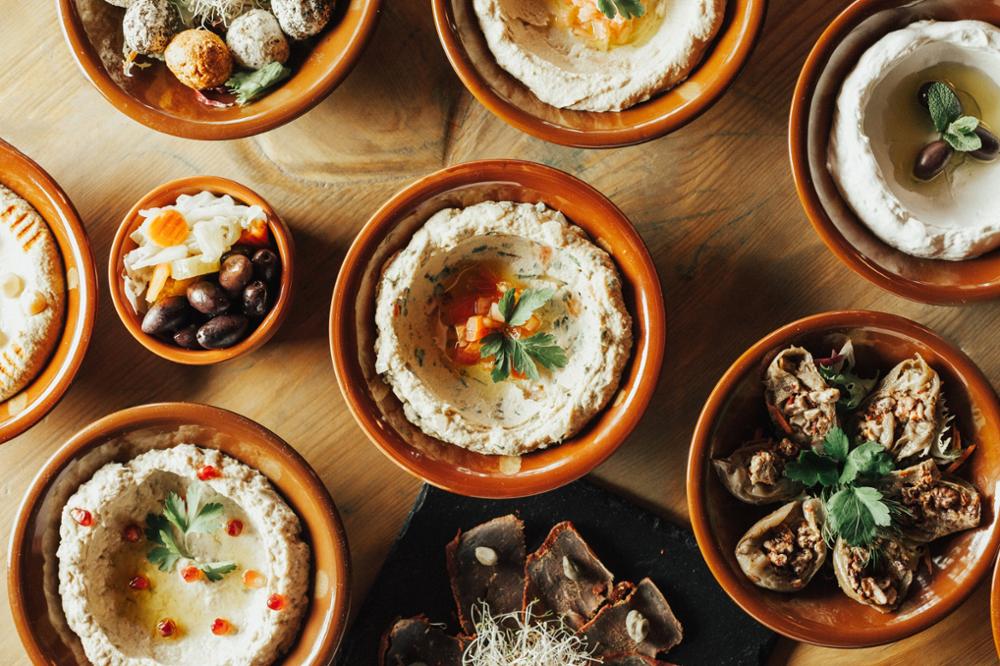
Here are the main mezze you can enjoy in Jordan:
The essential hummus: a puree of chickpeas and sesame with olive oil;
Falafels: chickpea balls mixed with various spices;
Moutabal or baba ganoush: better known to us as eggplant caviar;
Waraq inab: grape leaves stuffed with rice or meat;
Tabbouleh: a very parsley-rich tabbouleh;
Kebbeh or kubbeh: elongated-shaped balls, fried in oil, filled with bulgur, meat (lamb, mutton, or beef), and flavored with spices and herbs;
Fattoush salad: a salad made mainly of fresh vegetables (lettuce, tomatoes, cucumbers, radishes, onions), enhanced with a tangy spice (sumac), and topped with pieces of toasted Jordanian bread.
Note: the advantage with mezze is that there's something for everyone, even vegetarians and vegans!
Desserts and Pastries
When it comes to Jordanian desserts, you'll find primarily pastries enjoyed at the end of meals or at any time of day. As in most Middle Eastern countries, Jordanian pastries are mainly made with honey, pistachios, almonds, walnuts, and pine nuts.
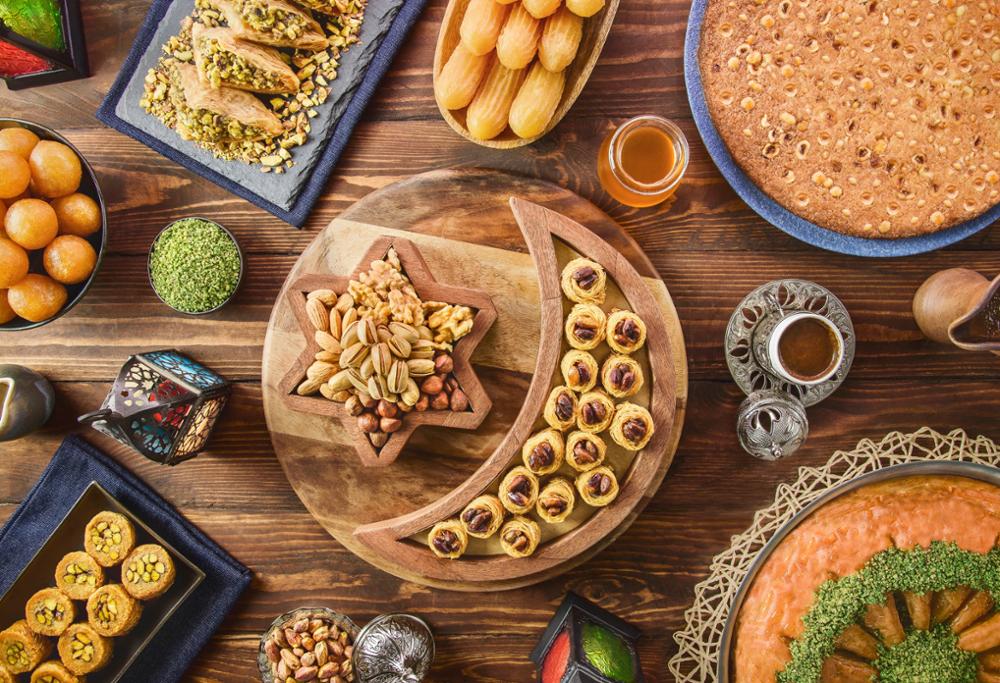
Here are some pastries to absolutely taste during a trip to Jordan:
Baklava: layers of phyllo dough adorned with walnuts and pistachios, flavored with rose or orange blossom syrup;
Kanafeh (or kadayif, konafa): phyllo pastry soaked in syrup, made with angel hair pasta, cheese, and pistachios;
Famous angel hair pasta;
Qatayif: crepe batter, filled with cream, pistachio, spices, or walnuts.
Ma'amouls: shortbread pastries filled with dates, walnuts, pistachios, almonds, or figs.
Barazek: sesame seed and pistachio biscuits.
Another Jordanian dessert highly appreciated by locals: kunafah. It is a type of cake made with sweetened cream cheese flavored with rose water, honey, and sugar.
Frequently asked questions
The national dish of Jordan is mansaf, a Bedouin-origin dish made with lamb cooked in jameed (fermented yogurt), served on rice and flatbread. It is traditionally eaten during major celebrations such as weddings or Eid.
Yes, Jordanian cuisine offers many vegetarian options, particularly through mezze: hummus, falafels, tabbouleh, fattoush salad, moutabal, and grape leaves stuffed with rice. Most restaurants offer these dishes without meat.
Maqluba (or maklouba) is a traditional Levantine dish very popular in Jordan. It is a stew of lamb or chicken with rice and vegetables (eggplant, cauliflower, tomato). Its name means 'upside down' in Arabic because the pot is turned over into the serving dish at the moment of serving.
The must-try pastries in Jordan include baklava (phyllo dough with walnuts and pistachios), kanafeh (angel hair and cheese in fragrant syrup), ma'amouls (shortbread filled with dates or walnuts), and qatayif (crepes filled with cream or pistachios).
Kanafeh and kunafah actually refer to the same Jordanian dessert, a pastry made with angel hair pasta, cheese, and pistachios soaked in sweet syrup. The two names are different transliterations from Arabic and are used interchangeably.