Petra and the King's Highway
From Madaba to Wadi Musa across 280 km of ancient roadway, leading to the Nabataean city carved into rose-hued sandstone: two full days on site, 850 steps to the Monastery.
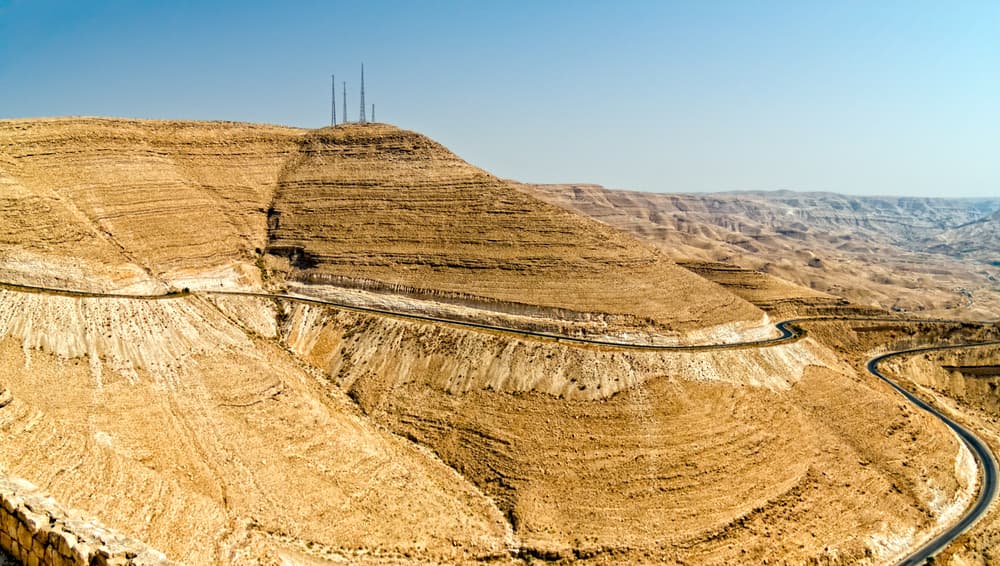
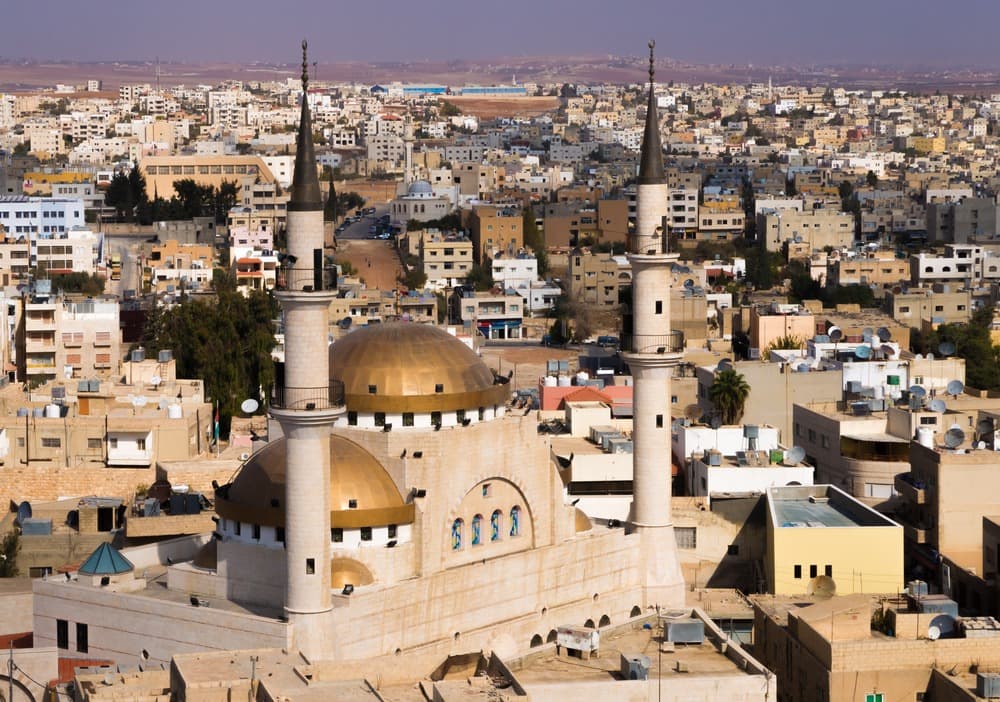
The King's Highway is one of the oldest trade routes in the Near East: Romans, Nabataeans, crusaders and pilgrims travelled it long before it became Route 35 on modern maps. Over 280 km between Madaba and Petra, it follows the ridge line east of the Dead Sea, plunging into the Wadi Mujib canyon before climbing back toward the high plateaus of Kerak and Tafilah. We recommend travelling it southward, over two days, stopping at the Byzantine mosaics of Madaba, the Crusader fortress of Kerak and the village of Dana before reaching Wadi Musa, the gateway to Petra.
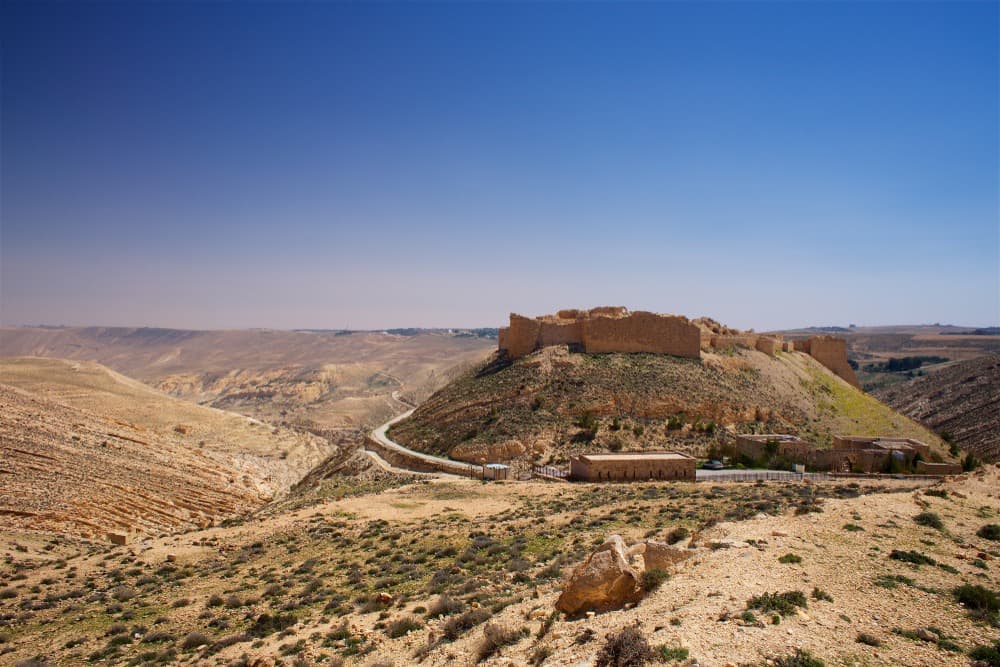
The Wadi Mujib cuts across the route midway: a canyon 1 km deep that is crossed via a series of switchbacks over 18 km, with a low point 220 m below sea level. The landscape transforms dramatically along the descent, from the olive groves and wheat fields of the Madaba plateau to the dry slopes dotted with junipers. Kerak Castle, built around 1140 by Payen the Butler, towers over the village of the same name at 950 m altitude. Its underground passages and vaulted halls can be explored in 1.5 to 2 hours.
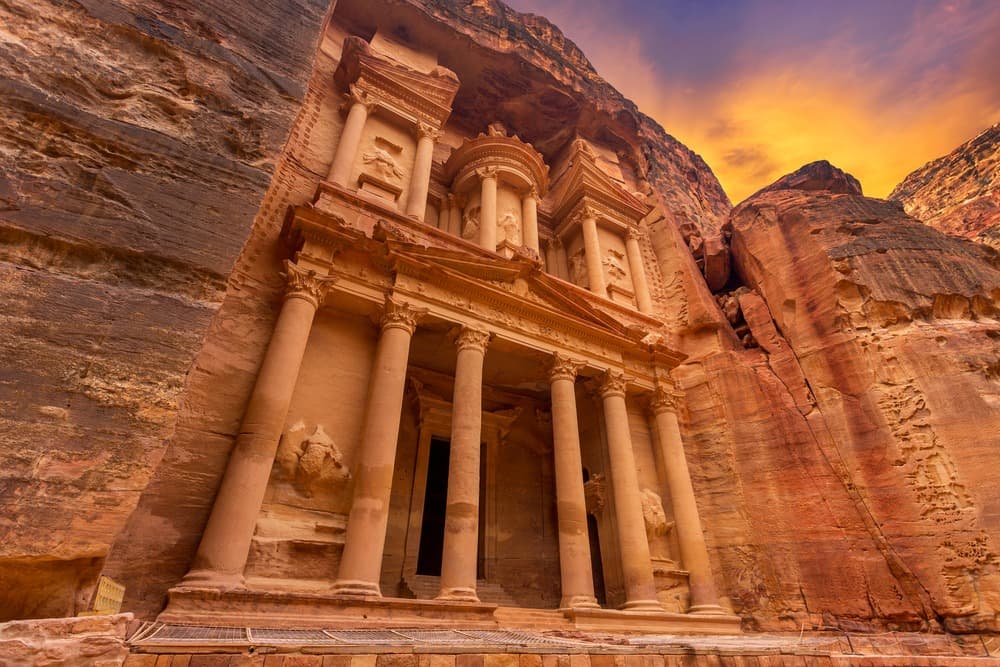
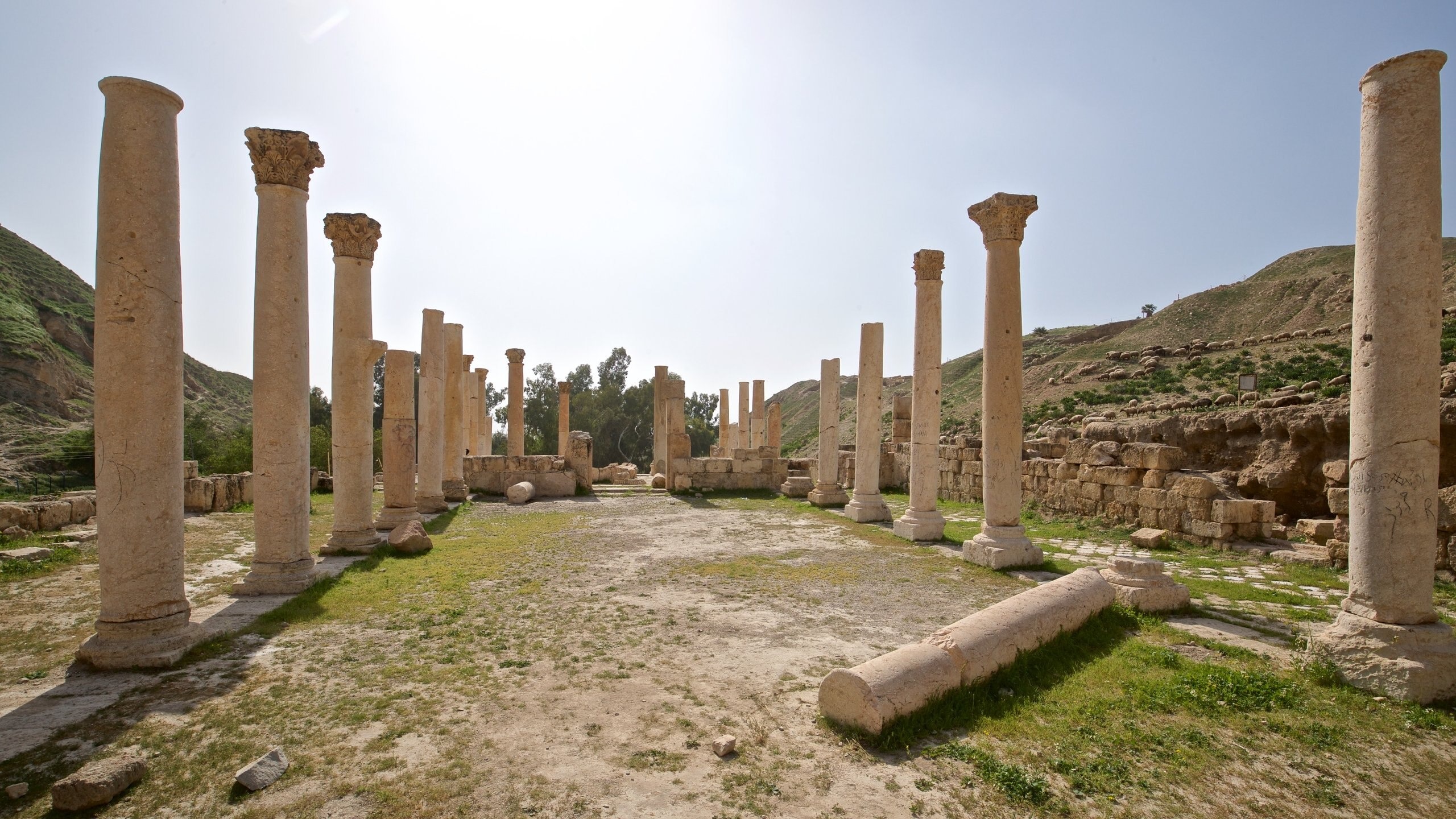
Petra is the culmination of this route, once the capital of the Nabataean kingdom between the 4th century BCE and the 2nd century CE. The archaeological site covers 264 km² but the area visited by most travellers concentrates on 5 to 6 km². Entry is made through the Siq, a 1.2 km fissure carved into the sandstone, with walls reaching 80 m in height in some places. At the end of the canyon appears the Khazneh, the Treasury, a royal tomb carved into the cliff face around 25 BCE. Further on, the Roman theatre, the royal tombs and the colonnaded street form the urban heart. Reaching the Deir, the Monastery, requires 850 steps carved into the rock and 1 hour of climbing to 1100 m altitude.
Two full days on site are necessary to see the essentials: one day for the main route to the Monastery, a second for less-frequented trails such as the High Place of Sacrifice or the Treasury viewpoint via the Al-Khubtha path. Travellers with just one day will see the Khazneh, the theatre and the royal tombs, roughly 15% of the site. Petra by Night, organised on Mondays, Wednesdays and Thursdays, illuminates the Siq and the Khazneh esplanade with 2000 candles: 2 hours of silent walking beginning at 8:30 pm.
Wadi Musa, the neighbouring village, concentrates all accommodation 3 km from the site entrance. Its population is largely descended from the B'doul Bedouin families, relocated from the heart of Petra in the 1980s when it was inscribed as a World Heritage Site. Some still work on site as guides, vendors or camel handlers. The higher village of Umm Sayhoun is home to the main Bedouin community. Local cuisine centres on mansaf, the national dish of lamb, dried fermented yoghurt (jameed) and rice, and zarb, meat cooked in an underground oven that is still shared in certain encampments in the region.
South of Petra, the road continues to Wadi Rum 110 km away, a 1.5-hour journey via the Desert Highway. This Petra–Wadi Rum connection forms the classic heart of a journey through Jordan, enriched from the north by the King's Highway.
To discover
The Khazneh at sunrise. Enter the Siq before 7am to emerge at the Treasury's façade as the low morning light ignites the rose sandstone. The site is nearly empty during the first hour.
Climb to the Monastery. 850 steps carved into the rock to the Deir, a 47 m high façade sculpted in the 1st century. From the nearby viewpoint, views over the Arabah valley and, on clear days, across to the Sinai.
Kerak Castle. A 1140 Crusader fortress on the King's Highway, whose vaulted halls and underground passages can be explored in 2 hours. A logical stop to break the Madaba–Petra journey.
Petra by Night. A walk through the Siq lit by 2000 candles to the Khazneh esplanade, where a rababa player accompanies Bedouin tea. Three evenings weekly, Monday, Wednesday and Thursday.
The Al-Khubtha trail. A 2.5-hour route past the royal tombs to a viewpoint that overlooks the Khazneh 200 m below. Little-frequented, accessible with a local Bedouin guide.
When to visit
We recommend two windows for Petra and the King's Highway: March to mid-May and October to mid-November. Temperatures at Wadi Musa, situated at 1000 m altitude, then range between 18 and 24°C during the day, with nights around 8 to 12°C. These periods allow for several hours of walking without suffering from the heat and for stringing together high-altitude trails like the Monastery or Al-Khubtha. Summer, from June to August, sees temperatures climb to 32-35°C on site, with strong glare off the sandstone walls: hikes must then be done before 10am and after 4pm.
Winter, from December to February, is more variable. Wadi Musa can experience night temperatures near 0°C and daytime readings of 10-13°C, with occasional rain or snow on the higher reaches of the King's Highway (Tafilah, Dana, Kerak all exceed 1100 m). Rainfall can trigger flash floods in the Siq, which is then closed as a precaution: it is rare but happens two to four times each winter. The low season of January, however, offers a nearly empty site, with winter light that changes the colour of the sandstone.
Practical advice
Allow three nights at Wadi Musa to combine two full days on the archaeological site and the Petra by Night evening. Travellers using the King's Highway add a night in Madaba or Dana en route, bringing the segment to four or five nights from Amman. The direct descent via the Desert Highway takes 3.5 hours against 6 to 7 hours via the King's Highway with stops: we often suggest the King's Highway on the outbound journey and the Desert Highway on return, or vice versa.
The most natural combination is with Wadi Rum, 1.5 hours to the south, then Aqaba on the Red Sea. To the north, Petra combines well with Dana and the eastern desert, which share the same high plateaus, and with Madaba, the gateway to the Dead Sea and Amman. Accommodation at Wadi Musa ranges from simple Bedouin camps 5 km from the site to upscale establishments with heated pools. The region suits contemplative travellers drawn to archaeology, hikers (the site covers 15 to 20 km per day for full trails) and families, provided the pace is adapted: an 8-year-old can do the Khazneh and the theatre, rarely the Monastery on the same day.