Aqaba and the Red Sea
27 km of shoreline on the Gulf of Aqaba, coral reefs accessible from the beach, and water temperatures between 21 and 28°C enabling year-round diving.
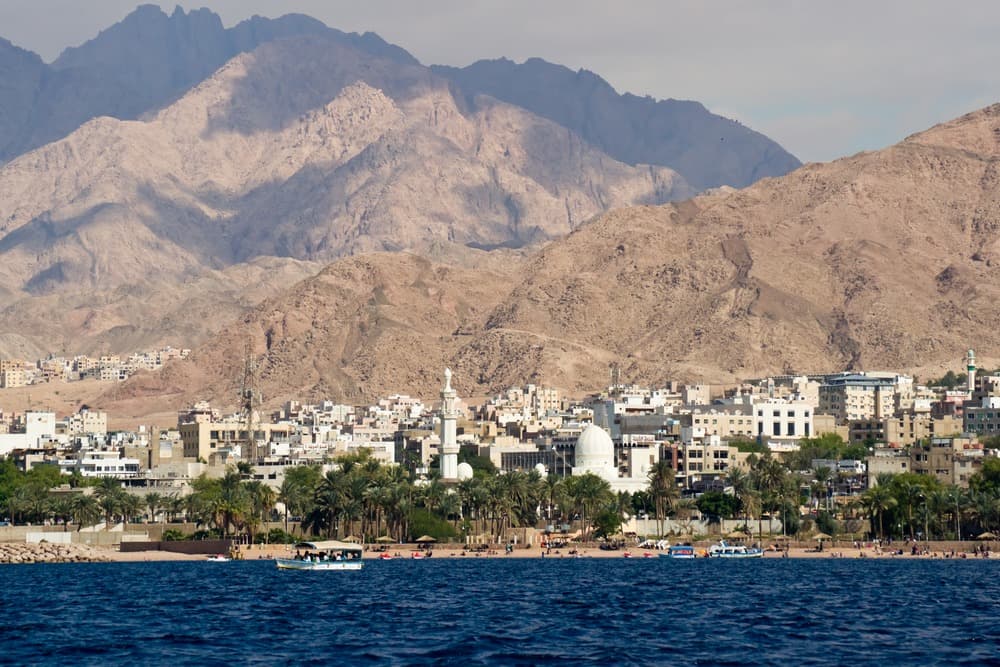
Aqaba sits at the southern tip of Jordan, where the country touches the Red Sea along just 27 kilometres. The city is wedged between the gulf, the granite mountains of Wadi Rum that rise abruptly inland, and the Egyptian, Israeli, and Saudi borders—all visible to the naked eye from the corniche. This geographical compression explains the place's distinctive character: a modest-sized beach resort (roughly 150,000 inhabitants), port and trading hub, without the hotel density of Sharm el-Sheikh or Eilat directly across the water.
The Gulf of Aqaba is a narrow arm, plunging deeper than 1,800 metres in places, which maintains temperate sea conditions year-round: 21°C in February, 28°C in August. Coral reefs often begin just metres from shore, making snorkelling accessible directly from the beach without a boat. This is an ecological singularity: along the Jordanian coast, corals have better resisted bleaching than elsewhere in the Red Sea, thanks to slightly more stable temperatures and limited visitor numbers. Aqaba Marine Park, the protected zone south of the city along the road toward the Saudi border, contains most of the dive sites.
Three immersions structure the local diving roster. The Cedar Pride, a Lebanese cargo ship deliberately sunk in 1985 at 25 metres, has become an artificial reef colonised by gorgonians and clownfish. The Tank, an American M42 tank submerged in 1999, rests at 6 metres and can be visited on a snorkel. Yamanieh, further south, is the flagship natural reef, with visibility regularly exceeding 30 metres. A more recent addition, the Underwater Military Museum sunk in 2019, lines up two dozen military vehicles on sandy ground between 15 and 28 metres.
Aqaba has held a special administrative status since 2001: a special economic zone (ASEZ), with reduced VAT and lower taxes on alcohol, tobacco, and electronics. In practical terms, beer costs half as much as in Amman, and some travellers take advantage before heading north toward the Dead Sea. The city maintains genuine port activity, visible from the waterfront where cargo ships unload phosphate, the country's primary export. The old-town souk, around Raghadan Street, sells spices, dried fish, and dates from Wadi Araba. On the culinary front, marina restaurants serve sayadieh (spiced rice with fish) and grilled fish of the day, typically local grouper or barracuda.
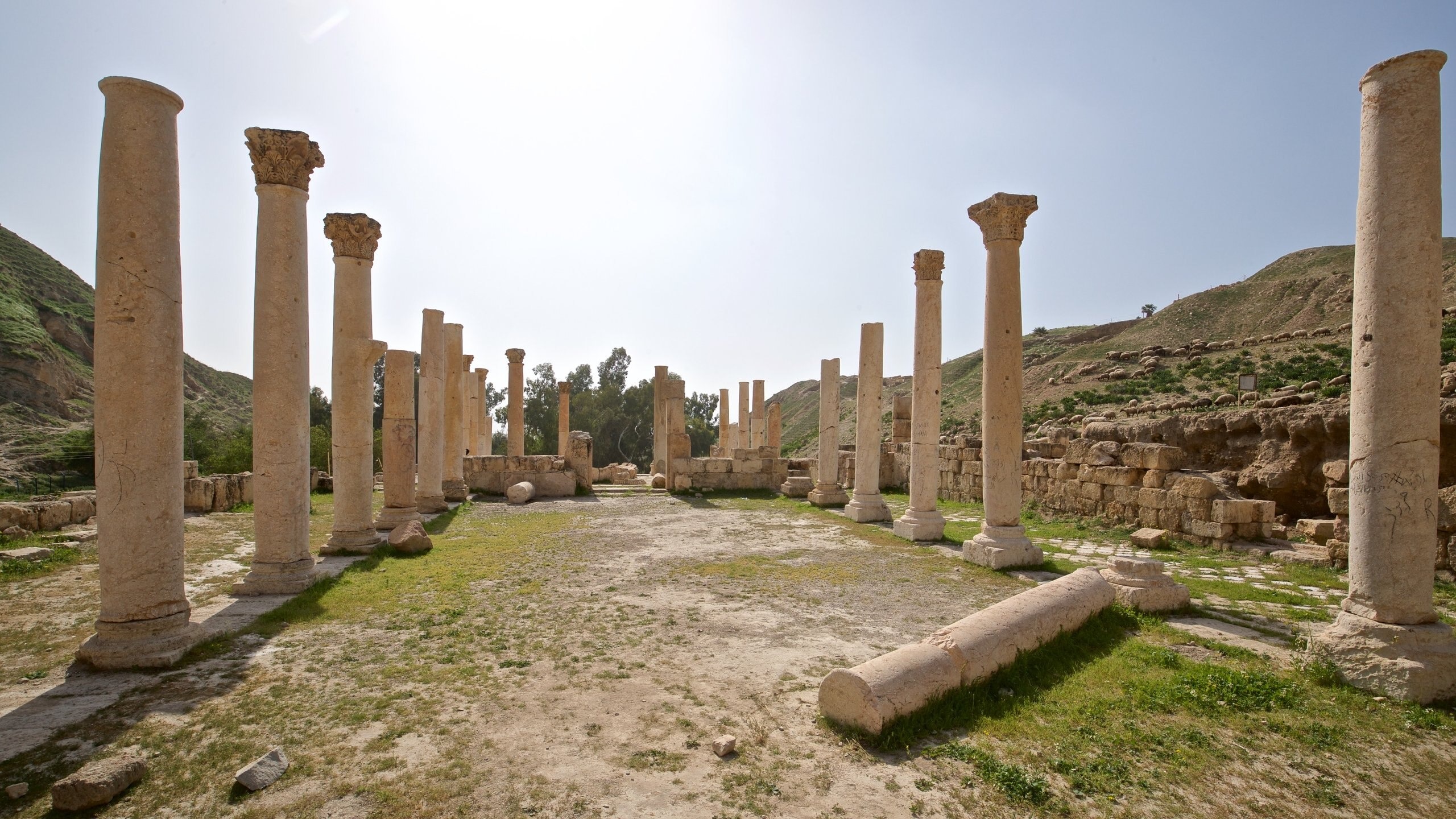
Aqaba's history extends far beyond the modern resort. The site of Ayla, just beside the town centre, preserves ruins of the first Islamic city built outside the Arabian Peninsula, founded around 650. Further afield, the 16th-century Mamluk castle served as a relay station on the pilgrimage route to Mecca. For those interested in modern history, this is where Lawrence of Arabia attacked the Ottoman garrison in 1917—a pivotal episode in David Lean's film, partly shot in nearby Wadi Rum.
Aqaba has an international airport (King Hussein) receiving seasonal direct flights from several European capitals, particularly in winter. It's an alternative gateway to Amman, especially relevant for itineraries starting in the south (Wadi Rum, Petra) and heading north toward the Dead Sea and the capital.
To Discover
Diving the Cedar Pride. The Lebanese cargo ship sunk in 1985 rests between 7 and 25 metres, accessible to Level 1 divers. Red gorgonians colonise the deck rails and schools of fusiliers circle the wreck.
Snorkelling from South Beach. The reef begins 10 metres from shore. A mask, snorkel, and 30 minutes are enough to spot parrotfish, clownfish, and green sea turtles—no boat trip needed.
Ayla archaeological site. The foundations of the 7th-century Islamic city, right in central Aqaba, offer a different reading of the region: a caravan trading post on the route between Damascus and Arabia, long before the beach resort era.
Underwater Military Museum. Around two dozen military vehicles (tanks, helicopter, ambulance) submerged in 2019 between 15 and 28 metres. An original dive that pairs well with a morning on natural reefs.
Sunset over four countries. From the northern corniche, you can simultaneously see the lights of Eilat (Israel), Taba (Egypt), and the Saudi coast. A geopolitical configuration unique to the world, visible with nothing more than a glass of lemon-mint tea on a terrace.
When to Visit
Aqaba can be visited year-round, unlike the rest of Jordan. Winter (December to February) is the best season for combining with Petra and Wadi Rum: 22°C during the day, sea water at 21-22°C, clear skies. It's also peak season for Europeans escaping the cold, so hotels are fully booked in December and during school holidays. Spring (March to May) and autumn (October-November) offer the best compromise: 25 to 30°C, water at 24-26°C, moderate crowds.
Summer is harsh. From June to September, temperatures regularly exceed 40°C, with peaks at 45°C in July-August. The sea remains pleasant (28°C) but land activities (visiting Ayla, walking the old town) become gruelling after 10am. If visiting in summer, arrange a hotel with direct beach or pool access and schedule activities early morning or late afternoon. Rain is virtually non-existent: less than 30 mm annually, mainly in January.
Practical Tips
Two to three nights are enough to enjoy Aqaba. It's an ideal recovery stop at the end of a circuit, after trekking in Petra and nights under canvas in Wadi Rum. Plan one day for diving or snorkelling (two dives in the morning, rest in the afternoon), half a day for Ayla and the old town, and free beach time. Beyond three days, the cultural offer thins out and it's better to move on toward the Dead Sea or Amman.
The region naturally connects with Wadi Rum (1 hour's drive), Petra (2 hours), and the Dead Sea (3.5 hours via the desert road). Many of our itineraries start in Aqaba with a direct winter flight from Europe, head north toward Wadi Rum, Petra, Dana, the Dead Sea, and finish in Amman. King Hussein Airport is 15 minutes from the centre. For comfort, options range from family pensions at 40 dinars a night to the resorts of Tala Bay (Mövenpick, Kempinski) south of the city. Aqaba suits families (equipped beaches, shallow water), divers (well-run PADI clubs), and those seeking to end a circuit in relaxation mode. Travellers looking for dense heritage will spend less time here.