New Amman (West Amman / Modern Districts)
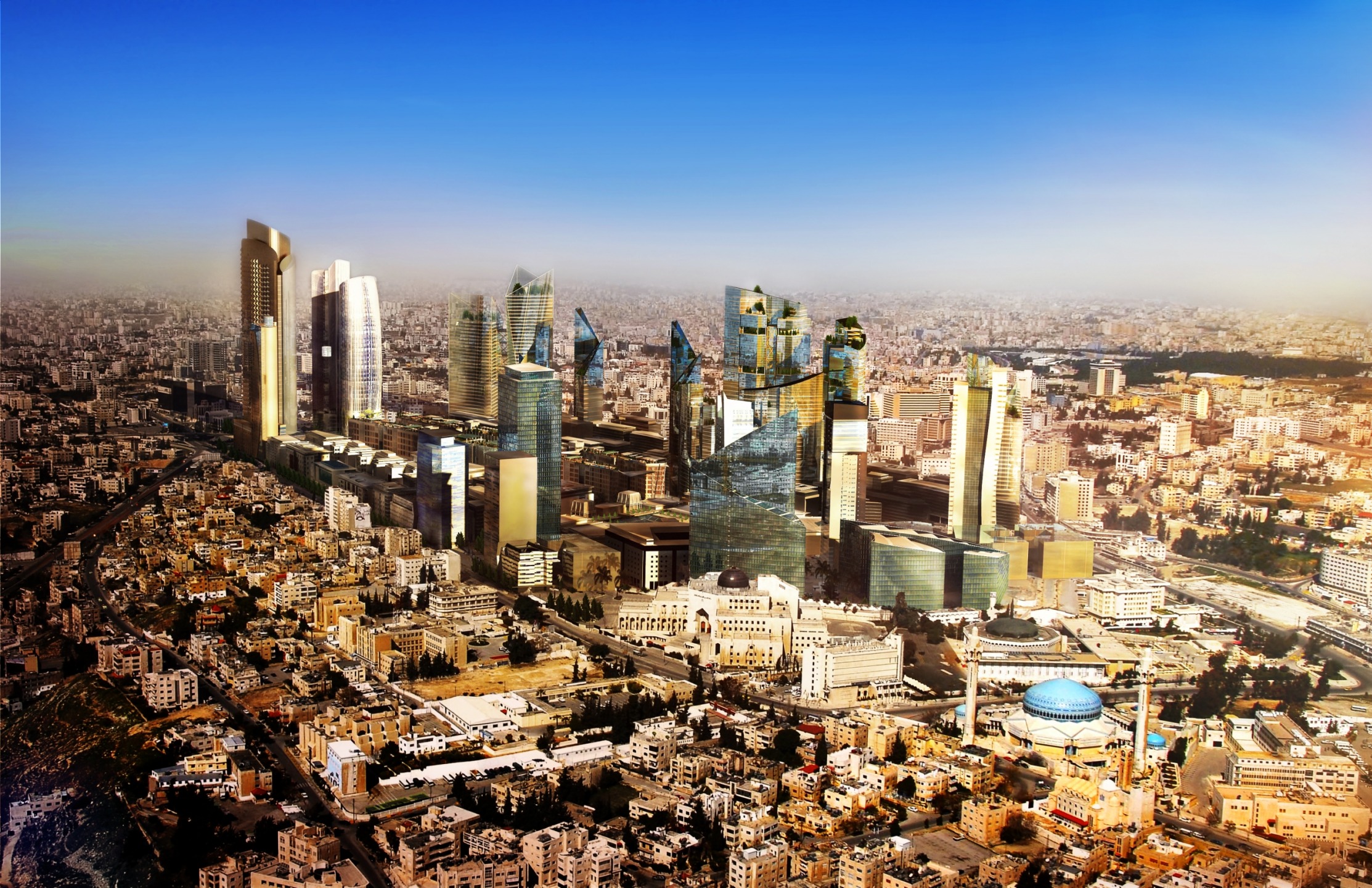
West of the historic center, Amman unfolds its modern districts across several hills: Abdoun, Sweifieh, Abdali. Limestone architecture, trendy restaurants and art galleries make up the contemporary face of Jordan's capital.
West of the historic center, Amman unfolds its modern districts across a series of residential and commercial hills. Abdoun, Sweifieh, Shmeisani and Abdali form what is commonly known as the new city: a contemporary Arab capital, where art galleries, trendy restaurants, shopping centers and embassies coexist with villas in the beige limestone characteristic of the Hashemite Kingdom.
What to See
The new city is not a delimited site but a living urban fabric. A few landmarks structure the visit:
- Boulevard Abdali: urban renovation project delivered in the 2010s, with office towers, international hotels and pedestrian promenades.
- Abdoun Quarter: embassies, terrace cafés and the Abdoun roundabout, a social landmark for Amman's youth.
- Sweifieh: dense commercial artery, local boutiques and international chains side by side.
- Galleries and Cultural Spaces: several contemporary Jordanian art galleries are concentrated in these western quarters.
- Limestone Architecture: a municipal law mandates local stone on façades; even recent buildings respect this rule, giving visual cohesion to the city.
History and Context
Amman developed rapidly after 1948, then again after 1967 and 1990, with each wave of refugees accelerating urbanization westward. Affluent residential hills multiplied as the population grew from tens of thousands in the mid-twentieth century to over four million today. The new city reflects this rapid growth and the emergence of a Jordanian middle and upper class.
Highlights of the Visit
Boulevard Abdali
This urban regeneration project transforms a former military quarter into a mixed-use downtown. The lively terraces in the evening offer a glimpse of contemporary Amman social life, far from conventional tourist circuits.
The Gastronomic Scene
The western quarters concentrate a varied restaurant offering: traditional Levantine cuisine revisited, international tables and specialty coffee cafés. This is where modern Jordanian dining is being experimented with.
Contemporary Art Galleries
Several spaces showcase Jordanian and Arab artists. Amman's art scene is one of the most active in the Middle East, driven by local collectors and an engaged diaspora.
Photography Tips
The golden light of late afternoon on beige limestone façades is particularly photogenic. The rooftop terraces of certain Abdoun cafés offer views of Amman's characteristic urban sprawl, its hills covered with white buildings stretching as far as the eye can see.
Location and Access
The modern quarters extend west of Amman's historic center and the Citadel. The distance between the center (1st circle) and Abdoun or Sweifieh can be covered by car or taxi in around fifteen minutes depending on traffic, which can be heavy at peak hours. White taxis and ride-hailing applications are the most practical way to move between quarters; the bus network exists but remains poorly suited to tourism.
Nearby
- Amman Citadel (Jabal al-Qal'a) — the archaeological heart of the city, with Roman temple, Umayyad palace and archaeological museum.
- Roman Theatre — 2nd century amphitheater in downtown, a few minutes from the souk.
- Rainbow Street — emblematic street of the Jabal Amman quarter, cafés, bookstores and lively neighborhood life.
- Jordan Museum — modern national museum presenting the country's history from its origins to the present day.
Frequently asked questions
Both parts of Amman are complementary. The historic center concentrates archaeological sites and souks; the new city showcases contemporary Jordanian urban life, its gastronomy and cultural scene. A day is enough to combine both.
Taxi or ride-hailing applications are the most practical options. Amman is a car city; distances between quarters are short but the elevation changes and traffic make walking impractical for connecting the zones.
Amman's western quarters are among the most liberal in Jordan. Casual attire is accepted in cafés and restaurants. In places of worship, usual rules apply.
Spring (March-May) and autumn (September-November) offer pleasant temperatures. Summer can be warm but remains manageable thanks to Amman's altitude (approximately 800 m). Winter is cool and occasional snowfall is possible.
Amman is the natural logistical base for exploring Jordan. Jerash, the Dead Sea and Madaba are accessible as day trips from the new city.
Interested in this visit?
We can include it in your personalised itinerary.