Mujib Valley
Mujib Valley
Jordan's deepest gorge and a UNESCO biosphere reserve, Mujib Valley is explored through canyoning between waterfalls, sandstone cliffs, and protected wildlife.
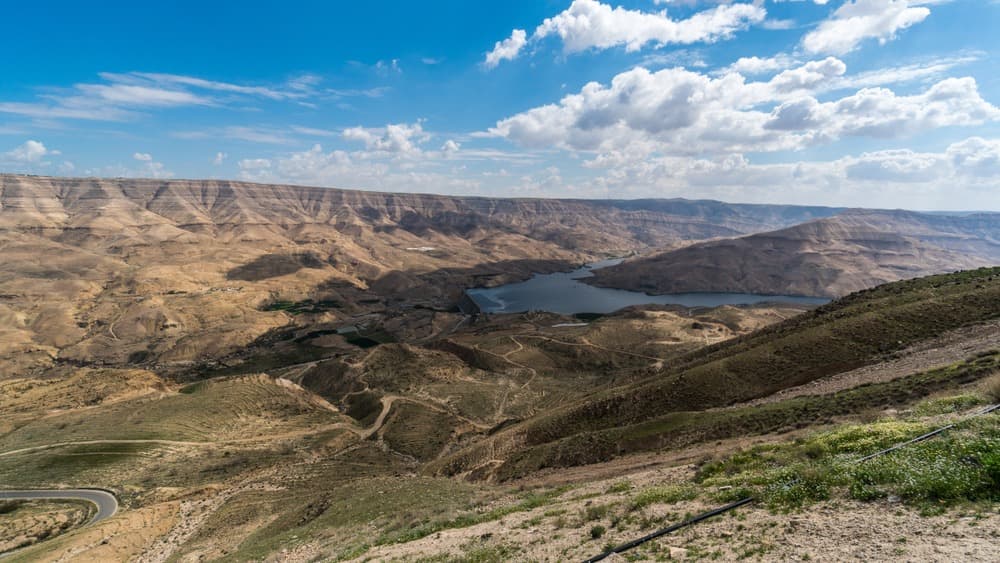
East of the Dead Sea, Mujib Valley cuts through the Jordanian plateau for nearly 70 km, forming the country's deepest gorge. Designated a UNESCO biosphere reserve in 2011, it harbours biblical heritage, spectacular geology, and a unique water-hiking terrain in Jordan. Here's what you need to know before visiting.
Why visit Mujib Valley
The reserve presents a geographical paradox: it is the world's lowest protected area, with its rivers ending more than 400 metres below sea level. This depression creates a microclimate where atypical fauna and flora have adapted to an arid environment, yet traversed by permanent water courses.
The site distinguishes itself from most Jordanian canyons through year-round water presence. The wet trails require progressing at times by swimming or climbing waterfalls, making it an experience closer to canyoning than the dry hiking typical of Wadi Rum or Petra.
History and biblical heritage
The valley is mentioned in the Old Testament as the Arnon River. It marked a disputed boundary between the Moabites and the descendants of Israel. Deuteronomy records: "And this land, which we possessed at that time, from Aroer, which is by the river Arnon, and half the hill country of Gilead and its cities, I gave to the Reubenites and the Gadites."
The Moabite sovereign Mesha, known through the stele bearing his name, built a road along the Arnon and took possession of Ataroth after defeating the tribes of Gad and Reuben. Remains of bridges, forts, and dwellings are still visible on either side of the river, witnesses to the civilizations that inhabited the region.
Geologically, the valley formed through the combined action of fluvial erosion and the gradual decline of the ancient Lake Lisan, predecessor to today's Dead Sea. The river carved a fissure through sandstone blocks, depositing sediments that today enable life in this rugged desert.
What to see and do
Hiking trails
Access to the trails is from the visitor centre, located on the Dead Sea road. Three trails structure the visit:
- Siq Trail: the most popular route, accessible without specialist equipment. It ascends the wet canyon to a sandstone cave and waterfall, through passages where you wade through water.
- Ibex Trail: approximately 4 hours of hiking, more demanding, ending on the shores of the Dead Sea. Reserved for hikers in good physical condition.
- Malaqi Trail: a route combining descent from the heights and water passages, culminating at a waterfall around twenty metres high.
Visits must be accompanied by a guide approved by the reserve. No independent exploration is permitted, due to safety concerns related to flash floods and the technical difficulty of the passages.
Fauna and flora
The reserve is home to several elusive mammals, including caracal, wildcat, striped hyena, and Syrian wolf. Nubian ibex, more visible, frequent the rocky slopes. As for birdlife, the valley lies on a migration corridor between the Rift Valley and Europe, allowing observation of raptors such as the Egyptian vulture and peregrine falcon.
Flora includes orchids, acacias, tamarisks, oleanders, and date palms, concentrated around permanent water sources.
Practical information
Entry to the reserve is fee-paying, with rates varying by chosen trail. Hiking permits are added to the entrance fee, and booking is required, particularly during peak season. As rates are regularly adjusted, it's best to consult the Royal Society for the Conservation of Nature (RSCN), the site's manager, before departure.
Pack closed-toe shoes suited to water, a waterproof bag for your belongings, and a change of clothes for your return. Phones and cameras must be protected.
When to go
Peak season runs from April to October, when wet trails are open. The Siq Trail, the main route, welcomes visitors in the morning and early afternoon only, with final entry mid-day. Starting early helps you avoid crowds and heat. In winter, water trails close due to flash flood risk.
How to get there
The visitor centre is located on the scenic Dead Sea road. Allow approximately 1 hour 20 minutes' drive from Amman and nearly 3 hours from Aqaba. Car rental remains the most flexible option. Otherwise, you can reach the Dead Sea by public bus and complete the journey by taxi.
What to see nearby
Mujib Valley fits naturally into an itinerary along the Dead Sea:
- The developed beaches of the Dead Sea, minutes by car away.
- The thermal springs of Ma'In, fed by hot springs.
- Machaerus fortress, where John the Baptist is said to have been beheaded according to tradition.
- Further south, Al-Karak Castle, a Crusader stronghold overlooking the valley.
- Heading towards Petra, the famous Sîq, the narrow passage providing access to the Nabataean city.
Frequently asked questions
Frequently asked questions
Integrate Mujib Valley into your trip
Located halfway between Amman and Petra, the reserve fits naturally into an itinerary combining the Dead Sea, biblical sites, and desert. To build a bespoke route, consult our suggestions for travel to Jordan.
Interested in this visit?
We can include it in your personalised itinerary.